
Many people want help eating better: more energy, better habits, cooking at home, fueling workouts or simply understanding food. Nutrition coaches support them with education, accountability and practical habit change. It’s a rewarding, flexible business that can run online or in person, often alongside fitness, wellness or cooking services.
But nutrition is also health care territory, and laws differ by state. Understanding your scope (what you may and may not do) is the first and most important step.
Nutrition coaching at a glance
Table of Contents
| Services | Habit coaching, meal planning support, education, accountability, group programs |
| Regulation | Varies by state; some restrict individualized nutrition advice to licensed professionals |
| Credentials | Coaching certifications (voluntary); registered dietitians have protected credentials |
| Startup costs | Low: training, software, website, insurance |
| Key to success | Clear scope, real results, trust |
Know your scope: state laws differ
States regulate nutrition services differently:
- Some states restrict individualized nutrition assessment and advice, especially for medical conditions, to licensed dietitians or other licensed professionals.
- Some states protect certain titles, such as "dietitian" or "licensed nutritionist," while allowing general nutrition coaching.
- Some states have few restrictions on general nutrition information and coaching.
Check your state’s dietetics licensing law, and if you coach clients in other states, check theirs too. When in doubt, stay with general education and habit coaching, and get advice from a professional familiar with your state’s rules.
What nutrition coaches typically do (within scope)
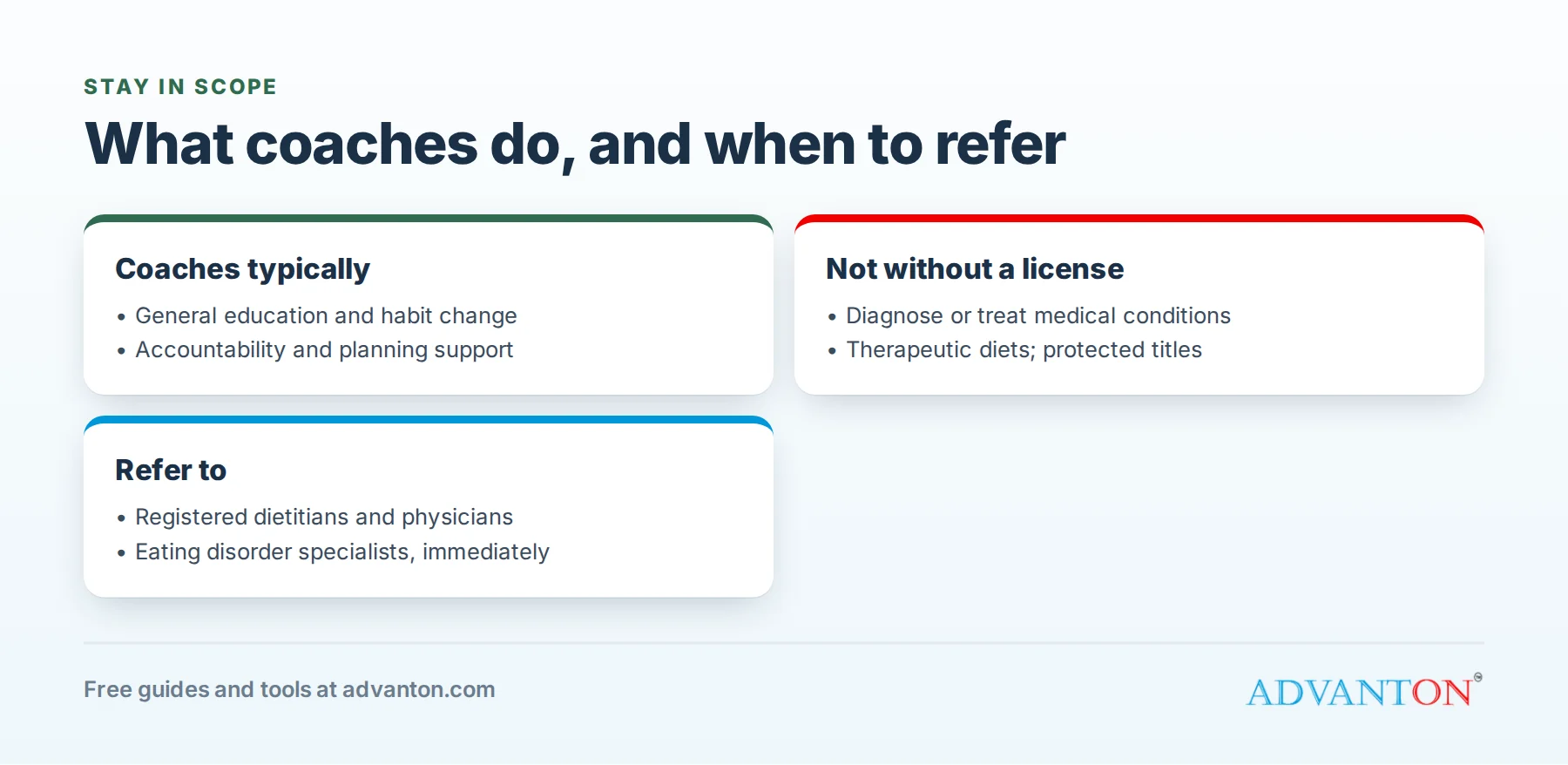
- Educate on general healthy eating principles and food basics.
- Support habit change: planning, shopping, cooking and routines.
- Provide accountability and encouragement.
- Help clients follow plans created by their healthcare providers.
What coaches should not do
- Diagnose or treat medical conditions, such as diabetes, kidney disease or digestive disorders, unless licensed to do so.
- Prescribe therapeutic diets or supplements to treat disease.
- Work with eating disorders outside a treatment team; refer immediately.
- Use protected titles like "dietitian" without the credential.
When to refer
Refer clients to a registered dietitian or physician when they have a medical condition affecting diet, take medications affected by food, are pregnant or have complex needs, show signs of disordered eating, or experience unexplained weight changes. Build a network of professionals to refer to; it protects clients and builds your credibility.
Credentials
Coaching certifications teach behavior change and general nutrition, and are voluntary. Registered dietitians complete accredited degrees, supervised practice and a national exam, and are licensed in many states. Choose training that fits your goals, and describe your credentials accurately.
A habit-based approach
Lasting change usually comes from small, consistent habits rather than strict plans: adding vegetables to one meal a day, planning lunches on Sundays, drinking more water, or cooking at home three nights a week. Help clients choose one or two habits at a time, track them simply, and build on success.
A sample client journey
- Discovery call to understand goals and check fit and scope.
- Intake form with health history and screening for referral needs.
- First session: goals, current habits and first steps.
- Weekly or biweekly check-ins on habits, obstacles and wins.
- Monthly review of progress and next goals.
- Graduation plan so clients keep habits on their own.
Programs and pricing
- Monthly coaching: regular check-ins, habit goals and messaging support.
- Three-month programs with structured lessons.
- Group programs: lower price per person, community support.
- Workshops: cooking classes, grocery tours, workplace wellness talks.
Use our pricing calculator to set rates that cover your time and costs.
An example program list
| Program | Includes | Example price |
|---|---|---|
| Habit kickstart | Intake plus three sessions over six weeks | $300 |
| Monthly coaching | Two sessions plus weekly check-ins | $250 a month |
| Group program | Six weekly group sessions and recipes | $150 per person |
| Workplace workshop | One 45-minute talk | Priced per event |
These prices are illustrative.
A worked example: a solo coach
These figures are illustrative.
| Income | Amount |
|---|---|
| 18 clients × $250 a month | $4,500 |
| Group program: 10 × $150 | $1,500 |
| Total income | $6,000 |
| Costs | Amount |
|---|---|
| Software and app | $120 |
| Marketing | $400 |
| Continuing education | $100 |
| Insurance | $50 |
| Payment processing | $180 |
| Total costs | $850 |
Profit before taxes: $5,150. Group programs raise your earnings per hour and help more people.
Intake and safety
Use a thorough intake form covering health history, medications, allergies and goals, and screen for conditions or signs that require referral. Document your scope in your client agreement, get clients’ consent, and keep records securely.
Finding clients
- Gyms and personal trainers whose clients want nutrition support.
- Workplace wellness programs.
- Helpful content: simple recipes, meal prep tips, grocery guides.
- Community classes at libraries and community centers.
- Referrals from happy clients and healthcare professionals who trust your scope.
- A website with your approach, programs and credentials; our website builder is free.
Honest marketing
Avoid promises of specific weight loss, disease cures or "detox" claims. Use permission-based testimonials without exaggerated results, and focus on habits, energy and sustainable change.
Insurance
Professional liability insurance is important for nutrition coaches; confirm the policy covers the services you actually provide. See how to get business insurance.
Respect food, culture and budget
Good coaching fits clients’ real lives: their cultural foods, family routines, cooking skills, schedules and budgets. Build plans around foods clients enjoy and can afford, and avoid one-size-fits-all rules.
Tools you’ll need
- Video calls for remote sessions.
- Scheduling and payments with reminders.
- Simple habit tracking: an app, spreadsheet or printed tracker.
- Recipe and meal planning templates.
- Secure storage for intake forms and notes.
Partner with trainers
Personal trainers and gyms often have clients asking about nutrition. Offer a referral arrangement or a joint program, and agree on roles: you cover nutrition habits within your scope; they cover exercise.
Privacy
Clients share health information with you. Store it securely, share it only with consent, and explain your privacy practices in your agreement.
Design a group program
Group programs work well for general topics such as meal planning, healthy cooking on a budget or building balanced habits. Keep groups to a manageable size, combine short lessons with discussion and weekly challenges, and give each member a simple tracker. Members support each other, and you reach more people at a lower price.
Workplace wellness
Employers offer wellness programs to support employee health. Pitch lunchtime talks, cooking demonstrations, healthy eating challenges or multi-week group programs. Keep content general and evidence-based, respect privacy, and avoid individual medical advice in group settings.
Measure success beyond the scale
Track what clients care about: energy, sleep, cooking at home, vegetables eaten, confidence with food, or progress toward goals set with their doctor. Focusing only on weight can harm motivation and isn’t appropriate for every client.
Stay evidence-based
Nutrition is full of trends and conflicting claims. Base your guidance on reputable, evidence-based sources such as national dietary guidelines and established health organizations, and be honest when evidence is limited. Clients trust coaches who are clear, consistent and humble about what’s known.
Cooking classes and grocery tours
Practical, hands-on sessions are some of the most popular nutrition services: simple weeknight cooking classes, batch-cooking workshops, or grocery store tours showing how to read labels and shop on a budget. Check food safety and venue rules for cooking events, and keep advice general for groups. These events are also excellent marketing, since participants often sign up for coaching afterward. Collect contact details at every event, with permission, and follow up within a few days while the experience is still fresh in their minds and they feel motivated.
Common mistakes to avoid
- Working outside your state’s scope rules.
- Treating medical conditions without a license.
- Ignoring signs of disordered eating.
- Overpromising results.
- Rigid plans clients can’t follow.
Your first 90 days
- Days 1 to 30: research your state’s laws, choose training, and define your scope and referral policy.
- Days 31 to 60: design programs, write your agreement and intake form, and launch your website.
- Days 61 to 90: partner with trainers and wellness programs, enroll first clients, and gather testimonials.
Frequently asked questions
Do I need a license to be a nutrition coach?
It depends on your state and what you do. Some states restrict individualized nutrition advice to licensed professionals. Check your state’s dietetics law.
What’s the difference between a dietitian and a nutrition coach?
Registered dietitians have accredited education, supervised practice and a national credential, and can provide medical nutrition therapy where licensed. Coaches typically focus on general education and habits.
Can I coach clients online in other states?
Possibly, but their state’s rules may apply. Check before working across state lines.
Can I recommend supplements?
Be cautious; avoid recommending supplements to treat conditions, and refer clients to healthcare providers.
Should I write meal plans?
It depends on your state’s rules and your credentials. Many coaches provide general templates, recipes and planning help rather than individualized therapeutic meal plans.
Which credential should I get?
Choose based on what you want to do: coaching certifications for habit-focused coaching, or the registered dietitian pathway if you want to provide medical nutrition therapy.
Keep learning
- How to start a life coaching business
- How to start a meditation and mindfulness studio
- How to get business insurance
Last reviewed October 28, 2026. Startup costs are estimates; check local prices, licensing and tax rules before you commit money.


Leave a Reply