
A meditation and mindfulness studio offers people a calm place to learn practices for stress, focus and well-being, with the community and structure many find hard to create on their own. Studios can be small and simple: a quiet room, cushions, a skilled teacher and a schedule of classes, workshops and courses.
Success comes from excellent teaching, a welcoming atmosphere and a membership base that returns week after week.
Meditation studio at a glance
Table of Contents
| Offerings | Guided classes, beginner courses, workshops, retreats, workplace programs, online classes |
| Licensing | Business license; no license to teach meditation in most places |
| Startup costs | Moderate: space, furnishings, sound, software, marketing |
| Revenue | Memberships, class packs, drop-ins, courses, workshops, corporate contracts |
| Key to success | Teaching quality, community and consistent attendance |
Choose your offering
- Guided meditation classes for drop-ins and members.
- Beginner courses (for example, a six-week introduction to mindfulness).
- Specialty classes: sleep, stress, breathwork, walking meditation, sound-based sessions.
- Workshops and day retreats.
- Workplace mindfulness programs.
- Online classes and recorded courses.
Many studios also offer gentle movement classes, such as yoga or tai chi, with qualified teachers.
Teacher training
There’s generally no license required to teach meditation, but training matters. Look for recognized teacher training programs, and consider training in trauma-sensitive approaches, since meditation can sometimes bring up difficult experiences. Hire teachers with solid training, a personal practice and warm teaching skills.
Stay within scope
Meditation can support well-being, but studios should avoid claims to treat or cure medical or mental health conditions. Describe benefits carefully, encourage participants with health concerns to talk with their healthcare providers, and refer people in distress to qualified professionals or crisis services.
Finding the right space
- Quiet: away from traffic, loud neighbors and gyms with heavy music; check soundproofing.
- Calm design: natural light, soft lighting options, comfortable temperature.
- Size: room for your target class size plus storage.
- Accessibility: step-free entry and chairs for people who can’t sit on the floor.
- Location: easy parking or transit, near offices or residential areas.
Some studios start by renting rooms by the hour in yoga studios, community centers or wellness clinics before signing a lease.
Startup costs to plan for
- Lease deposit and any build-out or soundproofing.
- Cushions, mats, chairs and blankets.
- Sound system and lighting.
- Booking and membership software.
- Teacher training and certifications.
- Insurance and business registration.
- Grand opening marketing.
- Working capital while memberships grow.
Total everything with our startup cost calculator.
Sound and atmosphere
Quiet is your product. Use rugs, curtains and acoustic panels to soften sound, choose calm colors and natural materials, keep the room uncluttered, and set a comfortable temperature. A peaceful entry area where people remove shoes and silence phones helps everyone settle.
Test before you lease
Renting a room by the hour in a yoga studio, community center or wellness clinic lets you test class times, prices and demand before committing to a lease. When classes are regularly full, you’ll know there’s enough interest for your own space.
Furnishings and equipment
Cushions, mats, chairs, blankets, a sound system, soft lighting, a check-in tablet, and booking software for classes, memberships and payments.
A sample weekly schedule
| Time | Monday to Friday | Weekend |
|---|---|---|
| 7:00 am | 30-minute morning meditation | — |
| 12:15 pm | Lunchtime reset (30 minutes) | — |
| 6:30 pm | Evening class (45 minutes) | — |
| 9:00 am | — | Saturday beginner class |
| 10:30 am | — | Workshop or course |
| 5:00 pm | — | Sunday sleep and relaxation class |
Start with fewer classes at the most popular times, then add more as attendance grows.
A six-week beginner course
| Week | Theme |
|---|---|
| 1 | What meditation is, posture and breathing |
| 2 | Focusing attention |
| 3 | Body awareness |
| 4 | Working with thoughts and emotions |
| 5 | Kindness and compassion practices |
| 6 | Building a daily practice |
Pricing: memberships, packs and drop-ins
| Option | Purpose |
|---|---|
| Unlimited monthly membership | Steady income, regular attendance |
| Class packs (5 or 10 classes) | Flexibility for occasional visitors |
| Drop-in classes | Easy first visit |
| Intro offer | First week or first class discounted |
| Courses and workshops | Higher-value, structured learning |
Research local studios and use our pricing calculator.
An example price list
| Option | Example price |
|---|---|
| Drop-in class | $20 |
| Intro offer: one week unlimited | $25 |
| 10-class pack | $170 |
| Unlimited monthly membership | $90 |
| Six-week beginner course | $180 |
| Half-day retreat | $75 |
These prices are illustrative; research your local market.
A worked example: a small studio
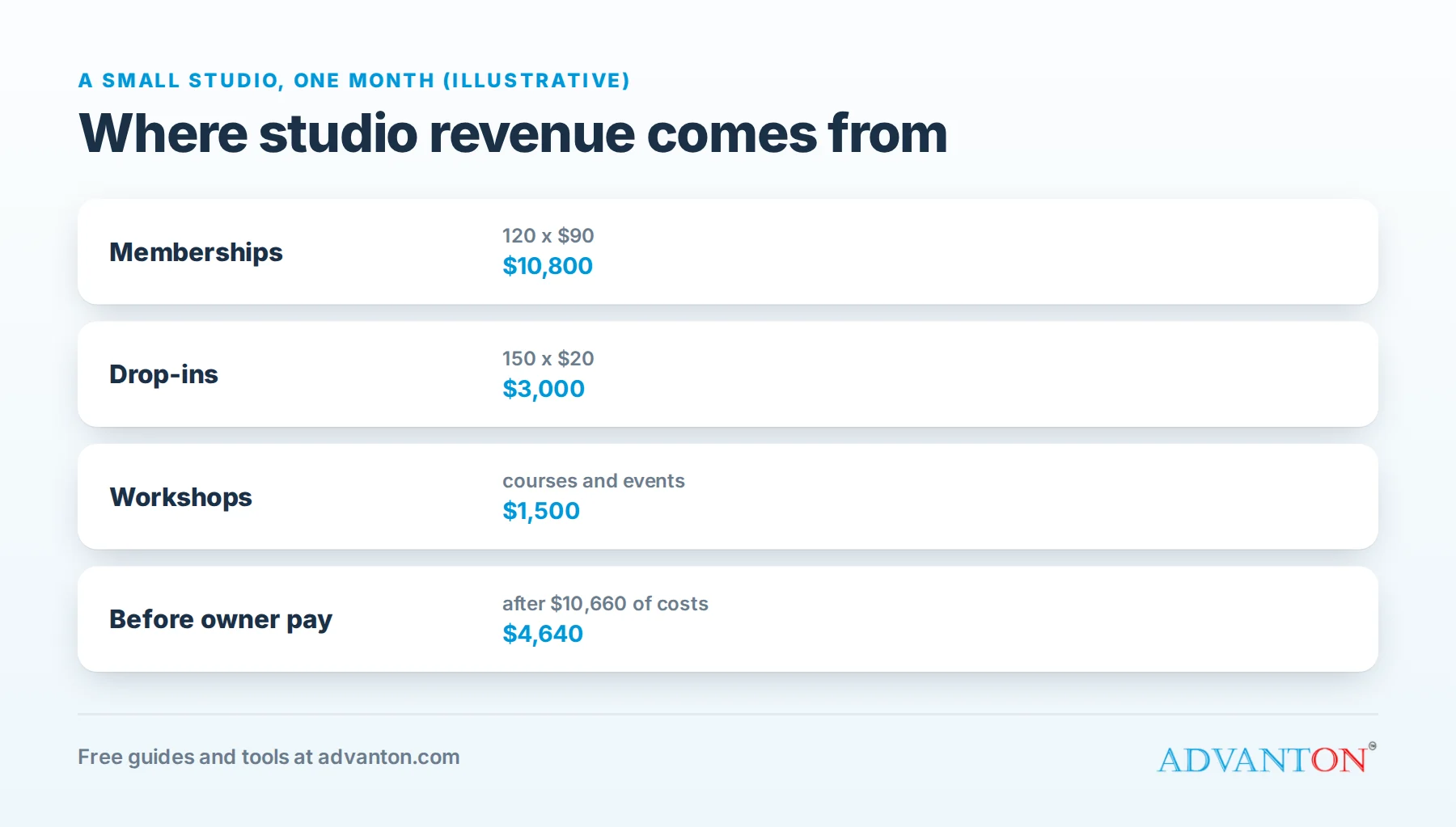
These figures are illustrative for one month.
| Revenue | Amount |
|---|---|
| 120 members × $90 | $10,800 |
| 150 drop-ins × $20 | $3,000 |
| Workshops | $1,500 |
| Total revenue | $15,300 |
| Costs | Amount |
|---|---|
| Rent | $4,500 |
| Teachers | $4,000 |
| Studio software | $150 |
| Insurance | $150 |
| Utilities | $400 |
| Marketing | $800 |
| Cushions and supplies | $200 |
| Card processing | $460 |
| Total costs | $10,660 |
Profit before owner’s pay and taxes: $4,640. Memberships are the foundation: growing from 120 to 150 members adds $2,700 a month with little extra cost. Find your break-even with our break-even calculator.
Workplace mindfulness programs
Employers increasingly offer mindfulness sessions for employees. Package short weekly sessions, lunchtime workshops or multi-week programs, delivered on-site or online, and price them by session or program. Corporate work fills daytime hours and introduces new people to your studio.
Online classes
Live-streamed classes and recorded courses extend your reach and serve members when they travel. Use good audio, and consider offering an online membership tier.
Building community
- Welcome every newcomer personally and explain what to expect.
- Beginner-friendly classes at popular times.
- Community events: tea after class, monthly gatherings, volunteer days.
- Member check-ins when regulars stop coming.
Finding students
- Google Business Profile and reviews.
- Free intro classes and community events.
- Partnerships with therapists, doctors, yoga studios, gyms and wellness clinics.
- Workplaces, universities and libraries.
- A calm, clear website with schedule and online booking; our website builder is free.
Insurance
Plan for general and professional liability insurance for the studio and teachers, plus property coverage. Landlords usually require proof of insurance. See how to get business insurance.
Paying teachers
Studios pay teachers per class, per student or a combination, sometimes with a base rate plus a bonus for larger classes. Agree on pay, expectations, substitutes and worker classification in writing, and check the rules for contractors and employees.
Day retreats
Half-day and full-day retreats, with guided practice, silence, mindful meals and walking meditation, are popular, higher-priced events. Host them in your studio or rent a peaceful venue, and plan logistics carefully.
Accessibility and inclusion
Offer chairs and cushions, explain that there’s no single "right" way to sit, use inclusive language, and keep classes welcoming to all ages, backgrounds and experience levels. A comfortable first visit keeps newcomers coming back.
Track studio health
Watch active members, new members per month, intro offer conversions, average class size by time slot and membership cancellations. Adjust your schedule and offers based on what the numbers show.
An opening checklist
- Space ready: furnished, clean, accessible and quiet.
- Schedule published with beginner-friendly classes.
- Booking software tested, with memberships and intro offers.
- Teachers trained in your studio’s standards and safety policies.
- Insurance in place.
- Free intro week promoted to neighbors and local businesses.
Partner with your neighbors
Local businesses can help each other: offer a free class to employees of nearby shops and offices, cross-promote with yoga studios, cafes, bookstores and wellness clinics, and host events with local therapists or nutrition coaches. Partnerships bring new people through your door at little cost, and they root your studio in the neighborhood.
Keep classes consistent
Regular students rely on a predictable schedule and familiar teachers. Change the timetable rarely, announce changes early, and train substitute teachers in your studio’s style so classes feel consistent. Ask regular students for feedback each season, and let their suggestions shape new classes and workshops, which strengthens their sense of belonging to the community.
Common mistakes to avoid
- Noisy locations.
- Overly complex schedules with too few students per class.
- Medical claims you can’t support.
- No intro path for beginners.
- Neglecting memberships in favor of drop-ins.
Your first 90 days
- Days 1 to 30: complete or plan teacher training, define your offerings, and test classes in rented rooms.
- Days 31 to 60: choose a space, set pricing and memberships, and set up booking software.
- Days 61 to 90: open with free intro classes, start a beginner course, and pitch workplace programs.
Frequently asked questions
Do I need a license to teach meditation?
Generally, no, though training and experience matter, and business licenses apply.
How big should my studio be?
Big enough for your target class size with comfortable spacing and storage; many studios start small.
Can I make money teaching meditation online?
Yes, through live classes, online memberships and courses, often alongside in-person classes.
Should I add yoga or other classes?
Gentle movement classes often attract more students; hire qualified teachers for them.
How long should classes be?
Many studios offer 30-minute classes for busy schedules and 45 to 60 minutes for evening and weekend sessions.
What is trauma-sensitive teaching?
An approach that offers choice, avoids forcing practices, and helps participants feel safe and in control. Training is widely available.
Can I call myself a certified teacher?
Only if you’ve completed a certification program; describe your training accurately.
Keep learning
Last reviewed October 28, 2026. Startup costs are estimates; check local prices, licensing and tax rules before you commit money.


Leave a Reply