
Many massage therapists start working for spas, clinics or franchises, then go out on their own to set their own schedule, choose their clients and keep more of what each session earns. A massage therapy business can start small, renting a single room or traveling to clients, and grow into a busy practice with regulars who book every month.
BLS wage data show massage therapists earned a median of about $57,950 in May 2024. Owners who build a full book of regular clients can earn more, but they also take on rent, marketing, supplies, insurance and the business work.
Massage business at a glance
Table of Contents
| Licensing | Most states license massage therapists; some cities add business permits |
| Models | Room rental, your own studio, mobile massage, corporate chair massage, spa |
| Startup costs | Low to moderate: table, linens, oils, booking software, insurance |
| Revenue | Sessions, packages, memberships, add-ons, gift certificates |
| Key to success | Regular clients who rebook |
Licensing and permits
- State massage therapy license: most states require one, usually involving approved training hours and an exam.
- Local business license and, in some cities, a massage establishment permit.
- Zoning if you work from home.
- Continuing education to keep your license current.
Check your state massage therapy board and your city before taking clients.
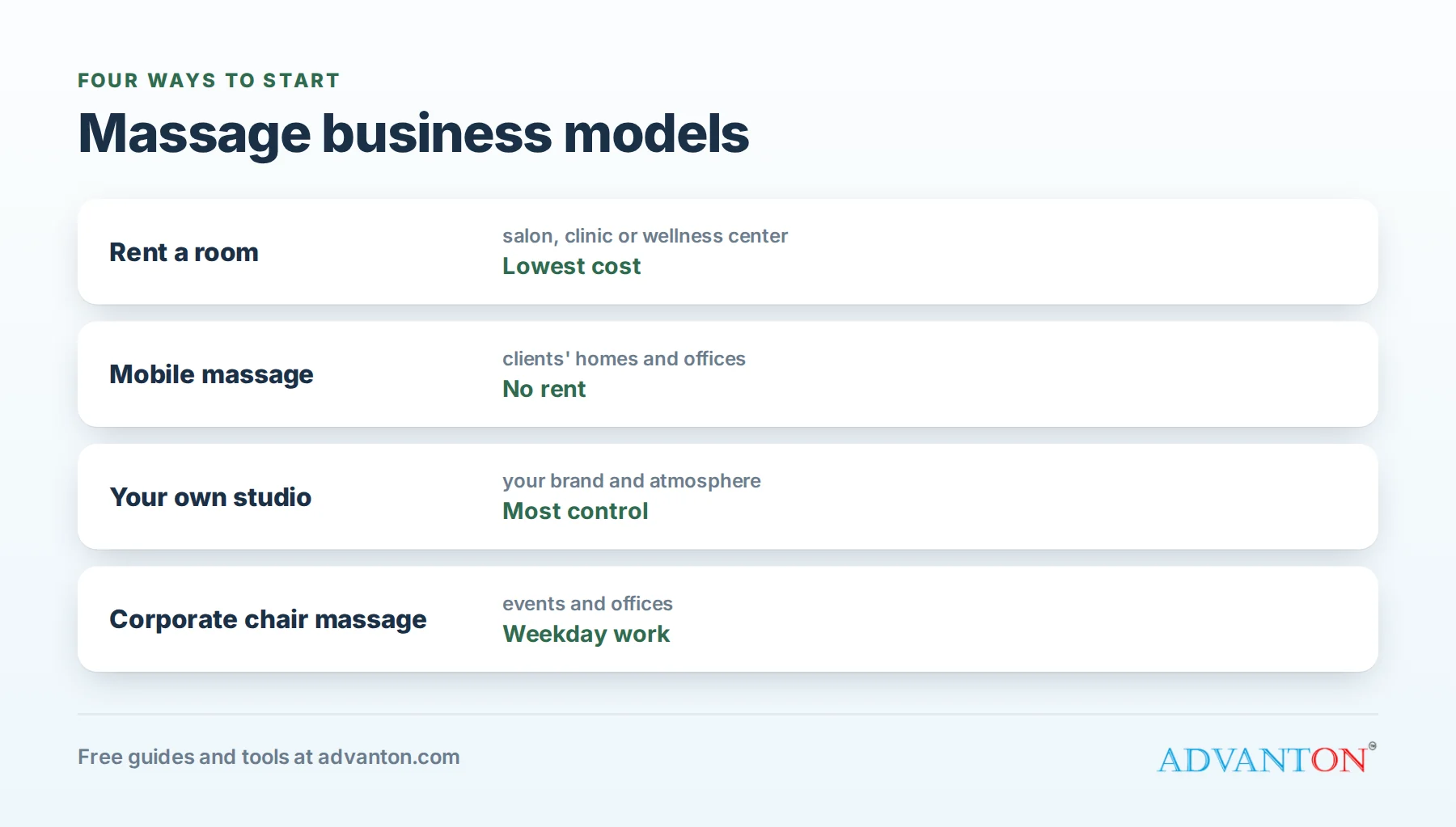
Choose your business model
| Model | Pros | Cons |
|---|---|---|
| Rent a room in a salon, clinic or wellness center | Low cost, built-in traffic | Less control over space |
| Your own studio | Your brand and atmosphere | Higher rent and setup |
| Mobile massage | No rent, premium pricing | Travel time, equipment hauling |
| Corporate chair massage | Group bookings, weekday work | Event-based scheduling |
| Combine | Multiple income streams | More to manage |
Many therapists start with room rental or mobile work, then open a studio once their client base is established.
Choose a specialty
Specialties help you stand out and charge more: sports and recovery massage for athletes, prenatal massage, massage for older adults, myofascial and trigger point work, or lymphatic techniques where you’re trained. Take recognized continuing education, and build referral relationships with providers who serve the same clients.
Insurance
Get professional and general liability insurance, often available affordably through professional associations, plus property coverage for equipment and a studio. If you rent, your landlord may require proof of coverage.
Setting up your space
- A quality table (portable for mobile work), face cradle and bolsters.
- Linens, oils, lotions and a laundry plan.
- Calming lighting, music and temperature control.
- Hygiene supplies and a cleaning routine between clients.
- Secure storage for intake forms.
Pricing, packages and memberships
- Session prices by length (60, 90 minutes) and type (relaxation, deep tissue, prenatal, sports).
- Packages of several sessions at a small discount.
- Memberships: a monthly fee including one session, with discounts on extras, which create predictable income.
- Add-ons: hot stones, aromatherapy, extended time.
- Gift certificates for holidays; our Brand & Print Studio makes them.
Research local prices and use our pricing calculator to cover rent, laundry, travel and your time between sessions.
An example price list
| Service | Example price |
|---|---|
| 60-minute massage | $95 |
| 90-minute massage | $135 |
| Prenatal massage, 60 minutes | $100 |
| Add-on: hot stones or aromatherapy | $15 |
| Monthly membership (one 60-minute session) | $79 |
| Package of five 60-minute sessions | $450 |
These prices are illustrative; research your local market.
A worked example: a solo therapist renting a room
These figures are illustrative.
| Revenue | Amount |
|---|---|
| 80 sessions × $95 | $7,600 |
| Costs | Amount |
|---|---|
| Room rent | $900 |
| Linens, oils and laundry | $250 |
| Booking software | $60 |
| Liability insurance | $30 |
| Marketing | $200 |
| Continuing education | $50 |
| Card processing (about 3%) | $228 |
| Total costs | $1,718 |
Profit before taxes: $5,882, plus any tips. Massage is physically demanding, so plan a sustainable number of sessions per week rather than maximum bookings.
Loading the calculator…
Intake, safety and boundaries
- Health intake forms before the first session, updated regularly, covering conditions, medications and areas to avoid.
- Know contraindications and when to recommend medical advice.
- Clear professional boundaries and draping policies.
- Consent and communication throughout the session.
- A written policy for inappropriate client behavior, including ending the session.
An example cancellation policy
"Please give at least 24 hours’ notice to cancel or reschedule. Late cancellations and no-shows are charged 50% of the session fee. Membership sessions missed without notice are counted as used."
Share it at booking, show it in reminders, and apply it consistently and kindly.
Session notes
Brief session notes, often in a SOAP format (subjective, objective, assessment, plan), record what the client reported, what you did, how they responded and what to do next time. Good notes improve care, help with referrals from healthcare providers, and protect you if questions arise. Store them securely.
Corporate chair massage
Offices, conferences and wellness fairs book chair massage for employees, usually priced by the hour or event. It’s a great way to fill weekday slots and meet new clients who later book full sessions. Bring a portable chair, sanitizing supplies and booking cards.
Booking and rebooking
Online booking with automatic reminders reduces no-shows. Rebook clients before they leave, offer standing appointments, and send a friendly reminder when it’s time for their next visit. A full calendar of regulars is the foundation of a stable massage business.
Keep your regulars
Remember clients’ preferences (pressure, areas of focus, music, room temperature), follow up after first sessions, and suggest a rebooking schedule that fits their goals. Small touches, such as a birthday discount or a loyalty card from our free rewards program, turn occasional clients into monthly regulars.
Working with healthcare providers
Building trust with chiropractors, physical therapists and physicians brings referrals for clients recovering from injuries or managing pain. Communicate professionally, stay within your scope of practice, and send brief updates when clients ask you to. Some massage for injuries may be covered by certain insurance or claims; check requirements before billing.
Finding clients
- Google Business Profile and reviews.
- Referrals from chiropractors, physical therapists, personal trainers and doctors.
- Gyms, running clubs and sports teams.
- Corporate wellness events.
- Local social media, with helpful content about recovery and stress relief.
- A simple website with services, prices and booking.
Protect your body
Massage therapy careers can be cut short by injury. Use good body mechanics, adjust table height for each client, vary techniques, schedule breaks between sessions, limit deep tissue work per day, and build strength and flexibility. Your hands are your business.
Taxes and records
Self-employed therapists pay self-employment tax and usually make quarterly estimated payments. Keep records of income, tips, rent, supplies, laundry, continuing education, insurance and mileage for mobile work; our free mileage log helps.
Mobile massage safety
When you visit clients’ homes, screen new clients by phone, confirm bookings through a business number, share your schedule and locations with someone you trust, and trust your instincts: you can end any session that feels unsafe. Carry your table and supplies safely, too, using a cart and good lifting form.
Gift certificates for the holidays
Gift certificates are some of the easiest sales of the year, especially in December and around Mother’s Day and Valentine’s Day. Offer them online and in person, promote them early, and track redemptions carefully. Many recipients become regular clients.
Common mistakes to avoid
- Working without the required license.
- Overbooking and risking injury and burnout.
- No cancellation policy.
- Weak intake records.
- Relying only on discount sites that attract one-time bargain hunters.
Your first 90 days
- Days 1 to 30: confirm licensing and permits, get insured, and choose your model and space.
- Days 31 to 60: set prices, packages and policies, launch booking and your Google Business Profile.
- Days 61 to 90: build referral partnerships, launch memberships and rebook every client.
Frequently asked questions
Do I need a license to offer massage?
Most states require a massage therapy license. Check your state board and local rules.
Can I work from home?
Often, with zoning approval and any required permits. Consider privacy, parking and safety.
How many massages can I do a day?
It varies by therapist and session type; many limit themselves to protect their bodies and the quality of their work.
Are memberships worth offering?
Yes. They create steady monthly income and encourage regular visits.
How much can a massage therapist earn on their own?
It depends on your prices, location, sessions per week and costs. A full book of regular clients makes the biggest difference.
Can massage therapists bill insurance?
Sometimes, for specific situations such as certain injury claims, with documentation and referrals. Most massage businesses are primarily cash-pay.
Should I join a spa or start my own business?
Working for a spa provides steady clients while you build skills. Your own business offers more control and higher earnings per session, with more responsibility. Many therapists combine both while building their own client list. When your own bookings regularly fill most of your available hours, it’s usually time to go fully independent and focus on your own regulars. Give your employer proper notice and leave on good terms; follow any agreements you signed about clients and contacting them after you leave.
Keep learning
- How to start a meditation and mindfulness studio
- How to start a chiropractic practice
- Rewards program: free stamp cards
Sources
Last reviewed October 28, 2026. Startup costs are estimates; check local prices, licensing and tax rules before you commit money.
This article is general information, not financial, legal or tax advice. Check the rules that apply to you or talk to a qualified professional before making decisions. See our disclaimer.
Leave a Reply