
Storms, fires, burst pipes and water damage create large, urgent projects, and most of them are paid for through homeowners insurance. For roofers, restoration companies, remodelers, plumbers and many other trades, insurance work can be a major source of revenue. It can also be risky: claims rules are complex, payments can be slow, and a few bad actors have given storm work a poor reputation.
This guide explains how insurance restoration work generally functions, what contractors can and cannot do, and how to build an ethical, sustainable business around it. Rules vary by state, so check your state’s laws and talk with an attorney or your insurance professional where needed.
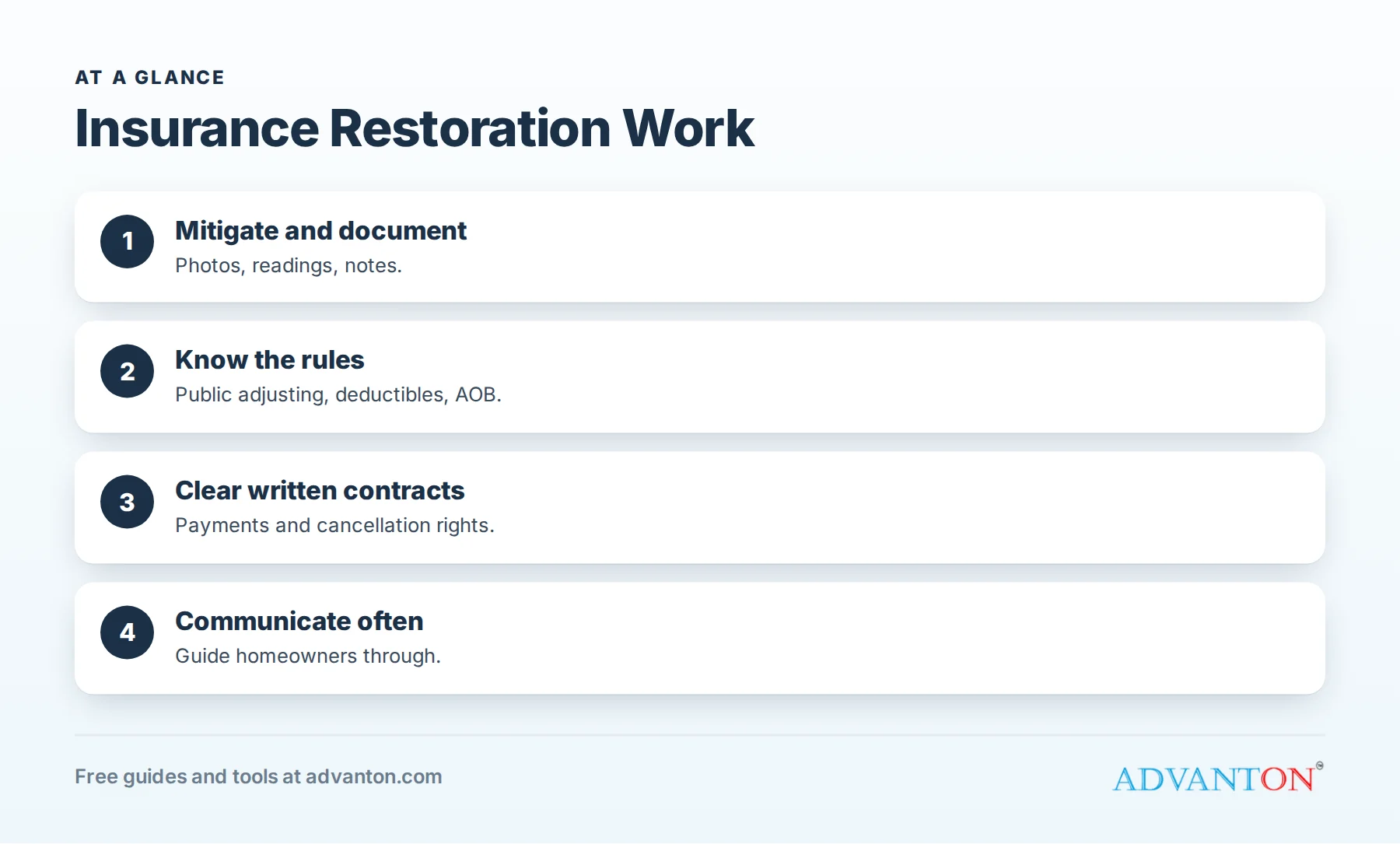
How the claims process generally works
Table of Contents
| Step | Who’s involved | Contractor’s role |
|---|---|---|
| 1. Damage occurs | Homeowner | Emergency mitigation if needed (tarping, water extraction) |
| 2. Claim filed | Homeowner and insurer | Advise homeowners to contact their insurer; don’t file for them unless permitted |
| 3. Inspection | Insurance adjuster | Provide documentation if the homeowner requests it |
| 4. Estimate and scope | Adjuster, homeowner | Provide a detailed estimate of repairs |
| 5. Approval and payment | Insurer, homeowner (and often mortgage lender) | Agree on payment schedule with the homeowner |
| 6. Repairs | Contractor | Complete work to code, document everything |
| 7. Final payment | Insurer, homeowner | Provide completion documentation |
What contractors should and shouldn’t do
- Do help homeowners understand damage with honest photo documentation.
- Do provide detailed, accurate estimates and attend adjuster inspections when the homeowner asks.
- Don’t negotiate the claim on the homeowner’s behalf unless you’re licensed to do so. In many states, only licensed public adjusters (or attorneys) may negotiate claims for homeowners.
- Don’t offer to waive or cover deductibles. Many states prohibit it, and it can amount to insurance fraud.
- Don’t exaggerate damage or create damage. It’s fraud, and it destroys reputations.
Assignment of benefits
Some contractors have used "assignment of benefits" agreements, in which homeowners transfer insurance claim rights to the contractor. Several states have restricted these agreements; Florida, for example, prohibits assignment of benefits for residential property insurance policies issued on or after January 1, 2023. Check your state’s current rules before using any such agreement, and explain all paperwork clearly to homeowners.
Documentation is everything
- Photos and video of damage before any work, with dates.
- Moisture readings for water damage.
- Measurements and detailed scope notes.
- Emergency mitigation records, including equipment logs.
- Completion photos and permits.
Good documentation speeds approvals, supports supplements for hidden damage and protects you in disputes.
Estimating
Insurers and adjusters commonly use specialized estimating software and pricing databases. Learn how adjusters build estimates, itemize your own estimates clearly, and document any additional damage discovered during repairs for supplemental requests through the homeowner.
Certifications that build trust
Water and fire restoration companies often hold certifications from the Institute of Inspection, Cleaning and Restoration Certification (IICRC), which sets industry standards for water damage restoration, mold remediation and related work. Manufacturer certifications help roofers and other trades. Certifications reassure homeowners and adjusters.
Cash flow realities
Insurance payments can take time, and checks are often made out to both the homeowner and the mortgage lender, requiring endorsements. Agree on a payment schedule in writing with the homeowner, collect deposits where permitted, and plan working capital for materials and labor while claims are processed.
Avoid storm-chasing tactics
After major storms, out-of-area crews often go door to door with pressure tactics. Many states have rules for contractors soliciting after disasters, and homeowners are increasingly wary. Local contractors win by being honest, licensed, responsive and still around to honor warranties.
Building referral relationships
- Insurance agents whose clients need reliable contractors after losses.
- Property managers with buildings that suffer damage.
- Plumbers who find water damage behind walls.
- Restoration companies that need rebuild partners (for remodelers and general contractors).
Earn referrals by communicating clearly, documenting well and treating homeowners fairly. Don’t offer payments for referrals where state rules prohibit them.
Trades involved in restoration
| Trade | Typical restoration work |
|---|---|
| Water and fire restoration | Mitigation, drying, cleaning, mold remediation |
| Roofing | Storm damage repairs and replacements |
| General contractors and remodelers | Rebuilds after water or fire damage |
| Plumbing | Leak sources and pipe repairs |
| Painting, flooring, drywall | Interior repairs |
A worked example
After a hailstorm, a local roofer receives 40 inspection requests. It documents damage honestly with photos, tells 12 homeowners their roofs don’t need replacement, and helps 22 others understand their damage before they file claims. Over the next three months, 16 approved projects proceed, with payment schedules agreed in writing. The honest "no" answers bring several referrals from grateful homeowners. These numbers are illustrative.
Emergency mitigation first
After water or storm damage, the first priority is preventing further damage: stopping leaks, tarping roofs, extracting water and drying structures. Most insurance policies expect homeowners to take reasonable steps to prevent additional damage. Contractors who respond quickly, document mitigation carefully and explain the next steps calmly earn trust when homeowners are most stressed.
Written contracts for insurance work
Use clear written contracts that describe the scope, payment schedule, how insurance payments will be handled, what happens if the claim is denied or reduced, and cancellation rights required by your state. Many states give homeowners a right to cancel certain contracts within a few days, especially after disasters or door-to-door sales. Have an attorney review your template.
Handling insurance checks
Payments are often issued to both the homeowner and the mortgage lender, and lenders may release funds in stages after inspections. Explain this process to homeowners early, help them with paperwork, and build realistic timelines into your schedule.
Supplements for hidden damage
Hidden damage often appears once work begins: rotted decking under shingles or wet framing behind drywall. Document it immediately with photos and measurements, inform the homeowner, and provide supplemental estimates the homeowner can submit through their claim.
Keep homeowners informed
Claims are confusing and stressful. Regular updates (what’s approved, what’s pending, when work will start) reduce anxiety and complaints. Homeowners who feel guided through a hard time become loyal customers and strong referrers.
Rules after disasters
Some states and cities have special rules after declared disasters, such as registration for contractors soliciting work, limits on door-to-door sales and price-gouging laws. Check local requirements before working in affected areas.
Insurance work and your reputation
Restoration work puts you in homes at difficult moments. Clear communication, honest assessments, clean job sites and fair pricing turn insurance customers into lifelong clients and enthusiastic referrers. The opposite (pressure, exaggeration and poor communication) leads to complaints that follow a business for years. Ask every satisfied restoration customer for a review once their home is back to normal.
Train your team on the rules
Everyone who talks to homeowners, including sales staff, estimators and project managers, should know what they can and cannot say about claims, deductibles and coverage. A short written policy and regular reminders protect your company from well-meaning mistakes.
Know what insurance typically doesn’t cover
Many homeowner policies exclude or limit certain types of damage, such as long-term leaks, wear and tear, or flooding without separate flood insurance. Don’t promise coverage; encourage homeowners to read their policy and ask their insurer. When a claim is denied, offering clear repair options at fair prices keeps you in the picture.
Common mistakes
- Negotiating claims without a license.
- Waiving deductibles.
- Weak documentation.
- Underestimating cash flow needs.
- High-pressure storm sales.
Frequently asked questions
Can contractors talk to insurance adjusters?
Contractors commonly meet adjusters to explain damage and estimates when homeowners request it, but in many states only licensed public adjusters or attorneys may negotiate claims for homeowners.
Can a contractor pay a homeowner’s deductible?
Many states prohibit waiving or covering deductibles, and it may be considered insurance fraud.
What is assignment of benefits?
An agreement transferring claim rights to a contractor; several states restrict it, including Florida for residential policies issued from January 2023.
How long do insurance payments take?
It varies; plan cash flow and agree payment schedules in writing with homeowners.
Do restoration contractors need certification?
Requirements vary, but certifications such as IICRC for water and fire restoration build trust.
Should I become a licensed public adjuster?
Some contractors consider it, but many states restrict holding both roles on the same claim; check your state’s rules before pursuing it.
Do I need special insurance to do restoration work?
Talk to your insurance professional; restoration work may require specific coverage, such as pollution liability for mold remediation.
How do I find restoration work without storm chasing?
Build relationships with insurance agents, property managers and plumbers, and be the trusted local contractor homeowners call first.
How Advanton helps
Advanton is a free resource for small businesses. Free tools that help: the quote and invoice generator, the Cash & Payroll Planner for cash flow and the lead source tracker. See our mold and asbestos remediation industry data and insurance agencies industry data. You can also add your business to the Advanton directory for free. Advanton earns money when you buy a domain or hosting through our store, which helps keep everything else free.
Keep learning
- How to get more roofing leads
- Google Local Services Ads for roofers
- General contractors industry data
Last reviewed October 30, 2026. Startup costs are estimates; check local prices, licensing and tax rules before you commit money.


Leave a Reply