
A pop-up restaurant serves food for a limited time in a borrowed or temporary space: ticketed dinners in event venues, takeovers of restaurant kitchens on closed nights, brewery and winery collaborations, farmers market stalls and seasonal residencies. Chefs use pop-ups to test concepts, build a following and earn income without the cost of a permanent restaurant.
Pop-ups are flexible but still regulated: food must be prepared in licensed kitchens, many cities require temporary food establishment permits for events and alcohol sales need licensed partners or special event permits. The Bureau of Labor Statistics reports a median pay of $65,310 for food service managers (May 2024), with about 352,800 jobs and employment projected to grow about 6%, and $35,760 for cooks. This guide covers concepts, venues, permits, alcohol, pricing, marketing, a worked example and a 90-day plan.
A pop-up restaurant at a glance
Table of Contents
| Topic | What to expect |
|---|---|
| Startup cost | Low: kitchen rental, permits, ingredients, small equipment, serviceware, insurance and marketing |
| Key rules | Licensed kitchens, temporary food permits for events, food manager certification and FDA Food Code practices |
| Alcohol | Partner with licensed venues or obtain special event permits; BYOB rules vary |
| How you earn | Ticketed dinners, a la carte sales, collaborations and catering opportunities |
| Best for | Creative chefs who want to test concepts and build an audience before a permanent restaurant |
Who pop-ups suit
They suit creative chefs and food entrepreneurs who enjoy events, can organize logistics and want to test ideas with real customers. Pop-ups demand flexibility: every venue and event is different.
Pop-up formats
- Ticketed tasting dinners with set menus.
- Restaurant takeovers on nights a restaurant is closed.
- Brewery, winery and coffee shop collaborations.
- Market stalls and food festivals.
- Seasonal residencies in an existing space.
- Supper clubs in event venues, following local rules.
Licensed kitchens and permits
Every food business needs the right health permits, food handler and manager certification (often ServSafe or similar) and practices based on the FDA Food Code adopted by your state: temperature control, cross-contamination prevention, handwashing and cleaning. Disclose major allergens (including sesame) accurately, especially on delivery menus.
Food must be prepared in a licensed kitchen, such as a commissary or a partner restaurant’s kitchen. Many cities require temporary food establishment permits for events and markets, with inspection and setup requirements such as handwashing stations and temperature control. Hosting paid dinners in private homes is often prohibited, so check local rules.
Alcohol rules
Selling or serving alcohol requires proper licenses. The simplest approach is partnering with a licensed venue such as a restaurant, brewery or winery that sells drinks under its license. Some states allow special event or temporary permits, often for nonprofits or licensed businesses, and BYOB rules vary widely. Never include alcohol in ticket prices without a license.
Venues and partnerships
Restaurants closed on certain nights, breweries without kitchens, event spaces and galleries often welcome pop-ups. Agree in writing on fees or revenue shares, kitchen use, cleaning, insurance, alcohol responsibilities and promotion.
Insurance
Carry general liability and product liability insurance for events, and name venues as additional insureds when required. Liquor liability is typically handled by the licensed venue.
Startup costs to plan for
| Item | What to budget for |
|---|---|
| Kitchen rental | Commissary or partner kitchen time |
| Permits | Temporary food permits, business license |
| Ingredients | Food for each event |
| Equipment and serviceware | Rentals, transport containers, plates |
| Insurance | Event liability coverage |
| Marketing | Photos, social media, ticketing platform |
Use our startup cost calculator for your total.
Pricing
Price ticketed dinners to cover food, venue and kitchen fees, staff, rentals, ticketing fees, permits and profit, with food cost targeted at a reasonable share of the ticket price. A la carte pop-ups price items individually. Use our pricing calculator.
A worked example: four ticketed dinners
These are illustrative assumptions for a chef running four ticketed dinners in a month, not predictions.
| Assumption | Monthly | |
|---|---|---|
| Ticketed dinners | 4 dinners, 40 guests at $95 | $15,200 |
| Drink pairings and add-ons | Through licensed venue partners, chef’s share | $1,200 |
| Revenue | $16,400 | |
| Food costs | About 30% of ticket sales | $(4,560) |
| Venue and kitchen fees | $(2,400) | |
| Staff | Cooks and servers, with payroll costs | $(3,200) |
| Rentals and serviceware | $(600) | |
| Ticketing fees, permits and insurance | $(900) | |
| Marketing and photography | $(500) | |
| Profit before owner pay and taxes | $4,240 |
That leaves about $4,240 for the month before the chef’s pay and taxes, on about $16,400 of revenue. Pop-ups are often a step toward catering, a residency or a permanent restaurant.
Loading the calculator…
Building an audience
Use social media, an email list, food writers and collaborations with venues and other chefs. Selling tickets in advance reduces waste and risk. Collect guest emails at every event to build a loyal following.
From pop-up to permanent
Successful pop-ups often lead to catering contracts, residencies, food trucks or permanent restaurants. Track which dishes and concepts sell, and use that data in a business plan for investors or lenders. Our business planner can help.
Menus for temporary kitchens
Pop-up kitchens may have limited equipment, space and refrigeration. Design menus around what you can prepare in advance in a licensed kitchen and finish on site safely, with a manageable number of courses and plating steps.
Ticketing and reservations
Ticketing platforms handle payments, seating and guest communication, and advance sales reduce food waste. Set clear refund and dietary request policies, and ask about allergies when guests book.
Guest experience
Pop-ups sell experiences: introduce the chef, explain dishes, create atmosphere with music and lighting and share the story behind the concept. Memorable experiences turn guests into regulars who follow future events.
Collaborations
Collaborating with other chefs, breweries, farms, artists and cultural organizations attracts each partner’s audience and creates unique events. Share responsibilities and revenue clearly in writing.
Logistics
Plan transport of food in temperature-controlled containers, setup and breakdown time, rentals, staffing, cleaning and waste disposal. A detailed run-of-show checklist keeps events smooth.
Residencies
A residency is a recurring pop-up in the same venue, such as weekly nights at a brewery or a seasonal run in a cafe. Residencies build regular customers and steadier income while testing a location before committing to a lease.
Pricing tests
Pop-ups are ideal for testing prices, menu items and formats. Track sellout speed, guest feedback and food costs to learn what customers value before investing in a permanent restaurant.
Staffing events
Pop-ups need cooks, servers and dishwashers for a few hours at a time. Build a reliable team of freelance or part-time staff, brief them before each event and pay fairly and on time, following employment laws for wages and classification.
Market stalls and festivals
Food festivals and markets bring large crowds but require temporary permits, booth setups that meet health rules and menus designed for speed. They are a good way to reach new customers and test street-food concepts.
Common mistakes to avoid
- Cooking in unlicensed kitchens.
- Serving alcohol without a licensed partner or permit.
- Underpricing tickets.
- Unclear venue agreements.
- Overcomplicated menus for temporary kitchens.
Your first 90 days
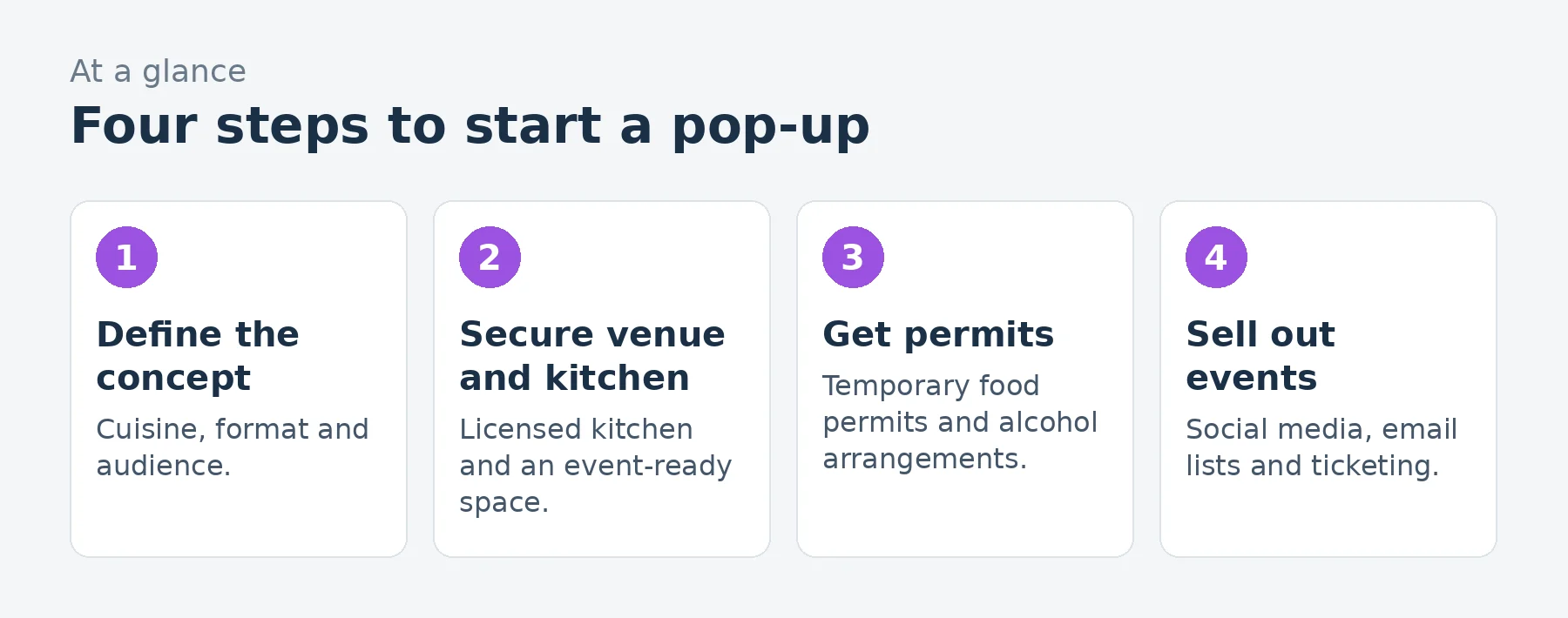
- Days 1-30: define the concept, find a licensed kitchen and venue partner and check permit rules.
- Days 31-60: get permits and insurance, test the menu and launch ticket sales.
- Days 61-90: host the first pop-ups, collect feedback and emails and plan the next series.
Frequently asked questions
Do pop-up restaurants need permits?
Usually yes, including food permits for licensed kitchens and temporary food establishment permits for events.
Can I host a pop-up dinner in my home?
Paid dinners in private homes are often prohibited; check local health rules.
Can pop-ups serve alcohol?
Through licensed venue partners or special event permits where allowed; BYOB rules vary.
How do pop-up restaurants make money?
Through ticketed dinners, a la carte sales, collaborations and catering opportunities.
Where can I host a pop-up?
Restaurants on closed nights, breweries, wineries, event spaces and markets.
Are pop-ups a good way to test a restaurant idea?
Yes. They let chefs test concepts and build an audience with lower risk.
How much should pop-up dinner tickets cost?
Enough to cover food, venue, staff, rentals and fees with profit, based on your concept and local market.
Do I need insurance for a pop-up?
Yes, event liability insurance is usually required by venues and protects your business.
How do I find a venue for a pop-up?
Approach restaurants closed on certain nights, breweries without kitchens, wineries, cafes and event spaces with a clear proposal.
Can pop-ups lead to a permanent restaurant?
Yes. Many chefs use pop-ups to build an audience and prove demand to investors and lenders.
What food permits do pop-ups need?
Typically permits tied to a licensed kitchen and, for events, temporary food establishment permits.
How far in advance should I plan a pop-up?
Often several weeks, to secure the venue, permits, staff and ticket sales.
Do pop-ups need a business license?
Usually yes, along with food permits and any event permits your city requires.
How many guests should a pop-up dinner have?
It depends on the venue and kitchen; many start with small seatings that the team can serve well.
Keep learning
- Restaurants and food service industry data
- How to start a ghost kitchen brand
- How to start a catering business
- Business Planner
Sources
- FDA, Food Code
- FDA, Food allergies and allergen labeling (including sesame)
- National Restaurant Association, Food safety resources (ServSafe)
- TTB and state alcohol regulators, Alcohol licensing overview
- US Bureau of Labor Statistics, Food service managers
- US Small Business Administration, Apply for licenses and permits
Last reviewed November 3, 2026. Startup costs are estimates; check local prices, licensing and tax rules before you commit money.

