
Float spas offer sessions in float tanks, pods or open rooms filled with warm water and about a thousand pounds of Epsom salt, so clients float effortlessly in quiet and darkness. Customers come for relaxation, stress relief, sore muscles after workouts and simply time away from screens. Many float centers add infrared saunas, cold plunges and massage.
The business depends on water quality and hygiene, reliable equipment and a calm experience. Rules vary: some health departments regulate float tanks under pool and spa codes, others have specific float rules and some have none. Building and plumbing work is significant, and marketing must avoid unsupported medical claims.
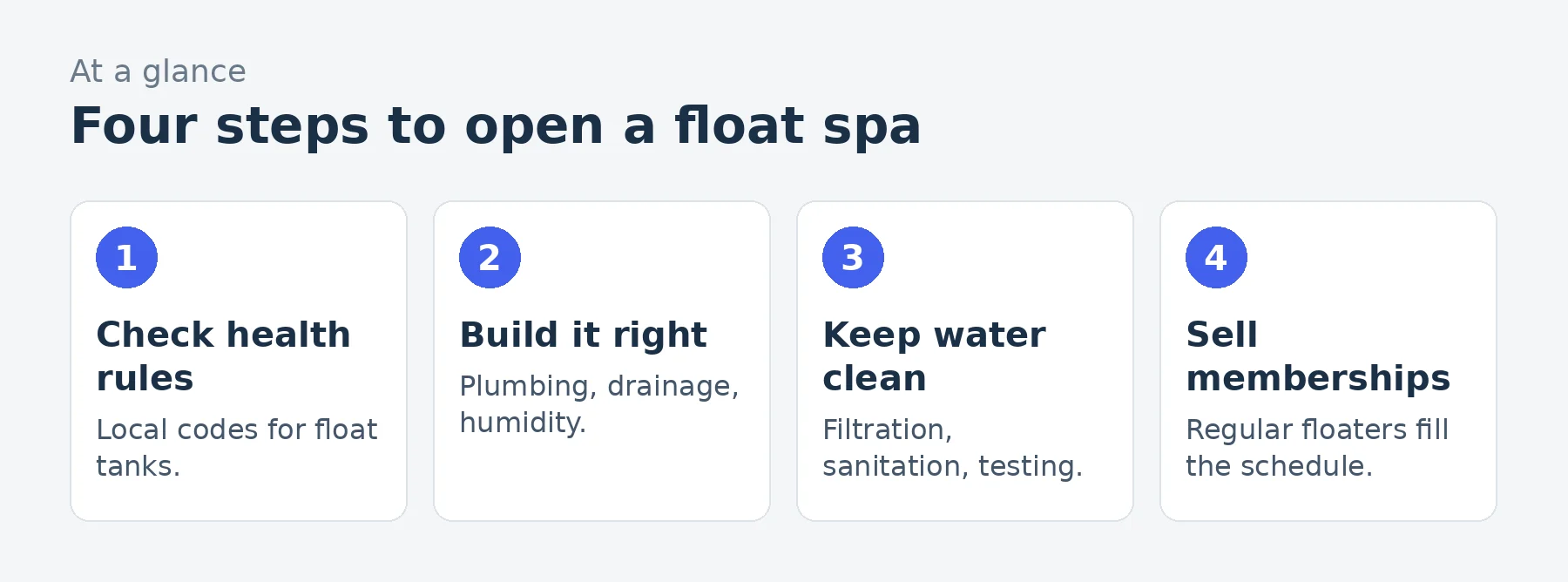
A float spa at a glance
Table of Contents
| Topic | What to expect |
|---|---|
| Startup cost | High: float tanks or rooms, build-out with plumbing and humidity control, showers, filtration and salt |
| Key rules | Local health department and pool code rules where they apply, building and plumbing permits, honest health claims |
| Revenue model | Single sessions, packages and monthly memberships, plus add-on services |
| How you earn | Float sessions, memberships, sauna and cold plunge, massage and retail |
| Best for | Calm, detail-oriented operators who keep facilities spotless |
Who a float spa suits
It suits people who value calm, cleanliness and customer care, and who are comfortable with equipment maintenance and water chemistry. Every session needs a spotless room, fresh towels and filtered water, so operations and staffing matter as much as the concept.
Types of float equipment
- Float pods: enclosed shells with lids; compact and popular.
- Float cabins: larger, walk-in tanks with more headroom.
- Open float rooms: pools in private rooms, good for people who feel claustrophobic.
- Filtration and heating systems that keep water and air at body temperature.
Each type has different space, plumbing and cost needs, and reliable manufacturers offer training and support.
Health department rules
Rules differ by state and city. Some health departments regulate float tanks like public pools and spas, with permits, water testing logs, operator training and inspections. Some have specific float tank rules, and some don’t regulate them at all. The CDC’s Model Aquatic Health Code is a useful reference for water quality concepts. Ask your local health department early, before you buy equipment.
Water treatment and hygiene
Float solution is extremely salty, which limits many germs, but it isn’t sterile. Most systems filter the full volume of water between every session and use UV light, ozone or hydrogen peroxide to sanitize, with regular testing of sanitizer levels, pH and specific gravity. Require clients to shower before and after floating, change filters on schedule and keep detailed water logs.
Building, plumbing and humidity
Float rooms need strong floors (tanks are heavy), floor drains, showers, salt-resistant materials, ventilation and humidity control, because salt and moisture damage buildings and equipment. Expect building and plumbing permits and a contractor experienced with float centers. Plan for salt disposal and check local wastewater rules.
Client screening
Ask clients about health conditions before their first float. Common reasons to wait or skip include open cuts or recent tattoos, skin infections, uncontrolled epilepsy, some heart conditions, being under the influence of alcohol or drugs and incontinence. Pregnant clients should check with their doctor. Use a waiver and intake form, and train staff to explain everything calmly.
Avoiding medical claims
Many floaters say they feel relaxed and sleep better, but claims that floating treats anxiety, PTSD, chronic pain or other conditions need solid scientific evidence under FTC rules. Describe the experience and what customers tell you, and avoid promising medical results.
Pricing and memberships
Price single floats, introductory offers, packages and monthly memberships with discounted sessions. Memberships build regular customers; if they renew automatically, follow auto-renewal rules with clear terms and easy cancellation. Use our pricing calculator.
Startup costs to plan for
| Item | What to budget for |
|---|---|
| Float equipment | Pods, cabins or rooms with filtration |
| Build-out | Showers, drains, floors, ventilation, humidity control |
| Permits | Building, plumbing and health permits |
| Supplies | Epsom salt, filters, sanitizers, towels |
| Add-ons | Infrared sauna, cold plunge, relaxation lounge |
| Insurance | General and professional liability, property |
Use our startup cost calculator for your total.
A worked example: a four-tank float spa
These are illustrative assumptions for a float spa with four tanks and an infrared sauna, not predictions.
| Assumption | Monthly | |
|---|---|---|
| Float sessions | 520 sessions at $59 | $30,680 |
| Memberships | $6,800 | |
| Infrared sauna and add-ons | $3,200 | |
| Retail | $600 | |
| Revenue | $41,280 | |
| Staff wages | With payroll costs | $(9,800) |
| Rent and utilities | $(7,500) | |
| Salt, filters and sanitation supplies | $(1,400) | |
| Laundry and cleaning | $(900) | |
| Equipment loan payments and maintenance | $(3,800) | |
| Insurance | $(600) | |
| Booking software and card fees | $(1,300) | |
| Marketing | $(1,800) | |
| Profit before owner pay and taxes | $14,180 |
That leaves about $14,180 a month before the owner’s pay and taxes, on about $41,280 of revenue. Members who float monthly are the base of the business, because each tank can only run a limited number of sessions a day.
Loading the calculator…
Adding services
Infrared saunas, cold plunges and compression therapy are popular add-ons that use less space than tanks. Massage must be performed by licensed massage therapists in most states, often requiring a massage establishment license. Each service adds safety rules, so train staff and follow manufacturers’ guidance.
Accessibility
As a business open to the public, you must follow the Americans with Disabilities Act. Open float rooms and accessible showers can serve more clients, and staff should be ready to help people with mobility needs safely.
Operations and staffing
Schedule sessions with time between them for filtration and cleaning, often 30 minutes. Train staff to clean rooms thoroughly, test water, handle check-ins and help nervous first-time floaters. Equipment problems can cancel sessions, so keep spare parts and a maintenance schedule.
The first float experience
Many first-time floaters are nervous. Give a short orientation, explain earplugs, the light switch, neck pillows and how to get out, and reassure them they can leave the tank at any time. Leave time after the float for a shower, a quiet lounge and tea. A calm first visit turns guests into members.
Caring for salt and equipment
Keep specific gravity in the right range by adding salt as needed, replace filters on schedule, inspect heaters, pumps and lids and wipe down salt build-up daily. Salt is corrosive, so check hinges, fixtures and electrical areas regularly and fix problems before they cancel sessions.
The economics of tank time
Each tank can host only so many sessions a day, often six to eight with cleaning time. Track occupancy by tank and hour, fill quiet times with off-peak pricing and memberships, and decide how many tanks your market can keep busy before adding more.
Marketing
- Gyms, sports teams and runners for recovery.
- Introductory float offers and gift cards.
- Partnerships with chiropractors, massage therapists and yoga studios.
- Reviews describing the experience.
- Corporate wellness packages.
Building a community of regulars
Float spas grow through regulars. Offer member events, bring-a-friend days, packages for athletes and partnerships with local businesses, and ask for feedback after every float. Regular floaters often visit monthly for years, which steadies revenue.
Common mistakes to avoid
- Buying tanks before checking health and building rules.
- Poor humidity control that damages the building.
- Skipping water testing and filter changes.
- Claiming floating treats medical conditions.
- Too little time between sessions for cleaning.
Your first 90 days
- Days 1-30: check health department rules, choose equipment and find a suitable building.
- Days 31-60: complete build-out and permits, install tanks and train staff.
- Days 61-90: open with introductory offers, launch memberships and gather reviews.
Frequently asked questions
Are float tanks regulated?
It depends on your area; some health departments regulate them like pools and spas, others have specific rules or none.
How is float water kept clean?
With filtration between sessions, UV, ozone or hydrogen peroxide sanitation and regular testing.
How much Epsom salt is in a float tank?
Usually around 800 to 1,200 pounds, depending on the tank.
Can I claim floating treats anxiety?
Avoid medical claims unless backed by solid evidence; describe the experience instead.
Who shouldn’t float?
People with open wounds, skin infections, uncontrolled epilepsy or certain conditions should wait or check with a doctor.
How long is a float session?
Often 60 to 90 minutes.
Can I add massage?
Yes, with licensed massage therapists and any required establishment license.
How much does it cost to open a float spa?
It’s significant; tanks and build-out with plumbing and humidity control are the largest costs.
How many floats can a tank run each day?
Often six to eight, depending on session length, cleaning time and opening hours.
Do I need to change the water often?
Most systems filter and sanitize between floats; follow your manufacturer’s schedule for partial and full changes.
Is floating safe during pregnancy?
Many centers welcome pregnant floaters after the first trimester with a doctor’s approval; ask them to check first.
What should guests bring?
Nothing special; centers provide towels, earplugs and toiletries, and guests float without swimwear in private rooms.
Keep learning
- Wellness industry data
- How to start a massage therapy business
- How to start a yoga studio
- Pricing calculator
Sources
- CDC, Model Aquatic Health Code
- FTC, Health products compliance guidance
- FTC, Restore Online Shoppers' Confidence Act (ROSCA)
- ADA.gov, Title III regulations for public accommodations
- OSHA, Hazard Communication standard
- US Small Business Administration, Apply for licenses and permits
Last reviewed November 4, 2026. Startup costs are estimates; check local prices, licensing and tax rules before you commit money.

