
A food cart or kiosk sells a focused menu from a small footprint: coffee, hot dogs, tacos, juices, crepes, pretzels, ice cream or specialty snacks on sidewalks, in parks, at events and farmers markets, or from kiosks in malls, airports, office lobbies and stadiums. Startup costs are far lower than a restaurant or food truck.
Carts and kiosks are tightly regulated: cities require mobile food vendor permits and often limit where carts can operate, health departments approve equipment and menus and many require carts to operate from a licensed commissary for cleaning, supplies and storage. Carts using propane need fire safety compliance. The Bureau of Labor Statistics reports a median pay of $65,310 for food service managers (May 2024), with employment projected to grow about 6%, and $35,760 for cooks. This guide covers concepts, permits, commissaries, safety, locations, pricing, a worked example and a 90-day plan.
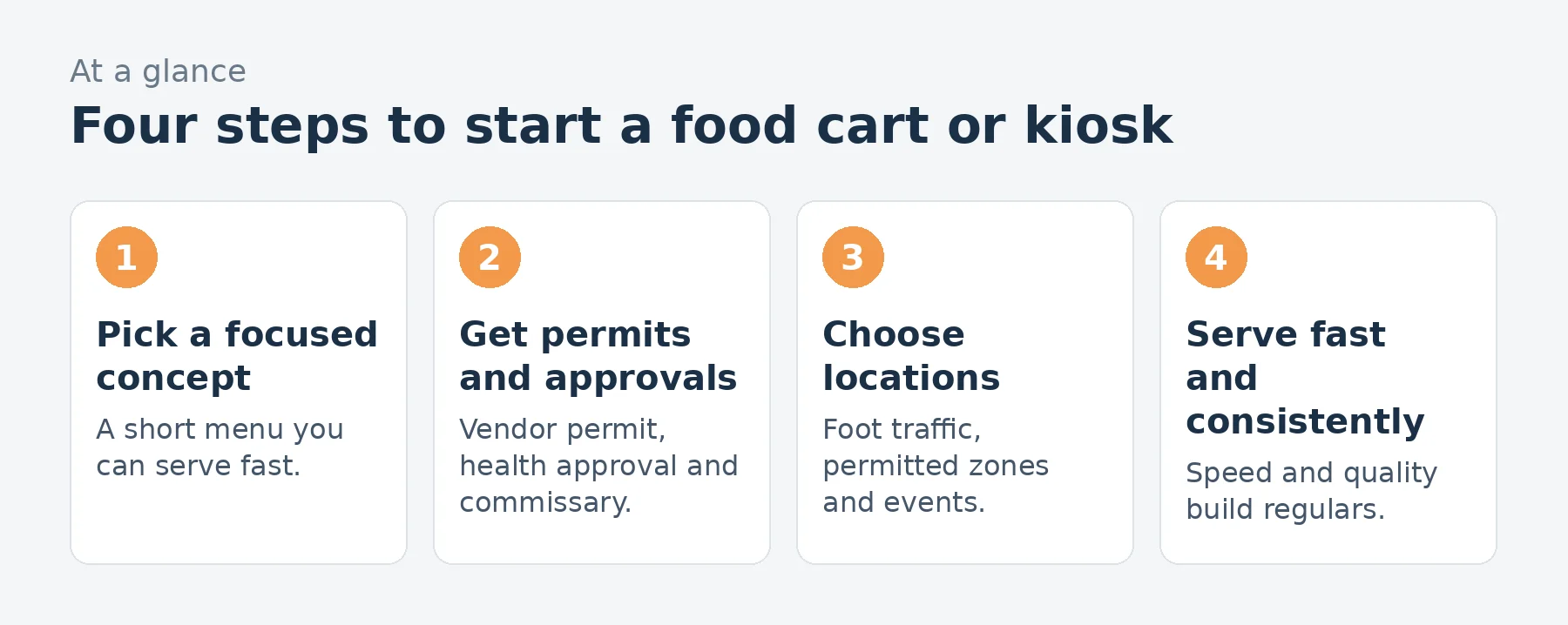
A food cart or kiosk at a glance
Table of Contents
| Topic | What to expect |
|---|---|
| Startup cost | Low to moderate: a health-approved cart or kiosk build, equipment, permits, initial inventory, payment system and insurance |
| Permits | City mobile vendor permits and location rules, health department plan review and permits, business license and sales tax permit |
| Commissary | Many health departments require carts to operate from a licensed commissary for prep, cleaning and storage |
| Safety | Propane safety and fire inspections, food temperature control and handwashing setups |
| Best for | Energetic operators with a focused menu and an eye for high-traffic locations |
Who a food cart suits
It suits energetic, organized people who enjoy serving customers, can work outdoors or in busy venues and keep menus simple. Early mornings, setup, cleanup and weather are part of the job.
Choosing a concept
The best cart concepts serve quickly, use limited equipment and travel well: coffee, hot dogs, tacos, empanadas, crepes, pretzels, juice and smoothies, shaved ice and desserts. Focus on a few items done extremely well, with a recognizable brand.
Permits and location rules
Cities issue mobile food vendor permits, sometimes with limited numbers or waiting lists, and set rules about where carts can operate (distance from restaurants, sidewalk width, parking zones and parks). Health departments typically review cart designs and menus, inspect carts and issue permits. Kiosks inside malls, airports and venues need landlord approval plus health permits.
Commissaries
Many health departments require carts to use a licensed commissary for food preparation, storage, water filling, wastewater disposal and cleaning. Commissaries charge monthly fees and may provide parking. Confirm which foods you may prepare on the cart and which must be prepared at the commissary.
Food safety
Every food business needs the right health permits, food handler or manager certification (often ServSafe or similar) and practices based on the FDA Food Code adopted by your state: temperature control, preventing cross-contamination, handwashing and cleaning. Disclose major allergens (including sesame) accurately.
Carts need handwashing setups, hot and cold holding equipment that keeps foods at safe temperatures and thermometers to check them.
Propane and fire safety
Carts using propane must follow fire codes based on NFPA 58, including secured cylinders, approved hoses and regulators, leak checks and fire extinguishers. Many fire departments inspect carts, especially for events. Never store propane cylinders in enclosed spaces.
Startup costs for a food cart or kiosk
| Item | What to budget for |
|---|---|
| Cart or kiosk | Health-approved cart or kiosk build |
| Equipment | Cooking, holding, refrigeration, handwashing |
| Permits | Vendor permit, health permit, fire inspection |
| Commissary | Monthly fee and deposit |
| Branding | Signage, menu boards, cart wrap |
| Payments and insurance | Card reader, liability insurance |
Use our startup cost calculator for your total.
Pricing
Price items to cover food costs (often targeted around a third of the price or less), commissary and permit fees, labor, card fees and profit. Combos and add-ons raise average tickets. Use our pricing calculator.
A worked example: a coffee and pastry cart
These are illustrative assumptions for a coffee and pastry cart at a busy location plus events, not predictions.
| Assumption | Monthly | |
|---|---|---|
| Daily location sales | 22 days averaging $480 | $10,560 |
| Events and catering | $2,400 | |
| Revenue | $12,960 | |
| Food and drink costs | About 30% of sales | $(3,900) |
| Helper wages | Part-time, with payroll costs | $(2,000) |
| Commissary rent | $(500) | |
| Permits, location fees and event fees | $(800) | |
| Card fees, insurance and supplies | $(600) | |
| Cart payment and maintenance | $(400) | |
| Profit before owner pay and taxes | $4,760 |
That leaves about $4,760 a month before the owner’s pay and taxes, on about $12,960 of revenue. Location is everything: the same cart can earn several times more in a high-traffic spot.
Loading the calculator…
Locations and events
- Permitted downtown and office areas at lunch.
- Farmers markets and festivals.
- Breweries, wineries and private events.
- Malls, airports and stadium kiosks with lease agreements.
- Corporate campuses and colleges.
Kiosk leases often include base rent plus percentage rent on sales, so model costs carefully.
Marketing
Post your location and hours daily on social media, build a loyalty program, offer catering for events and make the cart visually memorable. Regular locations and schedules build loyal customers.
Buying vs building a cart
Buying a cart from a builder who knows local health requirements is usually safer than building your own. Before buying, share plans with the health department, confirm sink, water and holding requirements and make sure the cart fits permitted locations and commissary parking.
Catering and private events
Weddings, corporate events, school functions and parties hire carts for a set fee or minimum spend. Private events bring predictable income and fill weekends, but require event permits, fire inspections and clear contracts.
Weather and seasonality
Outdoor carts depend on weather. Plan for rainy and cold days with canopies, heaters where allowed and indoor events, and adjust menus seasonally, such as hot drinks in winter and frozen treats in summer.
Growing to multiple carts
Successful operators add carts at new locations, events or kiosks, standardizing recipes, prep and training. Each cart needs its own permits, and commissary capacity must grow with you.
Kiosk leases
Mall, airport and stadium kiosks usually charge base rent plus a percentage of sales, with required hours and design standards. Negotiate terms carefully and project sales conservatively before signing.
Speed and workflow
Lines move customers away if service is slow. Design the cart layout for a smooth workflow, prep as much as allowed at the commissary, limit menu items and use card readers that process payments quickly.
Tracking sales by location
Record sales by location, day and time to learn which spots and events are worth your time. Drop weak locations, double down on strong ones and plan inventory accordingly.
Customer loyalty
Regular customers drive cart income. Offer punch cards or app rewards, learn regulars’ names and orders, keep consistent hours at regular locations and post schedule changes promptly.
Common mistakes to avoid when starting a food cart or kiosk
- Buying a cart the health department will not approve.
- Operating outside permitted zones.
- Skipping commissary requirements.
- Unsafe propane setups.
- Menus too large for a cart.
Your first 90 days as a food cart or kiosk owner
- Days 1-30: research vendor permits and health rules, choose a concept and find a commissary.
- Days 31-60: buy or build an approved cart, pass inspections and get permits and insurance.
- Days 61-90: launch at a strong location, add events and track sales by location and day.
Frequently asked questions about starting a food cart or kiosk
Do I need a permit for a food cart?
Yes. Cities usually require mobile vendor permits, and health departments require permits and inspections.
What is a commissary?
A licensed kitchen where carts prepare food, store supplies, fill water, dispose of wastewater and clean.
Where can food carts operate?
Only where city rules allow; many cities restrict locations near restaurants or in certain areas.
Do food carts need fire inspections?
Carts using propane often need fire inspections, especially for events.
How much does a food cart cost?
It depends on the build and equipment; health-approved carts and equipment are the main costs.
Is a kiosk different from a cart?
Kiosks usually operate in fixed indoor spaces like malls or airports under leases, while carts move between permitted locations.
Can I run a food cart from home?
Usually not; many health departments require carts to operate from a licensed commissary.
How much do food carts make?
It depends heavily on location, menu and hours; busy locations and events can make a large difference.
What sells best from a food cart?
Fast, focused items such as coffee, hot dogs, tacos, crepes, pretzels and frozen treats, depending on the location.
Do I need insurance for a food cart?
Yes, general and product liability insurance, which events and locations often require.
How do I choose a cart location?
Look for permitted zones with steady foot traffic, few nearby competitors and customers matching your menu.
Can food carts accept cards?
Yes, mobile card readers are standard and often increase sales.
Do I need a food handler certificate?
Usually yes; many health departments require food handler or manager certification for cart operators.
Can I sell at farmers markets with a cart?
Yes, with market approval and any temporary or mobile food permits your area requires.
Is a food cart cheaper than a food truck?
Usually yes; carts cost less to buy and operate, though they have smaller menus and capacity.
Keep learning
- Restaurants and food service industry data
- How to start a pop-up restaurant
- How to start a ghost kitchen brand
- Pricing calculator
Sources
- FDA, Food Code
- FDA, Food allergies and allergen labeling (including sesame)
- NFPA 58, Liquefied Petroleum Gas Code (propane safety)
- ServSafe, Food handler and manager certification
- US Bureau of Labor Statistics, Food service managers
- US Small Business Administration, Apply for licenses and permits
Last reviewed November 3, 2026. Startup costs are estimates; check local prices, licensing and tax rules before you commit money.

