
A personal shopper helps clients find clothing, gifts and products that suit their needs, style and budget: wardrobe edits, shopping trips, online and virtual styling, special event outfits, gift shopping and executive styling. Clients include busy professionals, people facing life changes (new jobs, weight changes, new cities), executives and anyone who dislikes shopping.
Personal shoppers earn from client fees and sometimes commissions or affiliate payments from retailers. If you are paid by retailers, honesty requires disclosure: the FTC’s endorsement guidance applies when material connections could affect recommendations. Advanton’s personal services data shows a median pay of $37,320 for concierges (May 2024), with about 45,600 jobs, and $35,110 across personal care and service occupations. Business owners serving affluent households, busy professionals and companies can earn more through higher rates and steady clients. This guide covers services, skills, retailer relationships, disclosure, payments, pricing, a worked example and a 90-day plan.
A personal shopper business at a glance
Table of Contents
| Topic | What to expect |
|---|---|
| Startup cost | Low: a website and portfolio, styling tools, insurance, scheduling and payment tools and marketing |
| Key rule | Disclose retailer commissions, affiliate links and other material connections to clients |
| Services | Wardrobe edits, shopping trips, virtual styling, event outfits, gifts and corporate styling |
| How you charge | Hourly rates, packages, flat fees for gifts and sometimes disclosed retailer commissions |
| Best for | Stylish, observant people who make clients feel confident and comfortable |
Who personal shopping suits
It suits people with strong style sense who can read clients’ needs, body shapes, lifestyles and budgets, and who make people feel confident rather than judged. Retail, fashion or image consulting experience helps.
Services to offer
- Wardrobe audits and closet edits: keep, tailor, donate and fill gaps.
- Shopping trips in stores, with pre-selected options.
- Online and virtual styling: curated links, video consultations and outfit boards.
- Event styling: weddings, interviews and special occasions.
- Gift shopping for individuals and companies.
- Executive and professional image styling.
- Seasonal refresh packages.
Choosing a niche
Niches might include professional women, menswear, plus-size styling, men and women starting new careers, older adults, budget-friendly styling, sustainable fashion or executive image. A niche makes your marketing clearer and helps you build retailer relationships that fit.
Retailer relationships
Many stores offer personal shopping programs, appointment services, discounts or commissions for stylists who bring clients. Build relationships with store managers and sales associates who can set aside items, arrange fitting rooms and handle returns smoothly.
Disclosing commissions and affiliate links
If retailers pay you commissions, give you free products or you earn through affiliate links, disclose this clearly to clients and in online content. Under FTC guidance, material connections that could affect recommendations should be disclosed. Many shoppers charge clients only their service fee and pass discounts to clients, which keeps recommendations unbiased.
Handling payments and returns
Agree on how purchases are paid: clients pay stores directly, or you buy with client approval and bill at cost with receipts. Keep receipts, track return deadlines and never add hidden markups. Confidentiality matters too: clients may share sizes, budgets and personal details.
Insurance and contracts
Carry general liability insurance, and consider professional liability for styling advice. Use service agreements covering fees, cancellations, purchase handling, returns and commission disclosure.
Startup costs to plan for
| Item | What to budget for |
|---|---|
| Website and portfolio | Photos of styled looks with permission |
| Styling tools | Steamer, tape measure, clips, garment bags |
| Software | Scheduling, invoicing, outfit boards |
| Insurance | General and professional liability |
| Training | Image consulting or styling courses |
| Marketing | Social media content, networking |
Use our startup cost calculator for your total.
Pricing
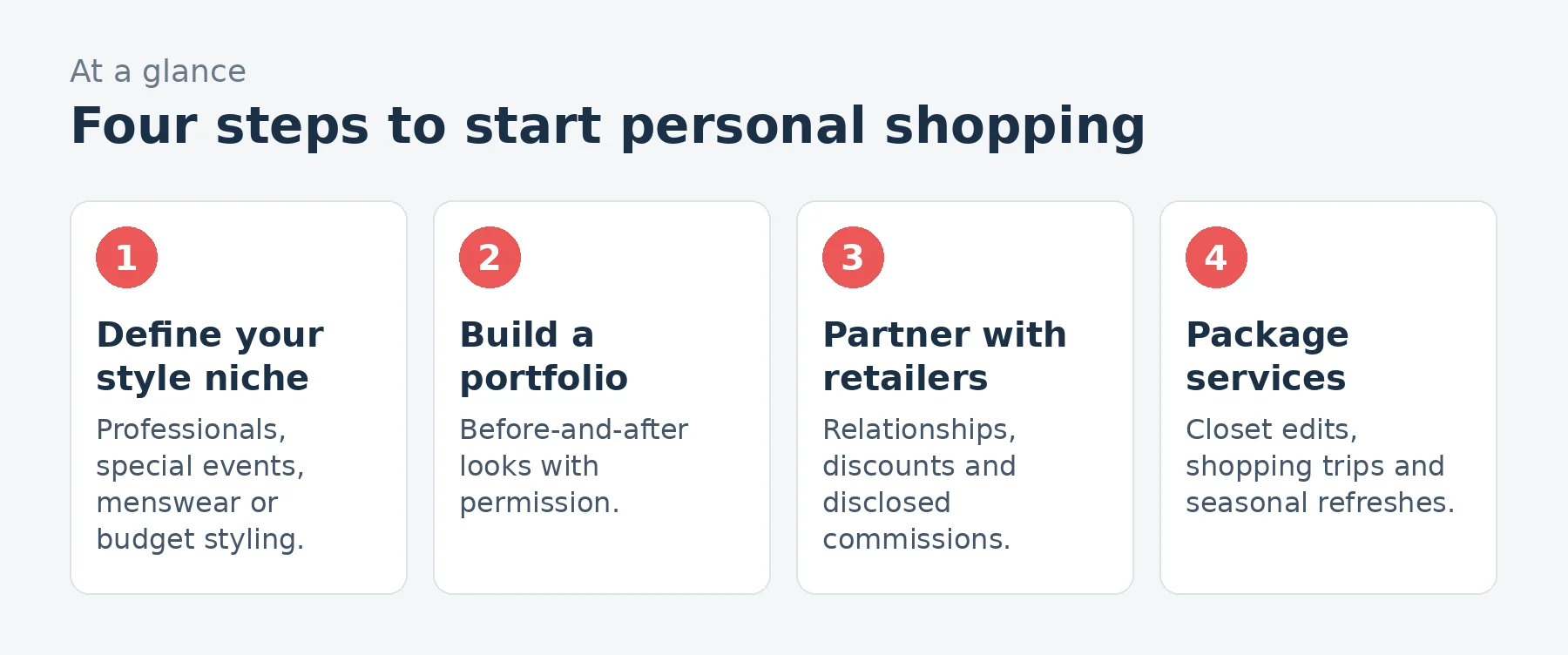
Price by the hour with a minimum, or by packages such as a closet edit plus a shopping trip, seasonal refreshes and virtual styling sessions. Gift shopping can be priced per gift or as a percentage of the budget, disclosed upfront. Use our pricing calculator.
A worked example: a solo personal shopper
These are illustrative assumptions for an established solo personal shopper, not predictions.
| Assumption | Monthly | |
|---|---|---|
| Wardrobe edits and shopping trips | 16 sessions averaging $300 | $4,800 |
| Seasonal styling packages | 4 packages at $750 | $3,000 |
| Virtual styling | 10 clients at $150 | $1,500 |
| Disclosed retailer and affiliate commissions | $600 | |
| Revenue | $9,900 | |
| Travel and parking | $(300) | |
| Software, phone and styling tools | $(100) | |
| Insurance | $(60) | |
| Marketing and content | $(500) | |
| Profit before owner pay and taxes | $8,940 |
That leaves about $8,940 a month before the shopper’s pay and taxes, on about $9,900 of revenue. Packages and repeat seasonal clients steady the business more than one-off sessions.
Loading the calculator…
A styling process
- Consultation: lifestyle, goals, budget, sizes and style preferences.
- Closet review to see what works and what is missing.
- A shopping list and pre-shopping research.
- Shopping in stores or online, with fittings.
- Outfit combinations and photos for the client.
- Follow-up and seasonal check-ins.
Finding clients
- Social media with outfit ideas and before-and-after styling (with permission).
- Professional networks and women’s business groups.
- Partnerships with tailors, salons, photographers and career coaches.
- Corporate gifting and executive programs.
- Referrals from happy clients.
Fit and body confidence
Clients often come to personal shoppers after struggling with fit or confidence. Learn fit principles for different body types, focus on how clothing makes clients feel and never comment negatively on bodies. Building confidence is often the most valued part of the service.
Tailoring partnerships
Tailoring makes affordable clothing look custom. Partner with a skilled tailor, recommend alterations and coordinate fittings. Tailors and stylists often refer clients to each other.
Menswear and executive styling
Men and executives are often underserved by stylists. Services such as building a professional wardrobe, suit fittings and smart casual capsules are valuable, and corporate clients may pay for executive image consulting.
Corporate gifting
Companies need thoughtful gifts for clients and employees. Offer curated gift programs with budgets per recipient, sourcing, wrapping and delivery. Corporate gifting smooths income around the holidays.
Budget and sustainable styling
Not every client wants to spend heavily. Shopping clients’ own closets, secondhand and consignment shopping and capsule wardrobes appeal to budget-conscious and sustainability-minded clients and broaden your market.
Building a client style profile
Keep records of each client’s sizes, preferred brands, colors, budget, lifestyle needs and past purchases. A detailed profile lets you shop for clients between sessions, suggest pieces that fit and deliver seasonal refreshes efficiently.
Content and online presence
Styling tips, outfit formulas and transformation stories (with permission) attract followers who become clients. Disclose any sponsored posts or affiliate links in your content, as FTC guidance requires.
Seasonal and life-event demand
Demand rises at season changes, before holidays, for weddings and events and when clients start new jobs or move. Reach out to past clients before these moments with seasonal refresh offers.
Working with sales associates
Good relationships with store associates make shopping trips smoother: they can pull sizes, hold items and alert you to new arrivals. Treat them as partners and thank them for their help.
Common mistakes to avoid
- Undisclosed retailer commissions.
- Pushing expensive items beyond the client’s budget.
- Losing track of receipts and return deadlines.
- Generic styling without understanding the client’s life.
- Underpricing preparation time.
Your first 90 days
- Days 1-30: choose a niche, build packages and set up scheduling, payments and insurance.
- Days 31-60: style a few clients at reduced rates for portfolio photos and testimonials.
- Days 61-90: build retailer relationships, post content consistently and partner with complementary businesses.
Frequently asked questions
Do personal shoppers need a license?
Usually just a business license; styling training and a portfolio build credibility.
How do personal shoppers get paid?
Through hourly rates and packages, and sometimes disclosed retailer commissions or affiliate income.
Do I have to disclose store commissions?
Yes. Material connections such as commissions should be disclosed so clients can trust your recommendations.
Can I offer virtual styling?
Yes. Video consultations, curated links and outfit boards let you serve clients anywhere.
Who hires personal shoppers?
Busy professionals, executives, people facing life changes and companies needing gifts.
How do I handle client purchases?
Have clients pay directly, or buy with approval and bill at cost with receipts, tracking return deadlines.
Can personal shoppers work with men?
Yes. Menswear and executive styling are growing niches with less competition.
How do I build a styling portfolio?
Style a few clients at reduced rates, take before-and-after photos with permission and share their stories.
How much do personal shoppers charge?
Rates vary by location and experience; many offer hourly sessions, packages and virtual styling at lower prices.
Do personal shoppers need insurance?
General liability insurance is wise, especially when working in clients’ homes and shopping with clients.
Can I be a personal shopper part-time?
Yes. Many stylists start with evening and weekend sessions and virtual styling.
What training helps personal shoppers?
Image consulting or styling courses, retail experience and learning fit principles for different body types.
Should I shop online for clients?
Yes. Curated online shopping and virtual styling save time and let you serve clients beyond your area.
Do personal shoppers keep store discounts?
Many pass discounts to clients; any commissions or benefits you keep should be disclosed.
Keep learning
- Personal services industry data
- How to start a personal concierge business
- How to start a boutique
- Pricing calculator
Sources
- FTC, Endorsement Guides: what people are asking
- FTC, Protecting personal information: a guide for business
- US Bureau of Labor Statistics, Personal care and service occupations
- US Bureau of Labor Statistics, Concierges (Occupational Employment and Wage Statistics)
Last reviewed November 3, 2026. Startup costs are estimates; check local prices, licensing and tax rules before you commit money.

