
Window tinting businesses install film on car windows, and many also tint homes and commercial buildings. Customers want privacy, heat and glare reduction, UV protection and a sleek look, and newer ceramic films block much more heat than older dyed films, which lets shops sell premium packages.
Car tinting is regulated by state tint laws that limit how dark front side windows can be, restrict tint on windshields and sometimes limit reflective films. Installing illegal tint can get your customers ticketed and, in some states, your shop fined. Knowing the rules and offering great film and clean installs is how tint shops build reputations.
A window tinting business at a glance
Table of Contents
| Topic | What to expect |
|---|---|
| Startup cost | Low to moderate: film inventory, tools, a plotter and pattern software, a clean bay or mobile setup and insurance |
| Key rules | State tint darkness (VLT) and reflectivity limits, windshield rules and medical exemptions |
| Revenue model | Per-vehicle packages by film type, plus residential and commercial jobs |
| How you earn | Car tint, windshield strips, ceramic upgrades, paint protection film and building film |
| Best for | Patient, detail-focused installers who take pride in clean, bubble-free work |
Who a tint business suits
It suits people with steady hands, patience and an eye for detail, since contamination, creases and peeling edges show immediately. You’ll spend long hours working inside cars, so a clean, cool, well-lit bay helps. Strong customer service matters too: explaining film options and legal limits clearly earns trust.
State tint laws
Every state sets its own rules, usually as visible light transmission (VLT), the percentage of light the window and film let through. Front side windows are typically the most restricted, while rear side and back windows are often allowed to be darker. Most states limit windshield tint to a strip above the AS-1 line near the top of the glass, and many limit reflective or mirrored films. Some states require a sticker or certificate showing the tint is legal.
Measure VLT with a meter, remember factory glass already blocks some light, and explain the rules before you install. Some shops refuse to install tint darker than the law allows, which protects customers and the shop’s reputation.
Medical exemptions
Many states allow darker tint for people with conditions such as lupus or sun sensitivity, usually with a doctor’s statement or state-issued exemption kept in the car. Ask to see the exemption before installing tint beyond normal limits, and keep a copy.
Film types
- Dyed film: lowest cost, good privacy, less heat rejection and can fade over time.
- Metalized film: strong heat rejection but can interfere with phone and GPS signals.
- Carbon film: good heat rejection, matte look, no signal interference.
- Ceramic film: the best heat and UV rejection without signal problems, at a premium price.
- Clear heat-rejecting films for windshields where the law allows.
Manufacturer programs and warranties
Major film brands run dealer programs with training, marketing support and lifetime warranties against fading, bubbling and peeling. Register warranties for customers, give them warranty cards and explain what’s covered. The International Window Film Association offers training and resources for automotive and building film.
Setting up your shop
A clean, dust-controlled bay is essential. Use bright lighting, a heat gun, quality squeegees and blades, a water spray system and a plotter with pattern software that cuts film to each vehicle’s windows, which saves time and reduces the risk of cutting on glass. Mobile tinting is possible, but dust and weather make indoor work more reliable.
Residential and commercial film
Building film cuts heat and glare, protects furniture from UV fading, adds privacy and can add safety and security film that holds glass together when broken. Commercial jobs can be large, so learn to measure, bid and schedule them, and check whether window manufacturers’ warranties allow film on their glass.
Pricing
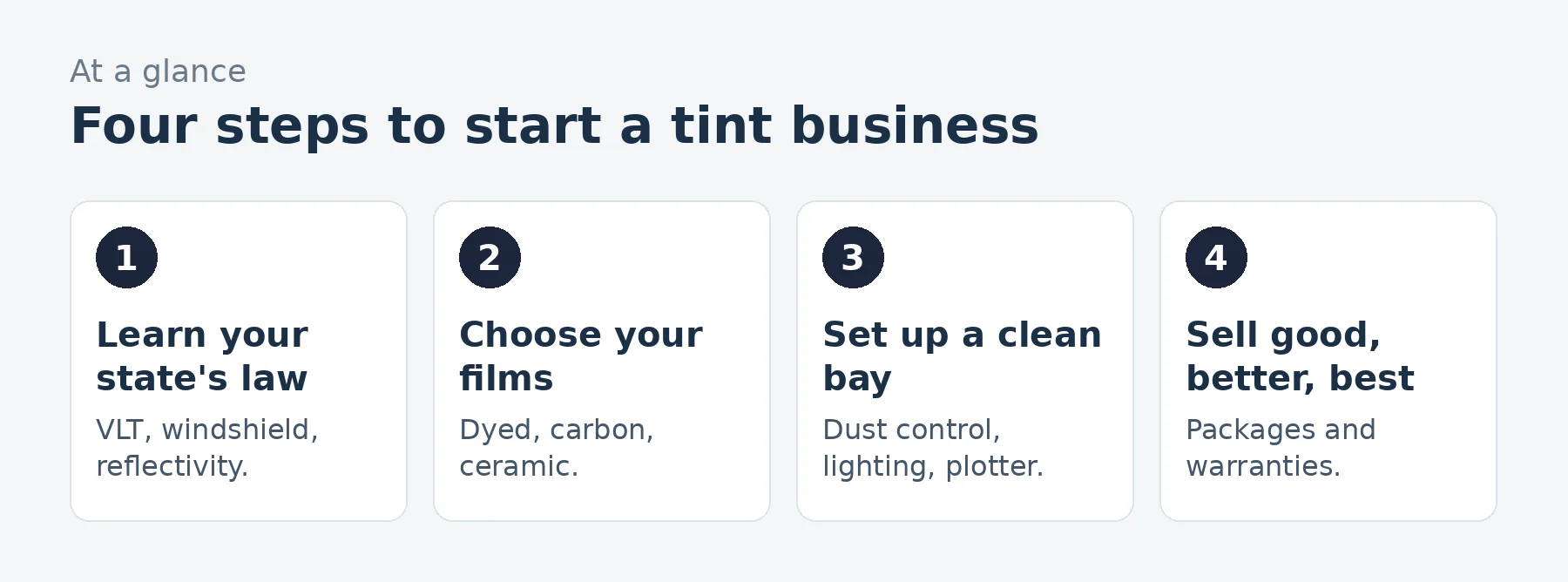
Price by vehicle type (coupe, sedan, SUV, truck), number of windows and film type, with good, better, best packages so customers can choose. Add windshield strips, full windshield clear film and old tint removal as extras. Building film is priced per square foot. Use our pricing calculator.
Startup costs to plan for
| Item | What to budget for |
|---|---|
| Training | Installer courses and manufacturer certification |
| Film inventory | Rolls of dyed, carbon and ceramic film |
| Tools | Heat guns, squeegees, blades, VLT meter |
| Plotter and software | Pattern cutting system |
| Bay | Lease, lighting, dust control |
| Insurance | Garage liability and garagekeepers coverage |
Use our startup cost calculator for your total.
A worked example: a one-bay tint shop
These are illustrative assumptions for a one-bay tint shop with an owner and one installer, not predictions.
| Assumption | Monthly | |
|---|---|---|
| Vehicle tint packages | 75 cars averaging $320 | $24,000 |
| Windshield and ceramic upgrades | $2,600 | |
| Residential and commercial film | $3,800 | |
| Revenue | $30,400 | |
| Film and supplies | About 22% of all sales | $(6,688) |
| Installer wages | With payroll costs | $(4,800) |
| Rent and utilities | $(2,400) | |
| Software, plotter and card fees | $(650) | |
| Insurance | $(350) | |
| Marketing | $(900) | |
| Profit before owner pay and taxes | $14,612 |
That leaves about $14,612 a month before the owner’s pay and taxes, on about $30,400 of revenue. Ceramic film upgrades and repeat referrals from dealers make the biggest difference.
Loading the calculator…
Removing old tint
Many jobs start with removing faded, bubbled or illegal film. Use steamers and the right tools, be careful with rear window defroster lines and charge separately for removal, since it can take as long as the new install.
Adding paint protection film and coatings
Many tint shops add paint protection film (PPF), ceramic coatings and vinyl wraps. These services use similar skills and plotters and bring high-value jobs from the same customers, but they need more training and practice before you charge for them.
Dealer and fleet work
Car dealerships, fleet operators and rental companies tint many vehicles. Offer wholesale pricing, fast turnaround and pickup or on-site service. Dealer work brings volume at lower prices, so balance it with retail customers who pay full rates.
Customer care and aftercare
Tell customers not to roll down windows for a few days while film cures, that slight haziness is normal at first, and how to clean tinted windows without ammonia-based cleaners. Inspect each car with the customer at pickup and fix any problems quickly.
Quality checks and warranty claims
Check every window under bright light before the customer arrives: no dust, hairs, creases, lifted edges or gaps at the top of roll-down windows. If a customer comes back with bubbling or peeling, fix it promptly and file manufacturer warranty claims for film defects. Keep photos and records of each install to make claims easy.
Luxury cars and special glass
High-end vehicles often have large curved rear windows, embedded antennas and expensive glass. Charge more for complex vehicles, use film that won’t interfere with antennas or sensors and take extra care around defroster lines and rain sensors.
Marketing
- Before-and-after photos and short videos.
- Heat demonstration lamps that show ceramic film’s difference.
- Car clubs, dealers and detailers for referrals.
- Reviews on your Google Business Profile.
- A clear page on your state’s tint law.
Building a reputation
Tint customers talk to friends and car clubs, and they post photos. A spotless waiting area, on-time appointments, honest advice about legal limits and fixing problems without arguments earn referrals that cost nothing.
Common mistakes to avoid
- Installing tint darker than your state allows.
- Dusty bays that leave contamination under film.
- Cutting film on glass and scratching windows.
- Not registering manufacturer warranties.
- Underpricing ceramic film.
Your first 90 days
- Days 1-30: learn your state’s tint law, train and practice on old glass and cars.
- Days 31-60: set up your bay, plotter and film supplier and get insured.
- Days 61-90: launch packages, contact dealers and detailers and collect reviews.
Frequently asked questions
How dark can window tint be?
It depends on your state, which sets visible light transmission limits that are usually strictest for front side windows.
Can I tint a windshield?
Most states allow only a strip above the AS-1 line; clear heat-rejecting film may be allowed.
What is VLT?
Visible light transmission: the percentage of light that passes through the window and film.
Is ceramic tint worth it?
It blocks more heat without signal interference, so many customers choose it.
Do I need a license to tint windows?
Usually a business license; a few states have specific tint compliance rules for installers.
Can I tint windows darker for medical reasons?
Many states allow medical exemptions with documentation.
How long does a car tint job take?
Often two to four hours, depending on the vehicle and whether old tint needs removing.
Can I tint homes and offices too?
Yes; building film for heat, glare and security is a good second market.
Can tint interfere with phone signals?
Metalized film can; carbon and ceramic films don’t.
How long before I can roll down tinted windows?
Usually a few days, while the film cures.
Should I offer a lifetime warranty?
Most major film brands back their films with lifetime warranties against fading and peeling; register them for every customer.
Keep learning
- Auto services industry data
- How to start a mobile car detailing business
- How to start a car wash
- Pricing calculator
Sources
- International Window Film Association
- US Small Business Administration, Apply for licenses and permits
- OSHA, Hazard Communication standard
- FTC, Endorsement Guides and testimonials
- NHTSA, Vehicle recalls
- OSHA, Heat illness prevention
Last reviewed November 4, 2026. Startup costs are estimates; check local prices, licensing and tax rules before you commit money.

