
A hot dog cart is one of the simplest food businesses to start: a compact cart, a short menu and a busy spot near offices, construction sites, parks, bars, sporting events or festivals. Many operators earn steady income from regular locations and boost it with private events and catering.
Even simple carts must meet health department requirements: approved cart designs with sinks, hot holding at 135°F or above and cold holding for toppings, plus mobile vendor permits and, in many cities, a licensed commissary. Propane grills need fire safety compliance. The Bureau of Labor Statistics reports a median pay of $65,310 for food service managers (May 2024), with employment projected to grow about 6%, and $35,760 for cooks. This guide covers carts, permits, food safety, locations, pricing, a worked example and a 90-day plan.
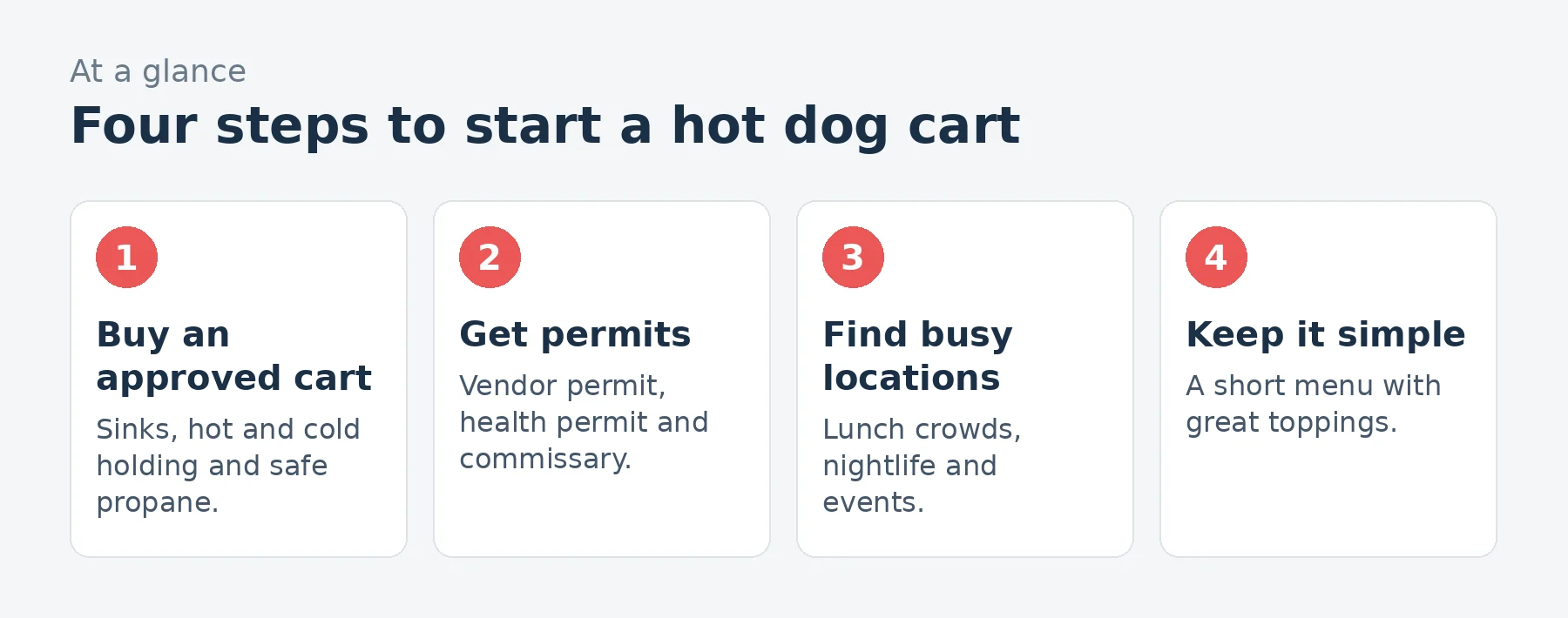
A hot dog cart at a glance
Table of Contents
| Topic | What to expect |
|---|---|
| Startup cost | Low to moderate: a health-approved cart, propane equipment, permits, commissary fees, inventory, umbrella and signage |
| Permits | Mobile vendor permit and location rules, health permit, business license and sales tax permit |
| Food safety | Hot holding at 135°F or above, cold holding at 41°F or below and handwashing on the cart |
| Commissary | Many health departments require daily commissary use for supplies, cleaning and water |
| Best for | Outgoing, reliable people who like simple menus and busy locations |
Who a hot dog cart suits
It suits outgoing, dependable people who enjoy chatting with regulars, can work outdoors and keep things simple. Consistent hours at a good location build loyal customers.
Choosing a cart
Buy a cart that your health department approves before you spend money: typically handwashing and utensil sinks with fresh and wastewater tanks, steam wells or grills for hot holding, refrigeration or ice for cold toppings and storage. Some cities restrict grilling on sidewalks. Ask for written approval of the cart design.
Permits and location rules
Cities issue mobile vendor permits, sometimes with waiting lists or fees by zone, and set rules on distances from restaurants and entrances, sidewalk space, parking and hours. Private property locations need the owner’s permission. Events require event permits and often fire inspections.
Food safety basics
Every food business needs the right health permits, food handler or manager certification and practices based on the FDA Food Code adopted by your state: temperature control, preventing cross-contamination, handwashing and cleaning. Disclose major allergens (including sesame) accurately.
Under the Food Code, hot foods must be held at 135°F or above and cold foods at 41°F or below. Use a thermometer to check hot dogs and toppings regularly, keep toppings covered and discard foods held outside safe temperatures too long.
Commissaries
Many health departments require carts to return to a licensed commissary daily to clean equipment, fill fresh water, dump wastewater and store food and supplies. Factor commissary fees and travel time into your plan.
Propane safety
Secure propane cylinders upright, use approved hoses and regulators, check for leaks, keep fire extinguishers on the cart and follow fire department rules based on NFPA 58, especially at events.
Startup costs to plan for
| Item | What to budget for |
|---|---|
| Cart | Health-approved cart, new or used |
| Equipment | Grill or steam table, thermometers, umbrella |
| Permits | Vendor permit, health permit, fire inspection |
| Commissary | Monthly fees |
| Inventory | Hot dogs, buns, toppings, drinks |
| Insurance and payments | Liability insurance, card reader |
Use our startup cost calculator for your total.
Menu and pricing
Offer a few hot dogs and sausages with signature toppings, chips and drinks, and use combos to raise average tickets. Price to cover food, permits, commissary fees and your time. Use our pricing calculator.
A worked example: weekday location plus events
These are illustrative assumptions for a cart at a busy weekday location plus weekend events, not predictions.
| Assumption | Monthly | |
|---|---|---|
| Weekday location sales | 20 days averaging $380 | $7,600 |
| Weekend events and catering | $2,400 | |
| Revenue | $10,000 | |
| Food, buns, toppings and drinks | About 33% of sales | $(3,300) |
| Commissary rent | $(400) | |
| Permits and event fees | $(500) | |
| Propane and supplies | $(250) | |
| Card fees and insurance | $(350) | |
| Cart payment and maintenance | $(250) | |
| Profit before owner pay and taxes | $4,950 |
That leaves about $4,950 a month before the owner’s pay and taxes, on about $10,000 of revenue. Events and catering can earn much more per day than street locations.
Loading the calculator…
Finding locations
- Office districts at lunch.
- Construction sites and industrial parks.
- Bars and nightlife areas late at night, where allowed.
- Sports fields, parks and beaches.
- Festivals, fairs and private events.
Catering and private events
Birthday parties, weddings, company picnics and school events book hot dog carts for a flat fee or per-person price. Catering brings predictable revenue and word of mouth.
Building regulars
Hot dog carts thrive on regular customers. Keep consistent hours, remember names and orders, offer punch cards and post your location and hours on social media every day. A friendly, reliable presence builds loyalty.
Nightlife and late-night vending
Bars and nightlife districts can be lucrative late at night where permitted, but check hour restrictions, have good lighting and security and plan for crowds. Some cities limit late-night vending.
Signature menu items
Regional styles, specialty sausages, vegetarian options and house-made toppings set you apart from generic carts. Keep the menu short so service stays fast, and label allergens clearly.
Growing the business
Successful operators add second carts, food trucks or catering packages. Each new cart needs permits and approval, and staff need food safety training. Standard recipes and supply ordering keep quality consistent.
Event logistics
Events need event permits, sometimes fire inspections and enough inventory for crowds. Bring backup propane, extra buns and toppings, a second person to take payments and a plan for long lines.
Weather plans
Rain and cold reduce sales. Use canopies and umbrellas where allowed, adjust inventory to forecasts and shift to indoor events or private catering during bad weather.
Choosing suppliers
Buy hot dogs, buns and toppings from reliable suppliers, such as restaurant suppliers and warehouse clubs, and keep receipts showing approved sources, which health departments may ask to see. Quality ingredients set your cart apart.
Daily routine
A typical day includes picking up supplies at the commissary, setting up the cart, checking temperatures, serving, logging sales, then returning to clean and restock. A consistent routine keeps you compliant and efficient.
Private property locations
Parking lots of hardware stores, car dealerships, breweries and gas stations can be good spots with the owner’s written permission, often in exchange for a fee or simply bringing customers. Check zoning and health rules for private property vending.
Common mistakes to avoid
- Buying a cart the health department will not approve.
- Vending in restricted locations.
- Toppings left at unsafe temperatures.
- Unsafe propane setups.
- Inconsistent hours that lose regulars.
Your first 90 days
- Days 1-30: research vendor permits and health rules, get cart approval and find a commissary.
- Days 31-60: buy the cart, pass inspections, get insurance and set the menu.
- Days 61-90: start at a strong location, book events and track sales by location and day.
Frequently asked questions
Do I need a permit to sell hot dogs?
Yes. Cities require vendor permits, and health departments require permits and approved carts.
How hot must hot dogs be held?
At 135°F or above under the FDA Food Code, with cold toppings at 41°F or below.
Do hot dog carts need a commissary?
Many health departments require daily commissary use for cleaning, water and storage.
How much does a hot dog cart cost?
It depends on the cart and equipment; approved carts are the main expense.
Where should I park a hot dog cart?
In permitted locations with steady foot traffic, such as office areas, parks and events.
Can I cater with a hot dog cart?
Yes. Private events and parties are a profitable part of many cart businesses.
What toppings do hot dog carts offer?
Common toppings include mustard, ketchup, onions, relish, sauerkraut, chili and cheese, held at safe temperatures.
Is a hot dog cart profitable?
It can be, with a busy location, low food costs and events or catering.
Can I sell drinks from my hot dog cart?
Usually yes, with permits, keeping canned and bottled drinks cold.
Do I need a food handler card?
Many health departments require food handler or manager certification for cart operators.
How many hot dogs does a cart sell?
It varies widely by location and hours; busy lunch spots and events sell far more.
Can I run a hot dog cart part-time?
Yes, many operate lunch hours or weekends and events, as permits allow.
What insurance does a hot dog cart need?
General and product liability insurance, which many events and property owners require.
How do I get a vendor permit?
Apply through your city’s vendor permit office, after health department approval of your cart and food handling plan.
What is a commissary kitchen?
A licensed facility where carts store food, clean equipment, fill water and dispose of wastewater.
Keep learning
- Food trucks industry data
- How to start a food cart or kiosk
- How to start a farmers market food stand
- Pricing calculator
Sources
- FDA, Food Code
- NFPA 58, Liquefied Petroleum Gas Code (propane safety)
- FDA, Food allergies and allergen labeling (including sesame)
- US Bureau of Labor Statistics, Food service managers
- US Small Business Administration, Apply for licenses and permits
Last reviewed November 4, 2026. Startup costs are estimates; check local prices, licensing and tax rules before you commit money.

