
A new roof, HVAC system or remodel is a large, often unexpected expense. Many homeowners who need the work can’t pay the full amount at once. Offering financing, usually through a lending partner, lets them spread payments over time, which can help them choose the right solution instead of a cheap patch. Done responsibly, financing helps customers and helps you close more jobs. Done carelessly, it can create legal and reputation problems.
This guide explains how contractors typically offer financing, what it costs, and the rules to respect. It’s general information, not legal advice; talk to your lending partner and an attorney about your specific situation.
Why financing helps
Table of Contents
- Homeowners can afford needed work without draining savings.
- Customers choose better solutions rather than the cheapest option.
- Larger jobs close that might otherwise be postponed.
- Monthly payments make options easier to compare.
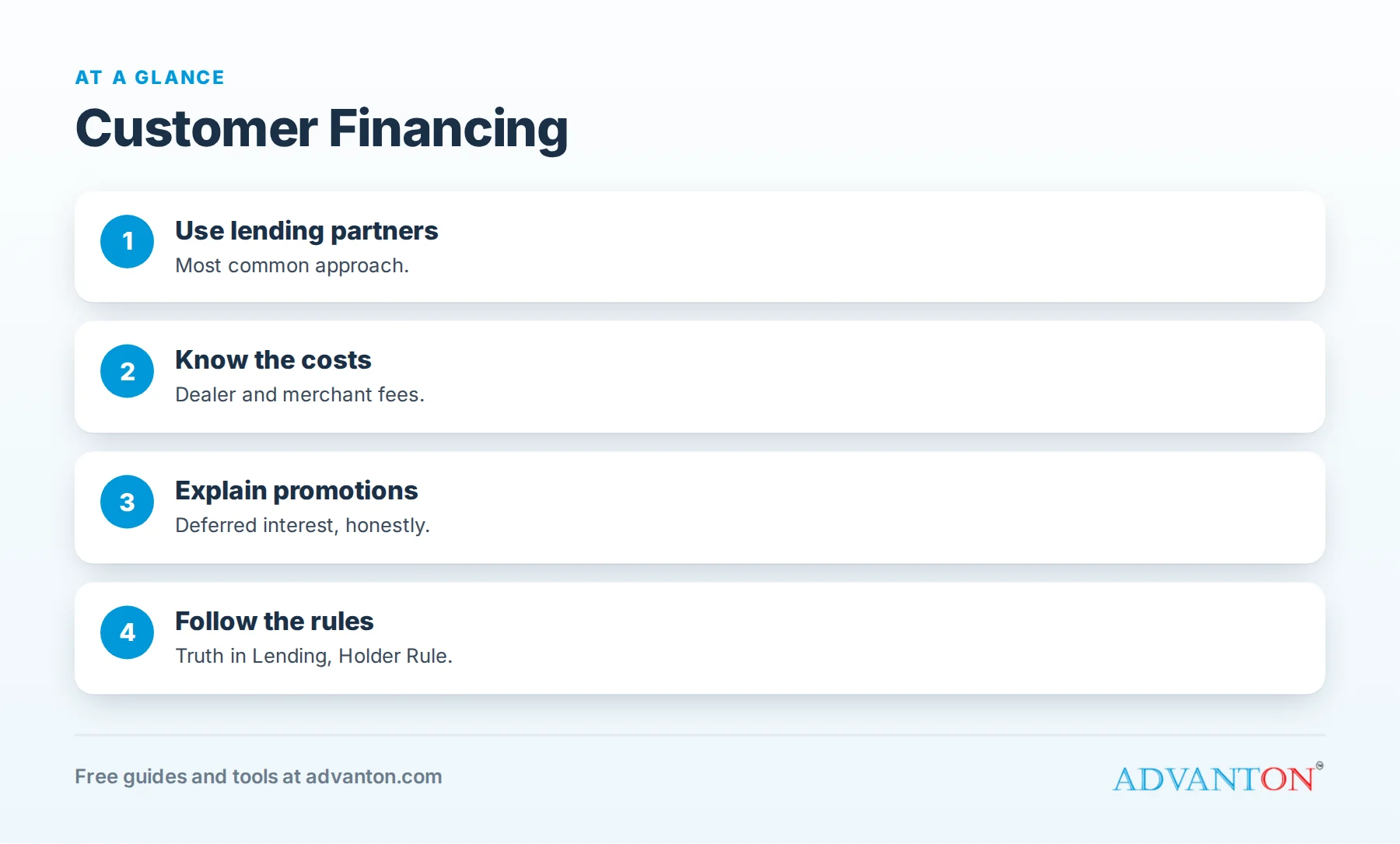
How contractors usually offer financing
| Approach | How it works | Notes |
|---|---|---|
| Third-party lending partner | A lender approves and finances the customer; you’re paid by the lender | Most common for contractors |
| Credit card payments | Customers pay with their own cards | Simple; card fees apply |
| Payment schedules | Deposit and progress payments, without credit | Common for larger projects, within state deposit rules |
| In-house financing | You extend credit yourself | Complex legal obligations; consult an attorney first |
Understand the costs
Lending partners often charge contractors fees, sometimes called dealer fees or merchant fees, especially for promotional offers like low or zero interest for customers. Understand these costs before choosing plans, and factor them into your pricing consistently and lawfully. Ask partners for written fee schedules.
Explain promotions honestly
Some plans offer "no interest if paid in full" within a promotional period. With deferred-interest promotions, interest may be charged back to the start of the loan if the balance isn’t paid in full by the end of the period. Customers must understand the terms. Never describe a deferred-interest plan as simply "interest-free," and point customers to the lender’s disclosures.
The rules to know
- Truth in Lending Act (Regulation Z): requires clear disclosures of credit terms, such as annual percentage rates and finance charges, when consumer credit is offered. Advertising credit terms (for example, "only $99 a month") can also trigger disclosure requirements.
- FTC Holder Rule: certain consumer credit contracts arranged by sellers must include a notice preserving the customer’s rights against the lender if there are problems with the work.
- State laws: states may regulate lending, interest rates, home improvement contracts and financing practices.
Reputable lending partners handle much of the compliance for their loans, but you’re still responsible for how you advertise and present financing. Ask partners for approved wording and training.
Choosing a lending partner
- Experience with home improvement and your trade.
- Range of plans for different credit profiles.
- Clear fee schedules for contractors.
- Fast decisions and easy applications.
- Training and approved marketing language.
- Good customer service for homeowners.
Present financing responsibly
- Lead with the right solution, not the payment.
- Offer financing as an option, not pressure.
- Use approved language from your lending partner.
- Let customers read and ask questions about terms.
- Never fill out applications for customers or encourage inaccurate information.
Advertising financing
If you mention financing on your website, ads or flyers, use your lending partner’s approved wording and required disclosures. General statements like "Financing available for qualified buyers" are common; specific monthly payments or rates usually require more disclosure.
Financing and good-better-best options
Showing monthly payment estimates alongside each option can help customers compare, as long as figures are accurate and disclosures are clear. See good-better-best pricing.
A sample financing conversation
"Here are your three options. Many customers pay with a card or check, and for larger projects some prefer monthly payments through our lending partner. Would you like me to show what that could look like? You’d see all the terms from the lender before deciding, and there’s no obligation."
Keep the focus on choosing the right solution; financing is simply one way to pay.
Match plans to job sizes
Different plans suit different projects: shorter terms for mid-sized repairs, longer terms for replacements and remodels. Work with your lending partner to choose a small set of plans that fit your typical jobs, rather than offering every option.
Prequalification
Some lending partners offer prequalification that doesn’t affect customers’ credit scores, letting homeowners see likely options before applying. If your partner offers it, explain the difference between prequalification and a full application accurately.
A compliance checklist
- Use the lender’s approved language in ads and conversations.
- Include required disclosures when advertising credit terms.
- Never alter or complete applications for customers.
- Explain promotional terms accurately.
- Keep records of financed jobs and documents.
- Train everyone who discusses financing.
Handling complaints
If a customer has a problem with financing, listen, connect them with the lender’s customer service and address any issues with your work promptly. Under rules like the FTC Holder Rule, customers may have rights against lenders when work problems arise, which is another reason to resolve issues quickly.
Keep records
Keep copies of contracts, financing approvals, change orders and completion documents for each financed job. Clear records protect you and your customers if questions arise later.
Don’t let financing replace good estimating
Financing makes payments easier, but it doesn’t fix an unclear scope or poor pricing. Keep estimates detailed and honest, so customers know exactly what they’re financing. A customer who later discovers unexpected costs is unhappy whether they paid cash or financed.
Explain financing on your website carefully
A short "Payment options" page explaining that you accept cards, offer payment schedules for larger projects and work with a lending partner (with "subject to credit approval" and the lender’s approved language) answers common questions before customers call. Link to the lender’s own pages for details and disclosures.
Review your financing program yearly
Once a year, review which plans customers used, fees you paid, approval rates and any complaints. Adjust plans, partners or pricing as needed, and refresh your team’s training.
Financing and your reputation
Customers remember how financing felt as much as the work itself. Clear explanations, no pressure and quick help when they have questions turn financed customers into loyal customers and referrers. Confusing terms or surprise charges, even from the lender, can show up in your reviews. Choose partners whose customer service reflects the way you treat customers.
Payment schedules without credit
For many projects, a simple payment schedule (a deposit within your state’s rules, progress payments at milestones and a final payment at completion) is all customers need. Explain it clearly in your estimate and contract. See how to write estimates that win.
Train for the moment of decision
The best time to mention payment options is when you present the estimate, after explaining the work and options, not at the start of the visit. Practice the conversation with your team, so it sounds natural and helpful.
Common mistakes
- Calling deferred-interest plans "interest-free."
- Advertising payments without required disclosures.
- Hiding dealer fees inconsistently in pricing.
- Pressuring customers into credit.
- Offering in-house financing without legal advice.
A worked example
An HVAC company partners with a lender offering several plans, trains its comfort advisors using the lender’s approved language, and presents financing as one of three ways to pay. More customers choose higher-efficiency systems, and complaints are rare because terms are explained clearly. This example is illustrative.
Frequently asked questions
Should contractors offer financing?
Many do for larger jobs, usually through lending partners, to help homeowners afford needed work.
Who pays for financing?
Customers pay interest on most plans; contractors often pay fees on promotional plans.
What is deferred interest?
A promotional feature where interest may be charged back to the start if the balance isn’t paid in full by the end of the promotional period.
Do I need to follow lending laws if I use a partner?
Partners handle much of the compliance for their loans, but you must present and advertise financing accurately and follow applicable rules.
Can I advertise "$99 a month"?
Specific payment terms in ads usually trigger disclosure requirements; use your partner’s approved language.
Is offering financing worth the fees?
It can be, if it helps close larger jobs; compare fees with the extra jobs and job values it brings.
Can small contractors offer financing?
Yes. Many lending partners work with small contractors; compare their fees, plans and support.
Do I need special licensing to offer financing?
Working through a licensed lending partner is the usual approach; offering credit yourself may require licensing; ask an attorney.
Should financing appear in my ads?
Only with your lending partner’s approved wording and any required disclosures.
How Advanton helps
Advanton is a free resource for small businesses. Create clear estimates with options using our free quote and invoice generator, and plan cash flow with the Cash & Payroll Planner. You can also add your business to the Advanton directory for free. Advanton earns money when you buy a domain or hosting through our store, which helps keep everything else free.
Keep learning
Sources
- Federal Trade Commission, Holder in Due Course Rule
- Consumer Financial Protection Bureau, Truth in Lending (Regulation Z)
Last reviewed October 30, 2026. Startup costs are estimates; check local prices, licensing and tax rules before you commit money.


Leave a Reply