
Maintenance agreements (also called service plans, memberships or club plans) turn one-time customers into long-term relationships. Customers get regular tune-ups, priority service and peace of mind; contractors get predictable revenue, steadier schedules in slow seasons and first call when bigger work is needed. For many service companies, maintenance agreements are one of the most valuable assets they build.
This guide explains how to design, price, sell and manage maintenance agreements responsibly.
Why maintenance agreements matter
Table of Contents
| Benefit | For customers | For contractors |
|---|---|---|
| Regular maintenance | Fewer breakdowns, longer equipment life | Scheduled work in slower seasons |
| Priority service | Faster help in emergencies | Loyal customers |
| Discounts | Savings on repairs | More repair and replacement work |
| Predictability | Fewer surprises | Recurring revenue |
Trades that suit maintenance agreements
- HVAC: seasonal heating and cooling tune-ups.
- Plumbing: water heater flushes, inspections, drain maintenance.
- Electrical: safety inspections, generator maintenance.
- Pest control: recurring treatments.
- Pool, lawn and landscaping: scheduled service.
- Roofing and gutters: annual inspections and cleaning.
- Garage doors, appliances, water treatment and others.
What to include
| Element | Example |
|---|---|
| Scheduled visits | Two HVAC tune-ups a year |
| Inspection checklist | Written list of what’s checked |
| Priority scheduling | Members first in busy seasons |
| Discounts | A percentage off repairs |
| No overtime fees | For members, where you choose to offer it |
| Reminders | Texts or emails before each visit |
Be precise in writing about what’s included and what isn’t, especially parts and repairs.
Pricing
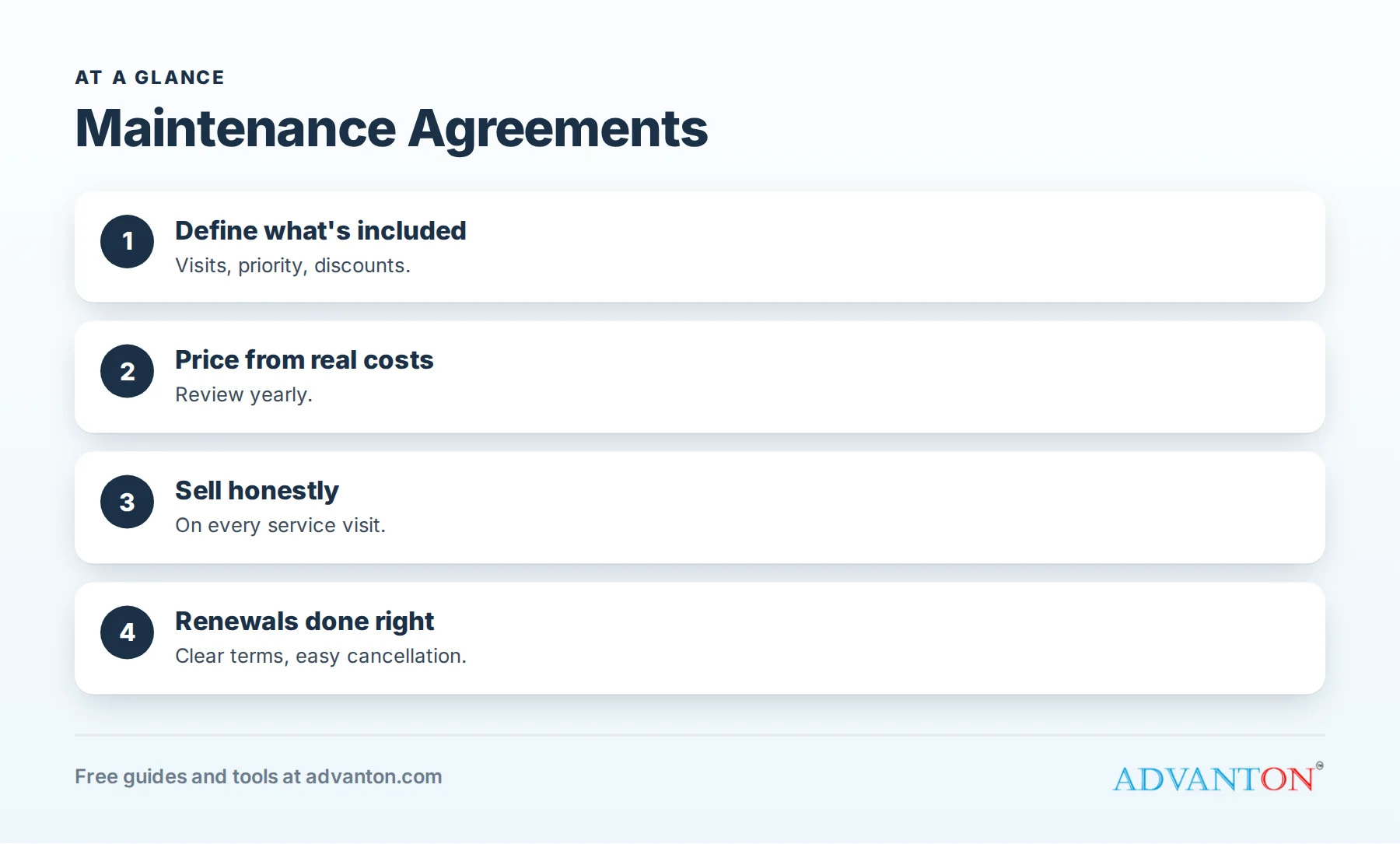
Price plans from the time and materials each visit takes, travel, administration and the value of member benefits, plus your margin. Many contractors offer monthly and annual payment options. Review prices yearly as costs change.
Selling plans honestly
The best time to offer a plan is during a service visit, when the technician has shown the customer their system’s condition:
"Your system is working well today. Many customers join our maintenance plan, which includes two tune-ups a year, priority service and [discount] off repairs. It helps catch small problems before they become expensive. Would you like the details?"
Never pressure customers or suggest equipment will fail without the plan.
Automatic renewals and cancellation
Many plans renew automatically. Many states have automatic renewal laws that require clear disclosure of renewal terms, the customer’s consent and an easy way to cancel. Disclose renewal terms clearly, send reminders before renewal where required, and make cancellation simple. Check your state’s rules.
Service contracts and repair promises
If a plan promises to pay for or perform repairs for a fee, it may fall under state laws governing service contracts or warranties in some states. Plans focused on scheduled maintenance and discounts are usually simpler. Ask an attorney if your plan promises repair coverage.
Schedule visits efficiently
Group member visits by area and season, schedule them in slower periods where possible, and send reminders. Efficient routing makes plans profitable.
Deliver real value
Members renew when they feel the value. Complete the checklist thoroughly, explain findings in plain language, leave a written summary with photos and honor priority and discount promises consistently.
Track retention
Track member count, renewals, cancellations and the extra repair and replacement work members bring. Call members who cancel to learn why. Retention is the heartbeat of a maintenance program.
Billing
Use recurring billing through your field service software or payment processor, with clear receipts. Update expired cards promptly and communicate politely about failed payments.
Marketing your plan
- Offer it on every service visit.
- Feature it on your website with clear benefits and pricing.
- Include it in "best" estimate options. See good-better-best pricing.
- Mention it in seasonal mailings.
Sample plan tiers
| Basic | Plus | Premium | |
|---|---|---|---|
| Visits per year | 1 | 2 | 2 |
| Priority scheduling | Yes | Yes | Yes |
| Repair discount | Small | Moderate | Larger |
| No overtime fees | No | Yes | Yes |
| Extra services | None | Filter delivery | Filter delivery and extra inspection |
Keep tiers simple; many companies offer one or two plans at first.
A sample HVAC visit checklist
- Inspect and clean or replace filters.
- Check thermostat operation.
- Inspect electrical connections.
- Check refrigerant system operation (cooling) or burner and heat exchanger (heating).
- Clean condensate drain.
- Measure temperature differences.
- Report findings with photos.
A written checklist shows customers what they’re paying for and keeps technicians consistent.
Plans for commercial customers
Restaurants, offices and property managers often need scheduled maintenance across multiple units or buildings. Offer commercial plans with service schedules, reporting and response-time commitments you can reliably meet.
Onboard new members
Send a welcome message explaining what’s included, when visits happen and how to request priority service. A good first experience sets up renewals.
Pricing math
Estimate yearly costs per member: technician time for each visit, travel, materials, administration and the cost of discounts, then add margin. Compare with what customers would pay for the same visits separately, and make sure members clearly come out ahead.
Train technicians
Technicians sell and deliver plans. Train them to explain benefits simply, complete checklists thoroughly and recognize members with priority and courtesy.
Member perks that cost little
Small perks make members feel valued: a sticker on equipment showing the next service date, a birthday or holiday note, early access to seasonal scheduling, or a small discount on add-on services. These cost little and strengthen loyalty.
Plans and replacement decisions
Members trust you, so when equipment reaches the end of its life, they’re more likely to ask for your recommendation. Present honest repair-or-replace options with written findings from past visits. Members who feel advised rather than sold become long-term customers.
Renewals
Send renewal reminders ahead of time where required or helpful, summarize the value delivered during the year (visits completed, issues caught) and make renewing easy. A short "here’s what we did for you this year" note is one of the best renewal tools.
Plan capacity
Every member adds scheduled visits. Before promoting plans heavily, make sure you have the technician capacity to complete visits on time in shoulder seasons. Missed member visits damage trust quickly.
Write clear plan terms
Your plan agreement should state what’s included, visit frequency, discounts, priority promises, price, billing frequency, renewal terms, cancellation process and any exclusions. Clear terms prevent disputes and help you comply with state rules. Have an attorney review your template, especially if you include repair coverage or automatic renewals.
Use plans to smooth your calendar
Schedule member tune-ups in shoulder seasons (spring and fall for HVAC, for example) to keep technicians busy between peaks. Predictable work in slower months improves cash flow and helps you keep good technicians year-round.
Measure plan profitability
Once a year, compare plan revenue with the cost of delivering visits and discounts, plus the extra repair and replacement work members brought. Adjust pricing, benefits or visit design if plans aren’t paying their way.
Make cancellations respectful
When a member cancels, process it quickly, confirm in writing and ask briefly why. A respectful exit protects your reputation and sometimes brings the customer back later. Hard-to-cancel plans create complaints and may conflict with state automatic renewal rules.
Show members on every invoice
Note member savings on invoices ("Member discount: $45"). Seeing the savings regularly reminds customers why the plan is worth renewing.
Common mistakes
- Vague plan terms.
- Underpricing visits.
- Not delivering promised visits.
- Hard-to-cancel plans.
- Pushy selling.
A worked example
An HVAC company offers a plan with two tune-ups a year, priority service and repair discounts, billed monthly. Technicians offer it on every service call, and the company schedules member visits in spring and fall shoulder seasons. Over time, members provide steady work between peaks and many later choose the company for replacements. This example is illustrative.
Frequently asked questions
What is a maintenance agreement?
A plan where customers pay for scheduled maintenance and member benefits like priority service and discounts.
How should I price a maintenance plan?
From visit time, materials, travel, administration and benefits, plus margin; review yearly.
Do automatic renewals need special handling?
Many states require clear disclosure, consent and easy cancellation for automatic renewals.
Is a maintenance plan a service contract?
Plans that promise repair coverage may fall under state service contract rules; maintenance-only plans are usually simpler. Ask an attorney if unsure.
How do I sell more plans?
Offer them on every service visit, explain real benefits and deliver great service.
Should plans be monthly or annual?
Offer both if you can; monthly billing feels affordable, and annual billing improves cash flow.
How many members should I aim for?
Grow steadily while keeping visits on schedule; quality service matters more than fast growth.
What’s the best way to start a maintenance program?
Launch one simple plan, offer it on every visit, deliver it well and refine it after a season.
Can small contractors run maintenance plans?
Yes. Start with a simple plan, a scheduling calendar and recurring billing through your payment processor.
How Advanton helps
Advanton is a free resource for small businesses. Build member loyalty with our free rewards program, send professional invoices with the quote and invoice generator and plan cash flow with the Cash & Payroll Planner. You can also add your business to the Advanton directory for free. Advanton earns money when you buy a domain or hosting through our store, which helps keep everything else free.
Keep learning
Last reviewed October 30, 2026. Startup costs are estimates; check local prices, licensing and tax rules before you commit money.


Leave a Reply