
A brow bar shapes and styles eyebrows with waxing, threading, tweezing, tinting and lamination, and many add lash lifts and tinting. Appointments are short, often 15 to 30 minutes, and clients return every three to five weeks, so a well-placed brow bar can serve many clients a day, including walk-ins.
Licensing depends on the service: waxing usually requires an esthetics or cosmetology license, threading is exempt from licensing in some states, and microblading is generally regulated as tattooing. Tinting and lamination use chemicals near the eyes, so safety and patch tests matter.
A brow bar at a glance
Table of Contents
| Topic | What to expect |
|---|---|
| Startup cost | Low to moderate: a small studio, salon suite or kiosk, chairs, lighting, wax, thread and tint supplies |
| Key rules | Esthetics or cosmetology license for waxing; threading rules vary by state; microblading falls under tattoo and body art rules |
| Revenue model | High volume of short appointments, rebooked every three to five weeks |
| How you earn | Shaping, tinting, lamination, lash lifts, memberships and retail |
| Best for | Precise, quick artists who like a busy day and regular clients |
Who a brow bar suits
It suits artists who are precise and fast, enjoy a steady stream of clients and can keep a consistent standard across a team. Brow bars run on volume: many short appointments a day, walk-ins in busy locations and clients who come back every few weeks. Clear communication helps, because clients care a lot about the shape of their brows.
Licensing by service
Check each service separately with your state board:
- Waxing and tweezing usually require an esthetics or cosmetology license.
- Threading is exempt from licensing in some states but requires an esthetics license or a threading-specific permit in others.
- Tinting and lamination usually fall under esthetics or cosmetology.
- Microblading and permanent makeup are generally regulated as tattooing by health departments, with body art licenses, bloodborne pathogen training and facility inspections.
Beauty services are licensed by your state board of cosmetology (or a similar board). In most states you need an individual license for the service you offer and a separate establishment or salon license for the place where you work, and the board inspects for sanitation. Use an EPA-registered disinfectant as the label directs, clean and disinfect tools between clients, throw away single-use items, keep safety data sheets for chemicals under OSHA’s Hazard Communication standard, and ventilate well.
Tinting and lamination safety
The FDA has stated that no color additives are approved for permanently dyeing or tinting eyebrows or eyelashes, and it has received reports of eye injuries from tints. If you offer brow tinting, know your state’s rules, use products as their makers direct, keep tint away from the eye, offer patch tests and keep records of reactions. Brow lamination uses a perming solution, so do patch tests, time it carefully and protect the skin.
Microblading as a separate business line
Microblading creates semi-permanent brows with fine cuts filled with pigment. Because it breaks the skin, it’s treated as tattooing in most states: you’ll need a body art or tattoo license, a health department inspection, bloodborne pathogens training that follows OSHA’s standard, single-use needles and a sharps container. Insurance costs more, and you need consent forms and aftercare instructions. Many brow bars add microblading only once they have a qualified, licensed artist.
Sanitation
Never double-dip wax spatulas, use fresh thread for every client, disinfect tweezers and scissors with an EPA-registered disinfectant, use single-use tint applicators and change chair covers between clients. Ask about retinoid creams, acne medications and recent peels before waxing, because they make skin more likely to tear or lift.
Choosing a location
Busy, visible locations drive walk-ins: mall kiosks and in-line stores, shopping centers near grocery stores and gyms, and salon suites for appointment-based studios. Mall kiosks have low build-out costs but strict lease rules and long opening hours. A small store lets you add lash and skin services.
Equipment and supplies
- Reclining chairs and good, cool lighting.
- Wax warmers, hard and soft wax and spatulas.
- Thread, tweezers and scissors.
- Tint, lamination kits and lash lift supplies.
- Retail brow gels, pencils and serums.
Pricing and memberships
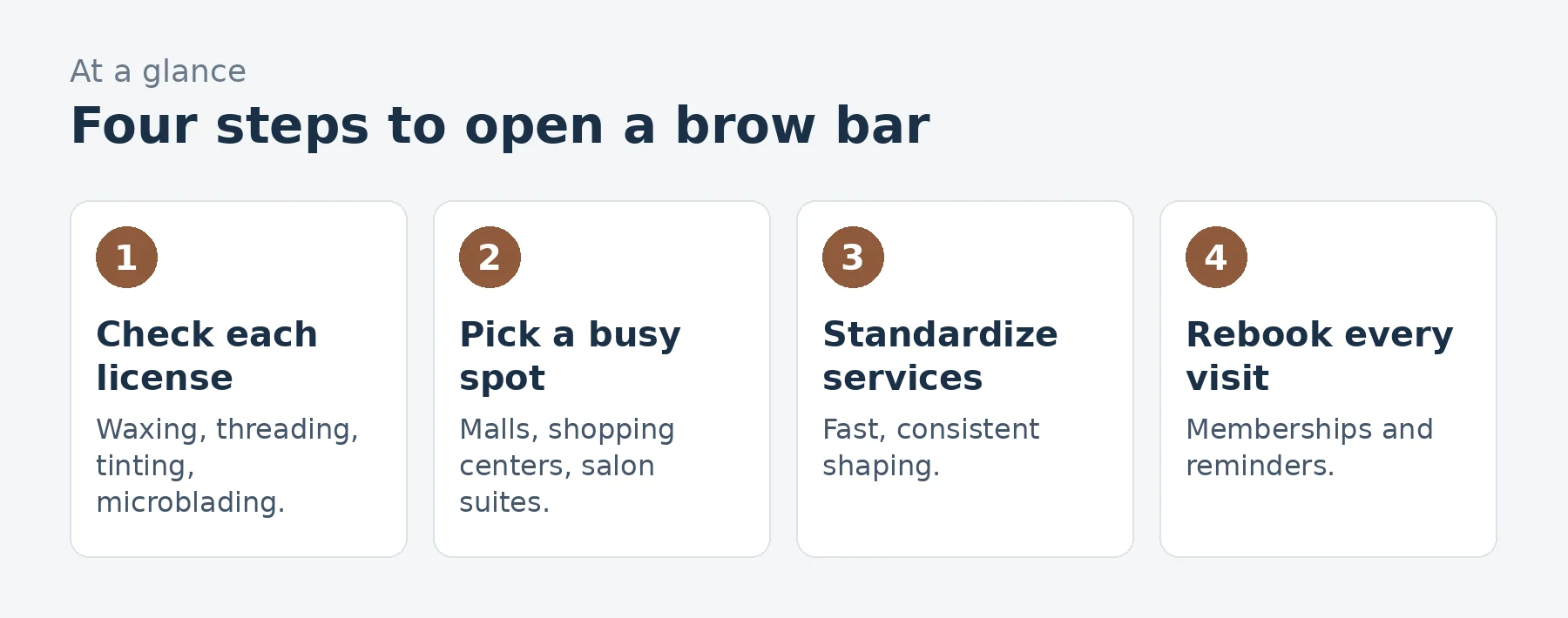
Price services by time and products, compare local prices and bundle shaping with tinting. Brow memberships that include a shaping every month can lock in regular visits; if they renew automatically, follow auto-renewal rules with clear terms and easy cancellation. Use our pricing calculator.
Startup costs for a brow bar
| Item | What to budget for |
|---|---|
| Licensing | Training, exams and establishment license |
| Space | Kiosk, small store or suite, plus build-out |
| Equipment | Chairs, lighting, wax warmers |
| Supplies | Wax, thread, tint, lamination kits |
| Retail inventory | Brow products |
| Insurance | Professional and general liability |
Use our startup cost calculator for your total.
A worked example: a two-artist brow bar
These are illustrative assumptions for a small brow bar with two artists, not predictions.
| Assumption | Monthly | |
|---|---|---|
| Brow shaping | 420 services at $28 | $11,760 |
| Tinting and lamination | $3,600 | |
| Lash lifts and add-ons | $2,200 | |
| Retail brow products | $700 | |
| Revenue | $18,260 | |
| Second artist | With payroll costs | $(4,200) |
| Supplies and retail product cost | $(1,700) | |
| Rent and utilities | $(3,200) | |
| Booking software and card fees | $(720) | |
| Insurance and licenses | $(180) | |
| Marketing | $(500) | |
| Profit before owner pay and taxes | $7,760 |
That leaves about $7,760 a month before the owner’s pay and taxes, on about $18,260 of revenue. Short appointments make location and rebooking the main drivers of profit.
Loading the calculator…
Hiring and training a team
Consistency is your brand. Train every artist on the same shaping method, mapping and service times, check their work and gather client feedback. Pay can be hourly, commission or a mix, and many brow bars add a retail commission. Classify workers correctly: artists whose schedules, methods and prices you control are usually employees.
Consultations and brow mapping
Spend a minute before every first service asking what shape the client wants and showing them where you’ll remove hair. Brow mapping, using the nose, eye and brow bone as guides, helps you create balanced shapes and explain your choices. Note each client’s preferred shape, products used and any skin sensitivities so every artist on your team can repeat the result next time.
Running a walk-in operation
Walk-ins can fill gaps, but they need a system: a digital check-in list, posted wait times and staff scheduled for your busiest hours, usually evenings and weekends. Keep services short and standardized, and encourage walk-in clients to book their next visit before they leave so they become regulars. Track how many clients you serve per artist per hour to plan staffing.
Insurance and records
Carry professional and general liability insurance that covers every service you offer, and add separate coverage if you add microblading. Keep consent forms for tinting, lamination and lash lifts, record patch tests and reactions, and store client records securely.
Marketing
- Visible signage and a walk-in menu with prices.
- Before-and-after photos with client permission.
- Text reminders when clients are due for their next shaping.
- Reviews on your Google Business Profile.
- Bridal and event packages.
Retail that helps clients
Recommend only a few products that genuinely help clients keep their shape between visits: a brow gel, a pencil or powder in the right shade and a growth-friendly serum. Sell them at the end of the service when clients can see the result, and train artists to suggest them naturally rather than pushing sales.
Common mistakes to avoid when starting a brow bar
- Assuming threading is unregulated everywhere.
- Offering microblading without a body art license.
- Skipping skin checks before waxing.
- Inconsistent shaping between artists.
- A location with too little foot traffic.
Your first 90 days as a brow bar owner
- Days 1-30: confirm licensing for each service and look for locations.
- Days 31-60: sign a lease, set up the space and train your team.
- Days 61-90: open with introductory pricing, collect reviews and launch memberships.
Frequently asked questions about starting a brow bar
Do you need a license to do eyebrow threading?
It depends on the state; some exempt threading, while others require an esthetics license or a threading permit.
Is microblading the same as tattooing?
Most states regulate microblading as tattooing or body art, with separate licenses and inspections.
Is brow tinting safe?
The FDA has not approved any color additive for permanently dyeing eyebrows; know your state’s rules and the risks.
How often do clients come back?
Usually every three to five weeks for shaping.
Can a brow bar take walk-ins?
Yes, and walk-ins are a big part of business in malls and busy shopping areas.
What does brow lamination involve?
A perming solution that sets brow hairs in place for several weeks, so patch tests and careful timing matter.
How much does it cost to open a brow bar?
A kiosk or suite can be low cost; a store with build-out costs more.
Should I sell retail products?
Yes; brow gels and pencils add profit and help clients keep their shape between visits.
What is brow mapping?
A way of measuring brow placement using facial features as guides, so the shape suits the client’s face.
When are brow bars busiest?
Usually evenings, weekends and before holidays and events.
Keep learning
- Lash and brow industry data
- How to start a lash extension business
- How to start a nail salon
- Pricing calculator
Sources
- FDA, Eye cosmetic safety (lash extensions, adhesives and tints)
- FDA, Color additives permitted for use in cosmetics
- OSHA, Bloodborne pathogens standard
- EPA, Selected EPA-registered disinfectants
- OSHA, Hazard Communication standard
- US Bureau of Labor Statistics, Skincare specialists
Last reviewed November 4, 2026. Startup costs are estimates; check local prices, licensing and tax rules before you commit money.

