
A pet photography business creates portraits of dogs, cats, horses and other animals: studio portraits, outdoor adventure sessions, family sessions with pets, end-of-life sessions and commercial work for pet brands, groomers and shelters. Pet owners spend generously on their animals, and great portraits become cherished keepsakes.
Success depends on patience with animals, technical skill with fast-moving subjects and a sales approach that turns sessions into prints, wall art and albums. Photographers must keep animals safe and comfortable, understand copyright in their images and get permits where parks require them. Advanton’s pet data shows a median pay of $33,860 for animal care and service workers (May 2024). Business owners earn the profit after staff, space, supplies and insurance. This guide covers gear, sessions, safety, legal basics, pricing and sales, marketing, a worked example and a 90-day plan.
A pet photography business at a glance
Table of Contents
| Topic | What to expect |
|---|---|
| Startup cost | Low to moderate: camera, fast lenses, lighting, editing software, treats and toys, a website and insurance |
| Key practices | Animal welfare and safety first, leashes and safe locations, and owner involvement |
| Legal basics | Photographers usually own copyright and license images; contracts, releases and park permits where required |
| How you earn | Session fees, prints, wall art and albums, digital files, commercial work and events |
| Best for | Patient photographers who love animals and enjoy working with owners |
Who pet photography suits
It suits patient, creative photographers who love animals, can stay calm when sessions get chaotic and enjoy helping owners celebrate their pets. Customer service and sales skills matter as much as camera skills.
Gear
- Camera with fast, accurate autofocus and animal eye detection.
- Fast lenses for low light and blurred backgrounds, plus a telephoto for active dogs.
- Lighting: studio strobes or continuous lights, with care for animals sensitive to flashes.
- Backdrops and props that are safe for animals.
- Treats, toys and squeakers to get attention (with owner permission for treats).
- Editing software and backup storage.
Session types
- Studio portraits with controlled lighting.
- Outdoor and adventure sessions at parks, beaches and trails.
- Family sessions including pets.
- End-of-life or legacy sessions, handled with sensitivity.
- Events: shelter adoption days, dog shows and holiday pet photos.
- Commercial work for pet brands, groomers, kennels and veterinarians.
Animal welfare and safety
Animal safety comes before any photo. Keep dogs leashed in unsecured areas (removing leashes in editing if desired), avoid traffic, heat, cliffs and water hazards, give breaks and water, watch for stress signals and let owners handle their pets. Never force poses or use props that could harm animals.
Permits and locations
Some parks and public lands require permits for commercial photography, including national parks in certain circumstances and many city and state parks. Check rules before booking locations, and respect leash laws and other visitors.
Copyright, contracts and releases
Photographers usually own the copyright to images they create and grant clients licenses for personal use, unless a contract says otherwise. Contracts should cover fees, what is included, cancellation and rescheduling, image usage, product orders and delivery timelines. Get written permission (a release) to use clients’ images in your marketing or portfolio, and for commercial work, define usage rights clearly.
Startup costs for a pet photography business
| Item | What to budget for |
|---|---|
| Camera and lenses | Fast autofocus body and lenses |
| Lighting and backdrops | Studio lights, backdrops, safe props |
| Software | Editing, galleries, client management |
| Sample products | Prints, canvases and albums to show clients |
| Insurance | Liability and equipment coverage |
| Website and marketing | Portfolio site and social media |
Use our startup cost calculator for your total.
Pricing and in-person sales
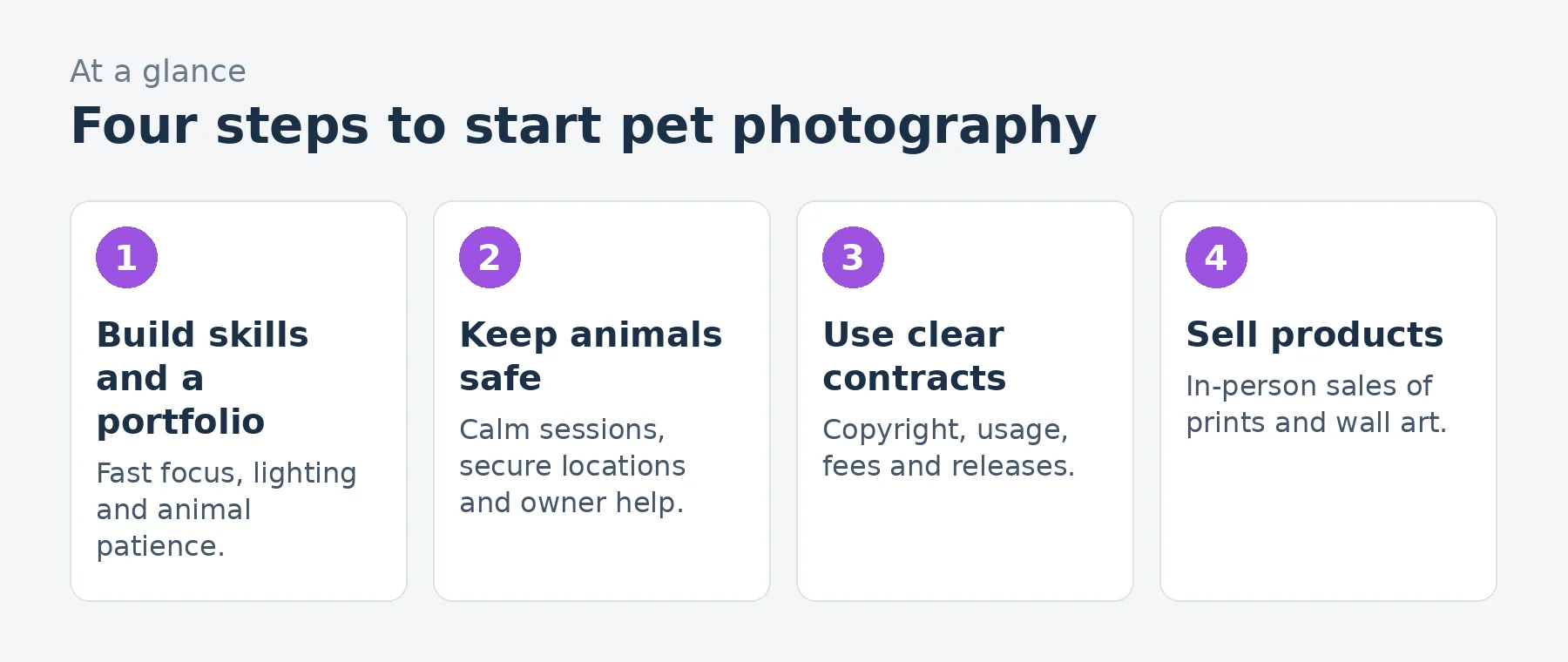
Many pet photographers charge a session fee and earn most of their revenue from products: prints, framed wall art, canvases and albums, often sold in a viewing and ordering appointment after the session. Others sell digital packages. Price products to cover printing, time and profit. Use our pricing calculator.
A worked example: an established photographer
These are illustrative assumptions for an established pet photographer, not predictions.
| Assumption | Monthly | |
|---|---|---|
| Session fees | 14 sessions at $200 | $2,800 |
| Prints, wall art and albums | Average sale of about $650 per session | $9,100 |
| Commercial and event work | Brands, groomers and shelter events | $1,500 |
| Revenue | $13,400 | |
| Print and product costs | About 25% of product sales | $(2,275) |
| Editing help and software | $(400) | |
| Studio rent | Shared studio space | $(900) |
| Insurance, travel and marketing | $(800) | |
| Profit before owner pay and taxes | $9,025 |
That leaves about $9,025 a month before the photographer’s pay and taxes, on about $13,400 of revenue. Product sales, not session fees, usually make pet photography profitable.
Loading the calculator…
Working with rescues and shelters
Volunteering to photograph adoptable animals helps them find homes, builds your portfolio and connects you with animal lovers. Many photographers run charity events or donate part of session fees to rescues.
Marketing
- Partnerships with groomers, veterinarians, pet stores and trainers.
- Social media showing pets and behind-the-scenes moments.
- Seasonal mini sessions for holidays.
- Pet events and adoption days.
- Reviews and referrals from happy owners.
Photographing cats and other animals
Cats are often best photographed at home where they feel safe, with patience, natural light and toys. Horses, birds and exotic pets each need specific handling knowledge; involve owners and keep animals’ comfort first.
End-of-life sessions
Legacy sessions for elderly or ill pets are emotional and meaningful. Offer flexible scheduling, gentle pacing, home or nearby locations and compassionate communication, and consider partnering with veterinarians who can refer clients.
Mini session events
Short, low-priced mini sessions around holidays or seasons bring many clients in a single day and introduce new customers, who often return for full sessions. Partner with pet stores or rescues to host events.
Products clients love
Wall art, framed prints, canvases, albums, calendars and holiday cards are popular. Show physical samples during sales appointments so clients can see quality and size, and offer packages at different price points.
Editing and delivery
Edit consistently in your signature style, remove leashes and distractions where appropriate and deliver galleries on a clear timeline. Online galleries make it easy for clients to view, favorite and order images.
Commercial pet photography
Pet brands, groomers, kennels, veterinary clinics and pet food companies need images for websites, packaging and ads. Commercial work requires clear usage licenses, model releases from owners and sometimes animal handlers on set.
Insurance and equipment protection
Carry general liability insurance for sessions, especially in studios and public places, and equipment insurance for cameras and lenses. Back up images in at least two places, including off-site storage.
Building a recognizable style
Clients choose photographers whose style they love, such as bright studio portraits, dramatic fine art, natural adventure images or playful action shots. A consistent style across your portfolio attracts the right clients.
Common mistakes to avoid when starting a pet photography business
- Putting the shot ahead of animal safety.
- Shooting in parks without required permits.
- Unclear copyright and usage terms.
- Relying on low session fees without product sales.
- No backup of client images.
Your first 90 days as a pet photography business owner
- Days 1-30: build a portfolio by photographing friends’ pets and shelter animals, and set up editing and galleries.
- Days 31-60: write contracts, buy insurance, order sample products and set pricing.
- Days 61-90: partner with groomers and vets, run a holiday mini session event and collect reviews.
Frequently asked questions about starting a pet photography business
Do I need a license to be a pet photographer?
Usually just a business license, plus park permits for commercial photography where required.
Who owns the copyright to pet photos?
Typically the photographer, who licenses images to clients, unless a contract transfers rights.
How do pet photographers make money?
From session fees and especially products such as prints, wall art and albums, plus commercial and event work.
How do you photograph fast-moving dogs?
With fast autofocus, quick shutter speeds, good light, treats, toys and patience.
Do I need permits to shoot in parks?
Some parks and public lands require permits for commercial photography; check local rules.
Is pet photography a good business?
It can be, especially with strong product sales and partnerships with pet businesses.
How long does a pet photo session last?
Often one to two hours, with breaks, depending on the animal and location.
Can I photograph pets at clients’ homes?
Yes, especially cats and older pets, which often relax more at home.
What camera settings work for pets?
Fast shutter speeds, continuous autofocus and wide apertures help capture sharp images of moving animals in good light.
Should I sell digital files or prints?
Many photographers offer both, but product sales of prints and wall art usually earn more.
How do I find pet photography clients?
Through groomers, veterinarians, pet stores, rescues, social media and mini session events.
Do I need a studio?
Not necessarily; many pet photographers work outdoors or in clients’ homes, renting studio space as needed.
How much do pet photographers charge?
Pricing varies; many charge a session fee and earn most revenue from prints, wall art and albums.
Can I use client photos in my portfolio?
Only with permission, usually granted in your contract or a release.
What lens is best for pet photography?
Fast prime lenses and a telephoto zoom are popular for sharp images and action shots.
Keep learning
- Pet care industry data
- How to start a portrait photography studio
- How to start a pet boarding kennel
- Pricing calculator
Sources
- Professional Photographers of America (PPA)
- US Copyright Office, Copyright basics
- National Park Service, Commercial filming and still photography permits
- US Bureau of Labor Statistics, Animal care and service workers
Last reviewed November 3, 2026. Startup costs are estimates; check local prices, licensing and tax rules before you commit money.

