
A portrait studio photographs people: families, children, newborns, high school seniors, couples, professionals needing headshots, and pets. Unlike weddings, portrait work happens all year, on weekdays as well as weekends, and many clients return every year as their families grow.
The business side matters as much as the photography. Studios differ mainly in how they sell: some charge a session fee that includes digital images, while others charge a smaller session fee and earn most revenue from prints, wall art and albums ordered after a viewing appointment. This guide covers niches, space, pricing models, a worked example and marketing.
A portrait studio at a glance
Table of Contents
| Topic | What to expect |
|---|---|
| Startup cost | Low to moderate: camera, lenses, studio lighting and backdrops; more if you lease a commercial studio |
| Licenses | A business license; home studios may need a home occupation permit under local zoning |
| How you charge | Session fees with digital images, or session fees plus print and wall art sales |
| Demand | Year-round, with peaks for seniors, back to school, fall family sessions and holidays |
| Best for | Photographers who enjoy people, posing and building long-term client relationships |
Who a portrait studio suits
Portrait work suits photographers who enjoy directing and relaxing people, especially children and camera-shy adults, and who want a steadier, year-round schedule than weddings. Strong lighting and posing skills matter, and so do sales and customer service.
Advanton’s photography and video industry data shows a median pay of $56,480 for media and communication equipment workers, the BLS group that includes photographers. Studio owners earn what remains after space, products and marketing.
Choosing a niche
- Families and children: steady demand, seasonal peaks and repeat clients.
- Newborns: high demand and loyal clients, but requires specialized safety training and patience; safety must always come before poses.
- High school seniors: strong spring, summer and fall demand, with outfit changes and locations.
- Professional headshots: weekday work for businesses, real estate agents and job seekers, often with corporate team bookings.
- Pets: a growing niche with enthusiastic owners.
- Maternity and milestone sessions: often booked by the same families over years.
A clear niche makes your marketing simpler and helps referrals: people remember the newborn photographer or the headshot studio.
Studio space: home, shared or leased
Many photographers start with a home studio or on location, which keeps costs low. Check local zoning; some areas require a home occupation permit or limit client visits. A shared studio or hourly rental space gives a professional setting without a long lease. A leased studio offers control and visibility but adds rent, utilities and build-out costs, so wait until bookings justify it.
Good studio space needs enough depth for lighting and backgrounds, high ceilings if possible, a changing area, climate control (especially for newborns) and convenient parking.
Equipment
- Camera body (with a backup), portrait lenses and a versatile zoom.
- Studio lights or strobes, modifiers (softboxes, umbrellas, reflectors) and stands.
- Backdrops, posing stools, props suited to your niche.
- An editing computer, software and a professional online gallery service.
- Sample products to show clients: prints, canvases and albums.
Pricing models
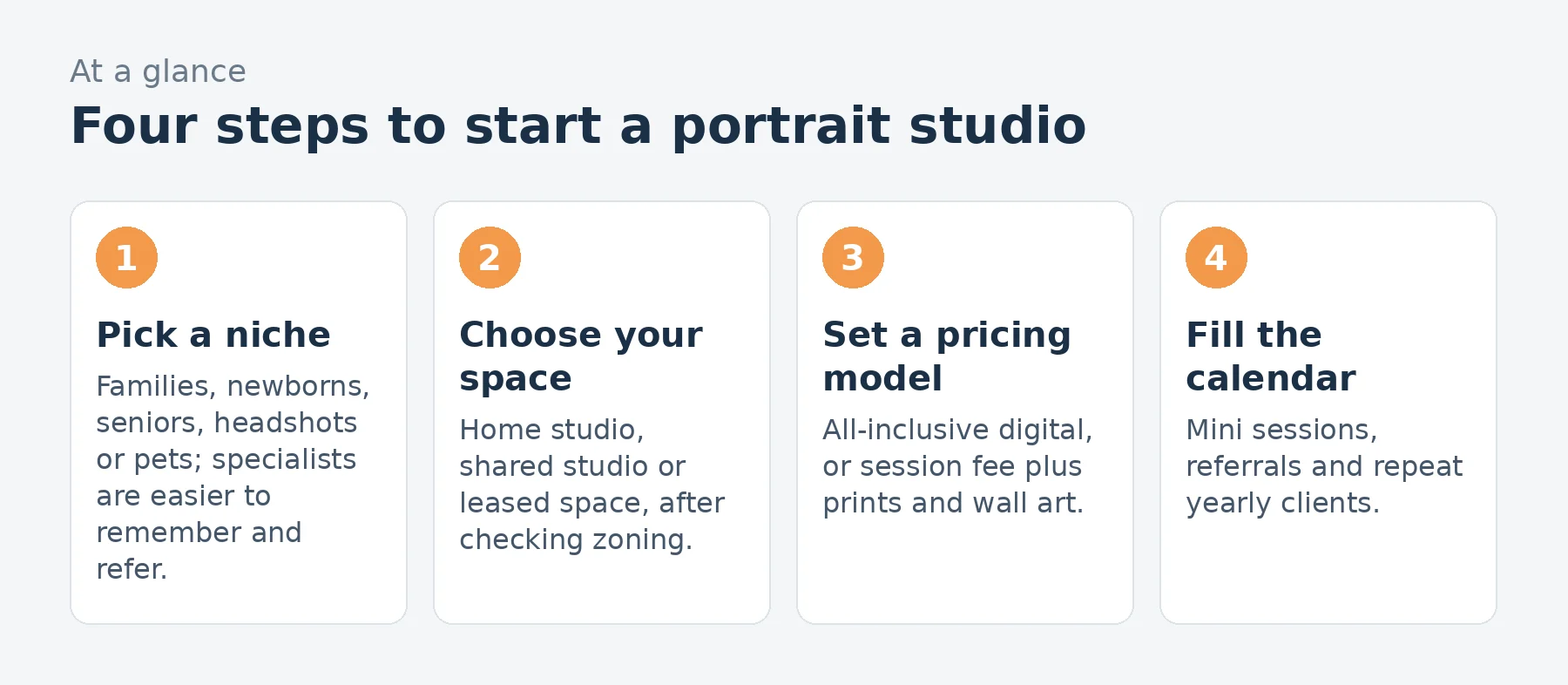
Most studios use one of two models:
- All-inclusive digital: one session fee that includes edited digital images. Simple for clients and easy to sell online, but revenue per client is capped.
- Session fee plus products (in-person sales): a lower session fee, then a viewing appointment where clients choose prints, wall art and albums. More work per client, but often much higher average sales.
Mini sessions (short, themed sessions at a set price on one day) fill the calendar in busy seasons and bring in new families. Whatever model you choose, show prices clearly enough that clients are not surprised, and use our pricing calculator to check that each package covers your time and costs.
A worked example: a small leased studio
These are illustrative assumptions, not predictions.
| Assumption | Monthly | |
|---|---|---|
| Full sessions | 24 sessions at $350 average (including digital images) | $8,400 |
| Print, wall art and album orders | About half of clients order products, $280 average | $3,360 |
| Mini-session event | One seasonal event a month on average | $1,500 |
| Revenue | $13,260 | |
| Studio rent and utilities | Small leased studio | $(1,800) |
| Print lab costs | Products ordered by clients | $(1,100) |
| Software, gallery hosting and backups | $(200) | |
| Marketing | Ads, website, local partnerships | $(800) |
| Insurance and equipment replacement | $(500) | |
| Assistant | Part-time help for busy days | $(900) |
| Profit before owner pay and taxes | $7,960 |
That leaves about $7,960 a month before the owner’s pay and taxes, on about $13,260 of revenue. Product sales are a powerful lever: studios that hold in-person viewing appointments often sell more wall art and albums than those that only deliver online galleries.
Running a session that clients love
- Send a preparation guide: what to wear, what to bring, how to prepare children.
- Greet clients warmly and spend a few minutes relaxing them before shooting.
- Work through planned poses, then let natural moments happen.
- Show a few images on the back of the camera to build excitement.
- Schedule the viewing or deliver a preview within days.
Under U.S. copyright law, you generally own your images; spell out clients’ personal use rights in your agreement, and get a model release before using images in marketing.
Newborn safety comes first
Newborn photography is popular and profitable, but babies are fragile. Learn safe posing and handling from a reputable training program before offering it. Keep the studio warm, wash hands and sanitize props, never leave a baby unattended on props, use a spotter for posed shots, and create composite images (combining two photos) rather than balancing a baby in risky positions. Parents notice your care, and safety-focused photographers earn referrals.
The viewing appointment
If you sell prints and wall art, the viewing (or ordering) appointment is where most revenue comes from. Show the edited images in person or on a video call, large on a screen, so clients can picture them on their walls. Have sample products to touch, a clear price list and collections that bundle prints with digital files. Guide clients toward what suits their home without pressure; satisfied clients return every year and tell friends.
A year-round calendar
- Winter: headshots for the new year, maternity and newborns, studio sessions while outdoor light is short.
- Spring: family sessions, cake smashes and early senior sessions.
- Summer: seniors, outdoor families and pets.
- Fall: the busiest family season and holiday mini sessions; book it early.
Plan marketing a few months ahead of each season, and send past clients a reminder before their usual time.
How to find clients
- Repeat clients: remind families yearly before their session season.
- Partnerships: schools and sports leagues (seniors), pediatricians and baby boutiques (newborns), real estate brokerages and companies (headshots), groomers and pet stores (pets).
- Google Business Profile and reviews for searches like "family photographer near me".
- Mini-session events promoted through local groups and social media.
Corporate headshot days
Headshots fill weekdays that family clients rarely book. Offer companies an on-site headshot day: you set up portable lighting and a backdrop in a conference room and photograph each employee in a few minutes, with consistent lighting and background across the whole team. Price per person with a minimum, include a set number of retouched images and offer add-ons for new hires later in the year. Real estate brokerages, law firms, medical practices and growing startups are good places to start.
Common mistakes to avoid
- Leasing a large studio before bookings justify it.
- Underpricing digital images and losing money on editing time.
- Using images in marketing without a model release.
- Trying to photograph every niche at once.
- Skipping newborn safety training.
Your first 90 days
- Days 1-30: choose your niche, register your business, check zoning for a home studio and set your pricing model.
- Days 31-60: build a niche portfolio, create sample products and launch your website and Google Business Profile.
- Days 61-90: run a mini-session event, partner with two local businesses and ask every client for a review.
Frequently asked questions
Do I need a commercial studio to start?
No. Many portrait photographers start with a home studio or on location and lease space once bookings are steady.
Should I sell digital files or prints?
Both models work. All-inclusive digital is simpler; session fees plus print and wall art sales often bring higher revenue per client.
What is a mini session?
A short, themed session at a set price, with several clients booked back to back on one day.
Do I need a license?
No photography license is required, but you need a business license and may need a home occupation permit for a home studio.
What niche is easiest to start in?
Family and headshot photography have steady, year-round demand and lower equipment needs than some specialties. Newborn work requires extra safety training.
Is newborn photography safe?
It is when done by trained photographers who follow safe handling and posing practices, keep the room warm, use spotters and create composite images instead of risky poses.
Keep learning
- Photography and video industry data
- How to start a wedding photography business
- Pricing calculator
- Local SEO Check
Sources
- US Bureau of Labor Statistics, Photographers
- US Copyright Office, Copyright basics
- US Small Business Administration, Choose your business location
Last reviewed November 2, 2026. Startup costs are estimates; check local prices, licensing and tax rules before you commit money.

