
A live event promoter organizes and markets events: concerts, club nights, comedy shows, festivals, theater, sports and cultural events. Promoters book talent, secure venues, sell tickets, run marketing and take on the financial risk, earning profit when ticket sales and other revenue exceed costs.
Promotion can be rewarding and risky: a sold-out show can be very profitable, while weak ticket sales can mean losses. Ticketing now has stricter rules: the FTC’s rule on unfair or deceptive fees, in effect since May 2025, requires sellers of live-event tickets to show the total price, including mandatory fees, upfront. The Bureau of Labor Statistics reports a median pay of $63,670 for music directors and composers, a reference for the music business. This guide covers deals, budgets, ticketing rules, permits and safety, marketing, a worked example and a 90-day plan.
A live event promotion business at a glance
Table of Contents
| Topic | What to expect |
|---|---|
| Startup cost | Low to moderate per event: artist deposits, venue rental, marketing, insurance, staff and production |
| Key rules | All-in ticket pricing including mandatory fees (FTC), BOTS Act limits on ticket bots, permits, alcohol and safety rules |
| How you earn | Ticket revenue after artist and venue costs, plus bar shares, sponsorships and merchandise shares |
| Biggest risk | Selling too few tickets to cover guarantees and costs |
| Best for | Connected, marketing-savvy people who understand an audience and manage risk carefully |
Who event promotion suits
It suits people deeply connected to a music scene or community who understand what their audience wants, can negotiate and are comfortable with financial risk. Promoters work nights and weekends and juggle many details on show day.
Booking talent
Most touring artists are booked through agents, who receive offers from promoters. An offer states the date, venue, capacity, ticket prices, the artist’s fee or deal structure, production and hospitality terms and radius clauses (limits on nearby shows). Build relationships with agents by paying on time, promoting well and reporting honestly.
Deal structures
- Flat guarantee: the artist is paid a fixed fee regardless of sales.
- Versus deals: the artist receives the greater of a guarantee or a percentage of net revenue.
- Door deals: the artist receives a share of ticket revenue, common for smaller shows.
- Co-promotions: promoters or venues share costs and profits.
Understand exactly how expenses are counted before agreeing to a percentage deal, and settle shows transparently.
Budgets and break-even
Before making an offer, build a budget: artist fee, venue, production, marketing, staffing, insurance, ticketing costs, hospitality and taxes. Calculate the break-even number of tickets at your planned prices. If break-even requires selling most of the venue, the show is risky. Use our break-even calculator to test scenarios.
Ticketing rules
Under the FTC’s Rule on Unfair or Deceptive Fees, businesses selling live-event tickets must clearly display the total price, including all mandatory fees, whenever a price is shown, rather than adding fees at checkout; optional charges and taxes are handled separately under the rule. The BOTS Act prohibits using software to get around ticket purchase limits and reselling tickets obtained that way. Some states add their own ticket resale and refund rules.
Venues and contracts
Venue agreements cover rental or revenue splits, minimums, staff, security, bar revenue, merchandise commissions, production equipment, insurance and cancellation. Read them carefully: hidden costs such as house staff, cleaning and security can change your break-even.
Permits, licenses and safety
Licensed venues usually hold music performance licenses from organizations such as ASCAP and BMI, but promoters running events in nonlicensed spaces may need licenses. Outdoor and pop-up events may need special event permits, fire inspections, temporary alcohol permits and noise approvals. Plan security, crowd management, medical coverage, accessibility and emergency procedures, especially for large events.
Startup costs to plan for
| Item | What to budget for |
|---|---|
| Artist deposits | Often a share of the guarantee upfront |
| Venue costs | Rental deposits and minimums |
| Marketing | Ads, posters, street teams, content |
| Insurance | Event liability coverage |
| Production | Sound, lights, backline, stage |
| Working capital | Reserves for weak shows |
Use our startup cost calculator for your total.
Marketing a show
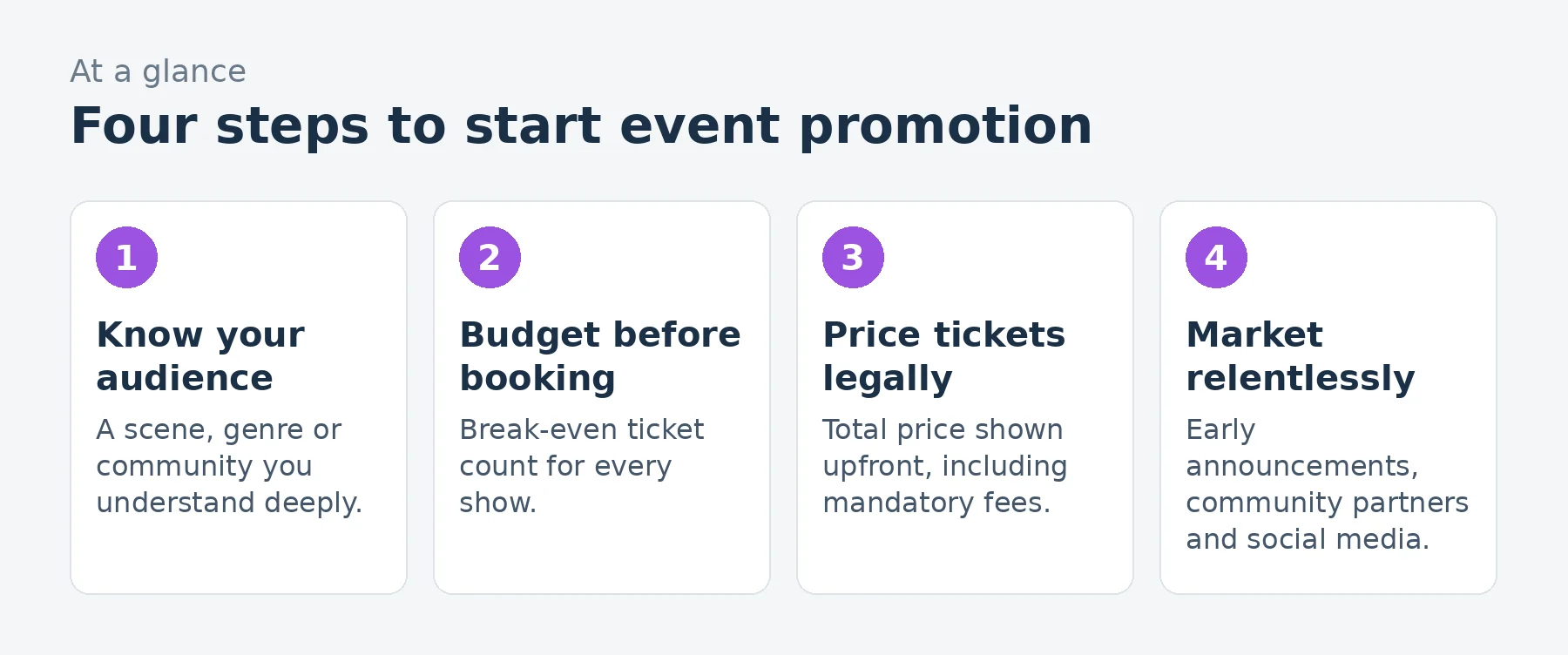
- Announce early with a clear on-sale date and tiered pricing.
- Work with the artist’s team on social media and email.
- Use targeted ads to fans of the artist and similar artists.
- Partner with local businesses, radio, media and community groups.
- Build your own email and text list (with consent) of past attendees.
A worked example: three shows in a month
These are illustrative assumptions for a month with three club and theater shows, not predictions.
| Assumption | Monthly | |
|---|---|---|
| Ticket sales | 1,500 tickets at $32 average (all-in, before ticketing fees) | $48,000 |
| Bar share and sponsorships | $3,500 | |
| Revenue | $51,500 | |
| Artist fees and guarantees | $(24,000) | |
| Venue rental and staff | $(9,000) | |
| Ticketing and payment costs | $(2,800) | |
| Marketing | Ads, posters, promoters | $(5,000) |
| Production, hospitality and travel | Sound, lights, rider costs | $(3,500) |
| Insurance and permits | $(900) | |
| Profit before owner pay and taxes | $6,300 |
That leaves about $6,300 a month before the promoter’s pay and taxes, on about $51,500 of revenue. Results swing widely show by show; one weak event can erase the profit of two good ones, so careful budgeting and audience knowledge matter most.
Loading the calculator…
Show day
- Confirm load-in, sound check and set times with the artist and venue.
- Brief security, door staff and box office.
- Manage hospitality and rider requirements.
- Keep the schedule on time.
- Settle with the artist and venue transparently after the show.
Sponsorships and extra revenue
Local and national brands sponsor events for exposure; offer packages with signage, social mentions and sampling. Bar revenue shares, VIP packages, merchandise commissions and parking can add income.
Settlement sheets
After each show, the promoter, venue and artist representative settle: ticket revenue, fees, taxes and agreed expenses, then the artist’s payment. Keep receipts and a clear settlement sheet. Transparent settlements build the trust that brings agents back with better artists.
Festivals and multi-day events
Festivals multiply both opportunity and risk: more artists, permits, infrastructure, security, medical staff and weather risk. Start with smaller single-day events, and consider event cancellation insurance and co-promotion partners before attempting a festival.
Building a promotion calendar
Plan shows around local calendars: avoid competing major events, use holiday weekends wisely and space similar shows so audiences are not overwhelmed. A consistent series, such as a monthly night, builds a loyal audience.
Growing beyond the first season
Track sales by show type, ticket price and marketing channel. Grow into larger venues as your audience grows, build relationships with agents for better routing and develop a brand audiences trust to curate good nights.
Accessibility at events
Plan accessible entrances, seating and viewing areas, accessible restrooms and clear information for guests with disabilities. Venues share these duties, but promoters should confirm arrangements and describe accessibility in event listings.
Working with venues long term
Venues prefer promoters who bring reliable audiences, follow rules and settle cleanly. Consistent series and good relationships can earn better dates, lower minimums and co-promotion opportunities.
Common mistakes to avoid
- Booking shows without a budget and break-even.
- Advertising ticket prices without mandatory fees included.
- Overpaying for talent your audience will not support.
- Underestimating venue and staffing costs.
- Skipping event insurance.
Your first 90 days
- Days 1-30: define your audience and scene, build venue relationships and create a budget template.
- Days 31-60: book a small first show with manageable risk, set up compliant ticketing and buy insurance.
- Days 61-90: market, run the show, settle transparently and use the results to plan the next.
Frequently asked questions
How do concert promoters make money?
From ticket revenue after artist, venue and production costs, plus bar shares, sponsorships and merchandise shares.
What is a versus deal?
A deal where the artist receives the greater of a guaranteed fee or a percentage of net revenue.
Do ticket prices have to include fees?
Yes. The FTC’s rule requires live-event ticket sellers to show the total price including mandatory fees upfront.
Do I need a license to promote events?
Usually a business license, plus venue agreements, insurance and any special event, alcohol and music licensing permits required.
How do I find artists to book?
Through agents and managers, local scenes and artists’ teams; build relationships by paying on time and promoting well.
How risky is event promotion?
It can be risky; budget carefully, calculate break-even and start with smaller shows.
Should I start with small venues?
Yes. Smaller venues lower guarantees and risk while you build an audience and relationships.
Do promoters need event insurance?
Yes. Event liability insurance is usually required by venues and protects against accidents and claims.
How do I set ticket prices?
Base prices on the artist’s draw, venue size, comparable shows and your break-even, then show the total price including mandatory fees.
Can I promote events part-time?
Yes. Many promoters start with occasional shows while working other jobs, growing as their audience builds.
What is a radius clause?
A contract term limiting an artist from playing other nearby shows within a set distance and time.
Keep learning
- Music and entertainment industry data
- How to start an event planning business
- Break-even calculator
- How to start a DJ business
Sources
- FTC, Rule on Unfair or Deceptive Fees (all-in pricing for live-event tickets)
- FTC, Better Online Ticket Sales (BOTS) Act
- ASCAP, Performing rights for songwriters and publishers
- US Bureau of Labor Statistics, Music directors and composers
- US Small Business Administration, Apply for licenses and permits
Last reviewed November 3, 2026. Startup costs are estimates; check local prices, licensing and tax rules before you commit money.

