
A plant nursery grows and sells plants: perennials, shrubs, trees, native plants, vegetables and herbs, houseplants or specialty collections. Retail nurseries sell to home gardeners; wholesale nurseries sell to landscapers, garden centers and contractors. Many small nurseries start on a few acres or even a large backyard, focusing on a niche.
Nurseries are regulated to stop plant pests from spreading, so most states require a nursery license and inspections. And many popular plants are protected by plant patents, which means you cannot legally propagate them without a license. The Bureau of Labor Statistics reports a median pay of $87,980 for farmers, ranchers and other agricultural managers (May 2024), though small nursery owners often earn less early on. This guide covers models, licensing, growing, patents, selling, a worked example and a 90-day plan.
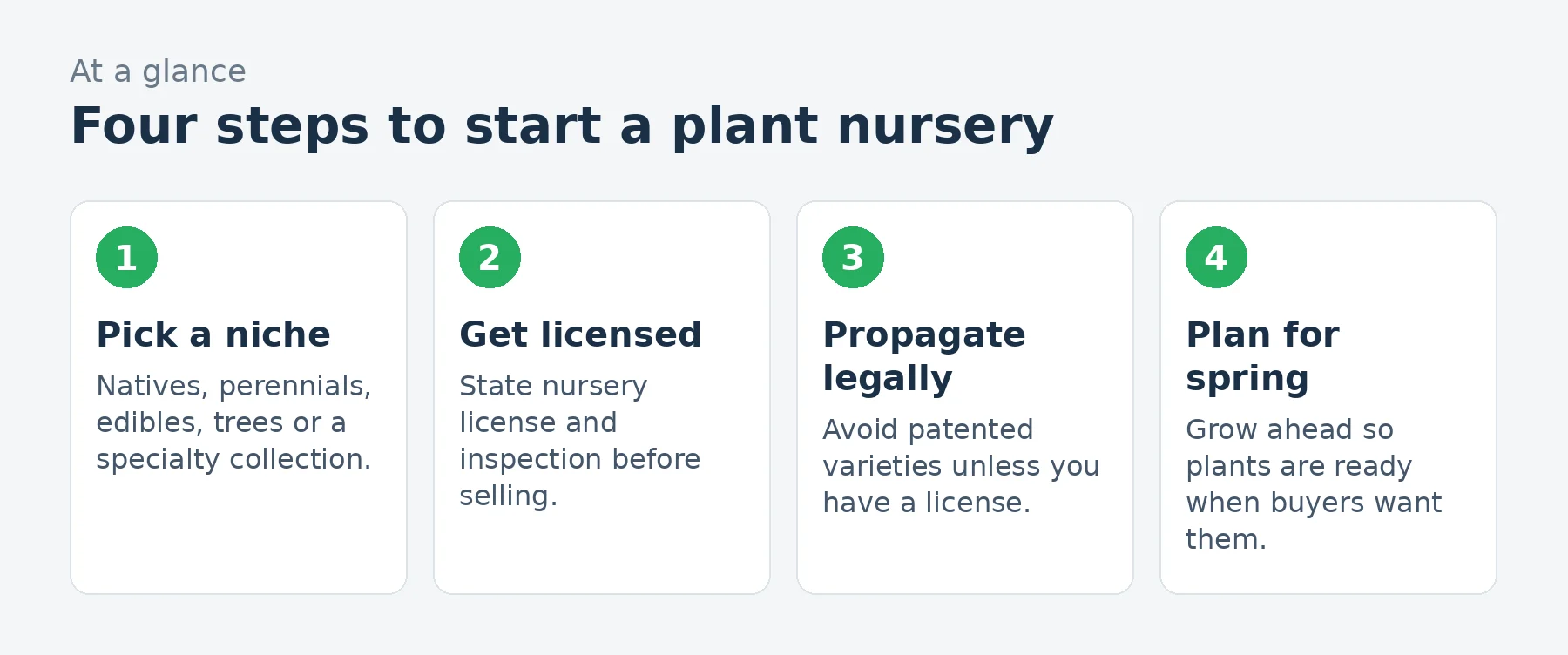
A plant nursery at a glance
Table of Contents
| Topic | What to expect |
|---|---|
| Startup cost | Low to high: land or space, greenhouse or hoop house, irrigation, pots, growing media, stock plants and a sales area |
| Licenses | State nursery license or registration and inspections; business license; pesticide applicator rules if applicable |
| Key rules | Plant patents and trademarks limit propagation of protected varieties; pest quarantines limit shipping |
| Busy season | Spring is the biggest selling season in most regions, with a smaller fall season |
| Best for | Patient growers who enjoy propagation and can plan production a season or more ahead |
Who a nursery suits
It suits patient, plant-loving people who enjoy propagation, physical work and planning far ahead. Many plants take months or years to reach sellable size, so production planning and cash flow matter.
Choosing a niche
- Native plants: growing demand for pollinator and native gardens.
- Perennials and grasses: popular with gardeners and landscapers.
- Vegetables and herbs: strong spring sales of transplants.
- Trees and shrubs: higher prices but longer growing times.
- Specialty collections: succulents, hostas, daylilies, fruit trees or rare plants.
Licensing and inspections
Most states require nurseries and plant dealers to hold a nursery license or registration from the state department of agriculture, with inspections for pests and diseases. Rules cover where plants come from and where they can go: state and federal quarantines restrict moving certain plants to stop pests. The National Plant Board lists state plant regulatory officials.
Plant patents and propagation
Many new plant varieties are protected by plant patents (and sometimes trademarks on their names). Asexually propagating a patented plant (cuttings, division, grafting) without a license infringes the patent, even if you bought the plant legally. Check labels and patent information, propagate public-domain varieties and natives freely, and buy licensed liners or join propagation programs for protected varieties.
Growing and pest management
Plan production schedules from your selling seasons backward. Use clean pots and media, good irrigation and spacing, and scout regularly for pests and diseases. If you use pesticides, follow label directions; agricultural employers must also follow the EPA Worker Protection Standard to protect workers.
Startup costs to plan for
| Item | What to budget for |
|---|---|
| Land or space | Lease or ownership, with water access |
| Growing structures | Greenhouse, hoop house, shade cloth |
| Irrigation | Drip or overhead systems, timers |
| Supplies | Pots, trays, growing media, labels |
| Plant stock | Seeds, liners, stock plants |
| Sales area | Benches, signage, payment system |
Use our startup cost calculator for your total.
Selling plants
- Retail: weekend sales at the nursery, plant sales events and online preorders with pickup.
- Farmers markets: especially for vegetable starts and herbs in spring.
- Wholesale: landscapers, garden centers and contractors, with volume pricing.
- Native plant sales: partnerships with conservation groups and schools.
A worked example: a spring month
These are illustrative assumptions for a spring month at a small retail and wholesale nursery, not predictions.
| Assumption | Monthly | |
|---|---|---|
| Retail plant sales | Weekend sales and online preorders | $14,000 |
| Wholesale to landscapers | $6,000 | |
| Revenue | $20,000 | |
| Pots, soil and fertilizer | $(2,400) | |
| Purchased liners and plugs | Young plants bought in to grow on | $(2,200) |
| Seasonal staff | With payroll costs | $(4,200) |
| Water, utilities and greenhouse heat | $(900) | |
| Land lease and equipment | $(1,100) | |
| Marketing, card fees and software | $(700) | |
| Insurance and licenses | $(300) | |
| Profit before owner pay and taxes | $8,200 |
That leaves about $8,200 in a strong spring month before the owner’s pay and taxes, on about $20,000 of revenue. Summer and winter can be slow, so plan cash flow across the whole year.
Pricing plants
Calculate costs per plant: pot, media, fertilizer, water, labor, the young plant or seed and losses. Price retail plants for quality and rarity, and offer wholesale prices for volume. Plants held too long cost money to maintain, so plan sales and markdowns.
Propagation methods
Nurseries propagate from seed, cuttings, division, layering and grafting, depending on the plant. Seeds are inexpensive but slower and variable; cuttings and division produce plants true to the parent. Many nurseries also buy young plants (liners or plugs) from specialist propagators and grow them on to sellable size, which saves time and gives access to licensed varieties.
Selling to landscapers
Landscapers and contractors buy in volume and value reliability: accurate availability lists, consistent sizes and quality, fair wholesale prices and on-time pickup or delivery. Send weekly availability lists in spring, offer standing orders for popular plants and build relationships with a few dependable contractors.
Managing inventory and records
Track what you planted, when it will be ready, what sold and what was lost. Clear labels with names and care information help customers and staff. Records also support licensing inspections, taxes and planning next year’s production.
Water and irrigation
Container plants need consistent water, often daily in summer. Reliable water, efficient drip or overhead irrigation, timers and good drainage protect your inventory and labor budget. Check water quality and any local restrictions on use, and plan for drought periods.
Insurance, taxes and records
Carry general liability insurance (venues and landlords often require it), property coverage for your inventory and equipment and commercial auto coverage for delivery vehicles. Collect and remit sales tax as your state requires, keep records of purchases, sales and losses, and review which products and services earn the most each month so you can adjust buying and pricing.
Planning the selling calendar
- Late winter: start seeds and cuttings, take preorders and publish availability lists.
- Spring: peak retail and wholesale sales; staff up for weekends.
- Summer: maintain stock, sell to landscapers and plan fall crops.
- Fall: sales of perennials, shrubs and trees; native plant events.
- Winter: clean up, repair structures and plan next year.
Native plants and conservation
Native plant demand has grown with interest in pollinators and wildlife. Grow species suited to your region from responsibly sourced seed, label them clearly with care and wildlife benefits and partner with conservation groups, schools and local governments that run native planting programs.
Labels and customer information
Good labels sell plants: the plant name, mature size, light and water needs, hardiness and any benefits such as attracting pollinators. Clear information helps customers choose the right plant and succeed with it, which brings them back. Keep patent and trademark labels on protected varieties as required.
Common mistakes to avoid
- Selling without a state nursery license.
- Propagating patented varieties without a license.
- Growing plants that are not ready in the spring rush.
- Underestimating water and labor.
- Overproducing plants that do not sell.
Your first 90 days
- Days 1-30: choose a niche, secure land and water and apply for a nursery license.
- Days 31-60: set up growing areas and irrigation, source seeds and liners and plan a production calendar.
- Days 61-90: propagate and grow your first crops, line up market spots and contact landscapers.
Frequently asked questions
Do I need a license to sell plants?
Most states require a nursery or plant dealer license and inspections. Check your state department of agriculture.
Can I propagate plants I bought?
Not if they are patented, unless you have a license. Public-domain varieties and many natives can be propagated freely.
When do nurseries sell the most?
Spring is the biggest season in most regions, with a smaller fall season.
Can I ship plants to other states?
Sometimes, but quarantines and state rules restrict some plants. Check before shipping.
Can I start a nursery in my backyard?
Some do, if zoning allows sales and you meet licensing rules.
Can I sell plants at farmers markets?
Yes, many nurseries sell at markets, but you still need any required state nursery license.
What plants are most profitable for a small nursery?
Often perennials, natives and vegetable starts that grow quickly and sell well in spring, priced for quality.
Do I need a greenhouse?
Not always. Many nurseries start with outdoor growing areas and hoop houses, adding greenhouses as they grow.
Are native plants a good niche?
Demand has grown with interest in pollinators and wildlife-friendly gardens, and many natives can be propagated freely.
How long does it take to grow plants to sell?
It varies from weeks for vegetable starts to years for trees and shrubs, which is why production planning matters.
Keep learning
- Plant nurseries industry data
- How to start a houseplant shop
- How to start a market garden business
- Pricing calculator
Sources
- USPTO, General information about plant patents
- National Plant Board, State plant regulatory officials
- USDA APHIS, Plant health and moving plants
- EPA, Agricultural Worker Protection Standard
- US Bureau of Labor Statistics, Farmers, ranchers and other agricultural managers
Last reviewed November 2, 2026. Startup costs are estimates; check local prices, licensing and tax rules before you commit money.

