
A houseplant shop sells indoor plants, pots, soil and plant care products, often with services such as repotting and workshops. Houseplants appeal to apartment dwellers, offices and gift buyers, and many shops build loyal communities through events and plant care advice.
Plants are living inventory: they need light, water and care while waiting to sell, and pests can spread quickly. Many states also require plant sellers to hold a nursery dealer license, and shipping plants across state lines is subject to pest quarantine rules. This guide covers models, sourcing, care, rules, services, pricing, a worked example and a 90-day plan.
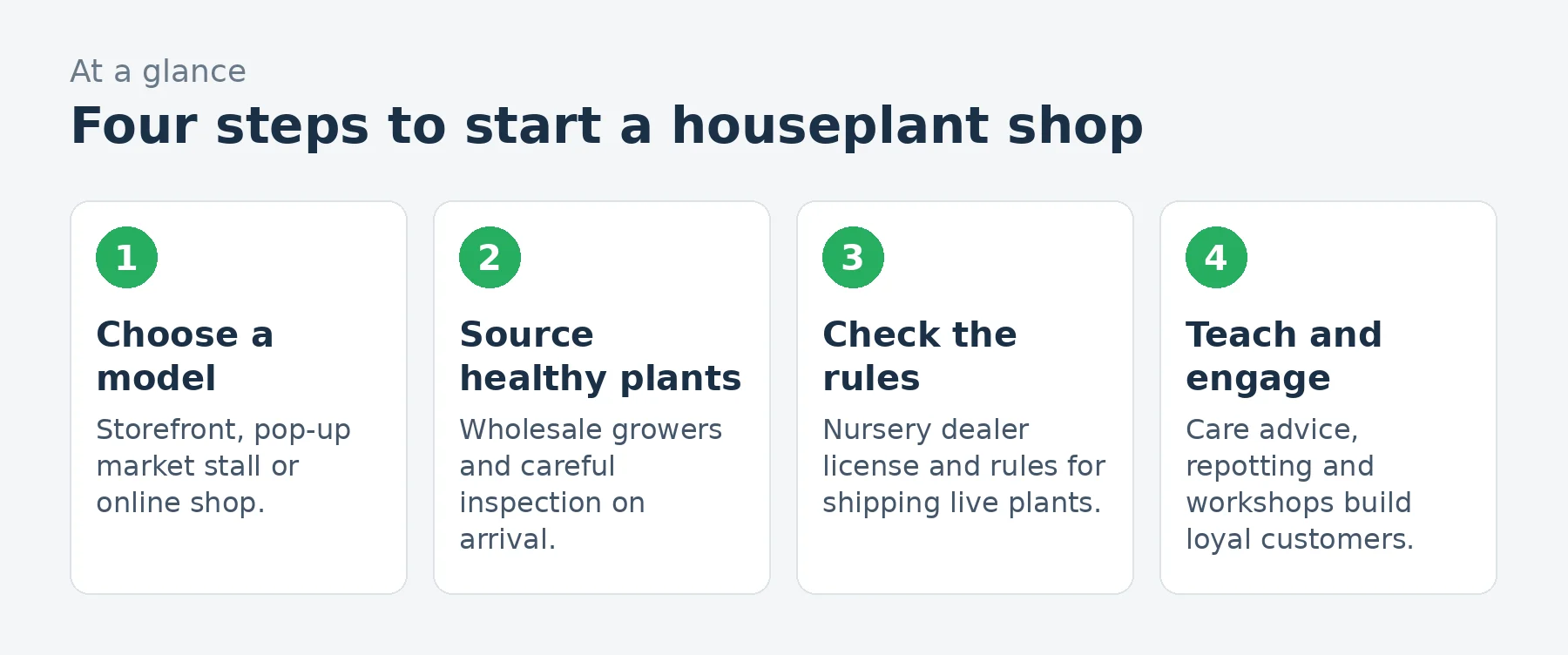
A houseplant shop at a glance
Table of Contents
| Topic | What to expect |
|---|---|
| Startup cost | Low to moderate: pop-up or shop space, plant inventory, pots and supplies, grow lights, shelving and point-of-sale |
| Licenses | Business license, sales tax permit and, in many states, a nursery or plant dealer license |
| Key challenges | Keeping plants healthy, preventing pests and managing living inventory |
| How you earn | Plants, pots and supplies, repotting services, workshops, gifts and office plant services |
| Best for | Plant lovers who enjoy teaching customers and caring for inventory daily |
Who a houseplant shop suits
It suits plant lovers who enjoy caring for living things and teaching customers. The Bureau of Labor Statistics reports a median pay of $34,730 for retail sales workers (May 2024); shop owners earn the profit after plants, rent and staff.
Choosing your model
- Storefront: a welcoming space with displays, workshops and repotting.
- Pop-ups and markets: low-cost testing at markets, festivals and events.
- Online shop: wider reach, with shipping challenges for live plants.
- Office plant services: installing and maintaining plants for businesses.
Sourcing plants
Buy from wholesale growers and distributors, many of which require a resale certificate or nursery license. Inspect every shipment for pests and disease before it joins your shop, and quarantine new plants briefly if possible. Offer a mix of easy-care staples, trendy plants and a few rare specimens. Some popular plant varieties are patented, so propagating them for sale requires a license.
Licenses and plant rules
Many states require businesses that sell plants to hold a nursery or plant dealer license and allow inspections. Shipping live plants across state lines is subject to federal and state rules to stop pests; some states have strict requirements or quarantines. The National Plant Board lists state plant regulators. Check before you sell online.
Keeping plants healthy in the shop
- Group plants by light needs and supplement with grow lights.
- Water on a schedule by plant type, and train staff.
- Keep humidity suitable for tropical plants.
- Inspect for pests weekly and isolate problems quickly.
- Discount plants that start declining before they become unsellable.
Startup costs to plan for
| Item | What to budget for |
|---|---|
| Space | Shop lease and build-out, or market booth |
| Inventory | Plants, pots, soil, tools and accessories |
| Display and lighting | Shelving, tables, grow lights |
| Licenses | Business, sales tax, nursery dealer |
| Point-of-sale and website | With online ordering |
| Insurance | General liability |
Use our startup cost calculator for your total.
Services that set you apart
- Repotting: customers bring plants and choose a pot; you repot for a fee.
- Workshops: terrariums, kokedama, propagation and plant care classes.
- Plant care advice: free help builds loyalty.
- Office plants: installation and maintenance contracts.
- Gifts and delivery: plants for birthdays and corporate gifts.
A worked example: a small storefront
These are illustrative assumptions for a small storefront, not predictions.
| Assumption | Monthly | |
|---|---|---|
| Plant sales | $13,000 | |
| Pots, soil and accessories | $5,000 | |
| Repotting, workshops and office plant care | $2,000 | |
| Revenue | $20,000 | |
| Plant and product costs | About 45% of product sales | $(8,100) |
| Losses and markdowns | Plants that decline or do not sell | $(900) |
| Staff wages | With payroll costs | $(4,200) |
| Rent and utilities | Including grow lights and humidity | $(2,800) |
| Card fees, software and marketing | $(800) | |
| Insurance and licenses | $(250) | |
| Profit before owner pay and taxes | $2,950 |
That leaves about $2,950 a month before the owner’s pay and taxes, on about $20,000 of revenue. Pots, soil and services often carry better margins than plants, so they matter more than they appear.
Loading the calculator…
Pricing
Price plants by size and rarity, and pots and accessories with healthy retail margins. Bundle a plant, pot and repotting as a single price for gifts. Track losses, and price to cover the plants that do not sell. Use our pricing calculator.
Creating a shop people want to visit
Houseplant shops thrive as destinations. Arrange plants by care level and light needs with clear signs, create photogenic displays, offer seating for workshops and make the space feel like a calm, green retreat. A clean, well-lit shop where plants look healthy builds trust in your advice.
Running workshops
Workshops bring in new customers, raise sales and build community: terrarium building, kokedama, propagation, pot painting and beginner plant care. Price per person to cover materials and time, limit class size and sell plants and supplies to participants afterward. Private workshops for birthdays and corporate team-building can be especially profitable.
Office plant services
Businesses pay for plants that look good year-round. Offer plant installation with ongoing maintenance visits (watering, cleaning, replacing declining plants) on monthly contracts. These recurring contracts steady income through slow retail months.
Selling online
An online shop extends your reach, but shipping live plants requires careful packing, seasonal timing (avoiding extreme heat and cold) and checking each state’s rules. Many shops start with local delivery and in-store pickup, then add shipping for hardy plants and supplies.
Insurance, taxes and records
Carry general liability insurance (venues and landlords often require it), property coverage for your inventory and equipment and commercial auto coverage for delivery vehicles. Collect and remit sales tax as your state requires, keep records of purchases, sales and losses, and review which products and services earn the most each month so you can adjust buying and pricing.
Pricing rare and specialty plants
Rare plants can command high prices, but demand and prices can fall quickly when growers increase supply. Buy rare plants in small quantities, price them based on current market demand and avoid holding large stocks of trendy varieties. Steady sellers and accessories provide a stable base.
Teaching customers
Many plant buyers worry about keeping plants alive. Care cards with every sale, simple advice about light and watering, a free plant clinic day and follow-up emails reduce plant deaths and bring customers back. Customers who succeed with their first plants return for more.
Gifts and corporate orders
Plants make long-lasting gifts. Offer gift-ready plants in decorative pots with a care card, local delivery and corporate gift programs for clients and employees, especially around the holidays and for office openings.
Pop-ups before a storefront
Pop-up markets, festivals and partnerships with cafés and boutiques let you test demand, build a following and learn what sells before signing a lease. Bring a focused selection of healthy plants, pots and a few workshop-style activities, and collect emails to announce your shop opening.
Common mistakes to avoid
- Buying plants your space cannot keep healthy.
- Skipping pest inspections.
- Shipping plants without checking state rules.
- Ignoring pots, soil and services, which carry good margins.
- Overbuying trendy plants that fall out of fashion.
Your first 90 days
- Days 1-30: check licensing rules, find wholesale growers and test demand at a market pop-up.
- Days 31-60: secure space, set up lighting and displays and buy opening inventory.
- Days 61-90: open, launch workshops and repotting and contact offices about plant services.
Frequently asked questions
Do I need a license to sell houseplants?
Many states require a nursery or plant dealer license. Check your state department of agriculture.
Can I ship houseplants to other states?
Often yes, but federal and state pest rules apply and some states have strict requirements. Check before shipping.
Where do houseplant shops buy plants?
From wholesale growers and distributors, often requiring a resale certificate or license.
How do I keep plants healthy in a shop?
Group by light needs, use grow lights, water on schedule, manage humidity and inspect for pests weekly.
What sells best besides plants?
Pots, soil, tools, workshops and repotting services often carry strong margins.
What are the best-selling houseplants?
Easy-care plants such as pothos, snake plants and ZZ plants sell steadily, while trendy and rare plants attract enthusiasts.
Do houseplant shops make money on workshops?
Often yes. Workshops cover materials and time and lead to extra plant and supply sales.
How do I keep pests out of my shop?
Inspect every shipment, isolate new arrivals briefly, check plants weekly and remove infested plants quickly.
Is a houseplant shop profitable?
It can be when pots, soil, services and workshops support plant sales, and losses are kept low through careful buying and care.
Should I start with a pop-up?
Many shop owners test demand at markets and pop-ups before committing to a storefront lease.
How much inventory should I start with?
Enough to fill your displays with a mix of staples and a few specialty plants, while keeping cash for restocking what sells. Buy small, frequent orders at first.
Keep learning
- Florists and garden centers industry data
- How to start a plant nursery
- How to start a florist shop
- Pricing calculator
Sources
- National Plant Board, State plant regulatory officials
- USDA APHIS, Plant health and moving plants
- USPTO, General information about plant patents
- US Bureau of Labor Statistics, Retail sales workers
Last reviewed November 2, 2026. Startup costs are estimates; check local prices, licensing and tax rules before you commit money.

