
Travelers, retirees, remote workers and outdoor enthusiasts book RV sites and campsites near lakes, parks, highways and events. RV parks and campgrounds combine land ownership with hospitality, and they can earn steady income once utilities and reputation are in place. Lodging managers earned a median of about $68,130 in May 2024, according to BLS figures as reported, and property managers earned $66,700.
Operators range from small RV parks with full hookups to campgrounds with cabins and glamping, and long-term RV communities that rent sites by the month. Permits for water, septic and electrical service are often the biggest early hurdles.
The workforce
| Occupation | Jobs (2024) | Median pay (May 2024) | Projected growth, 2024 to 2034 |
|---|---|---|---|
| Lodging managers (figures as reported) | n/a | $68,130 | +3% |
| Property, real estate and community association managers | 466,100 | $66,700 | +4% |
Source: U.S. Bureau of Labor Statistics, Occupational Outlook Handbook and Occupational Employment and Wage Statistics.
Business models compared
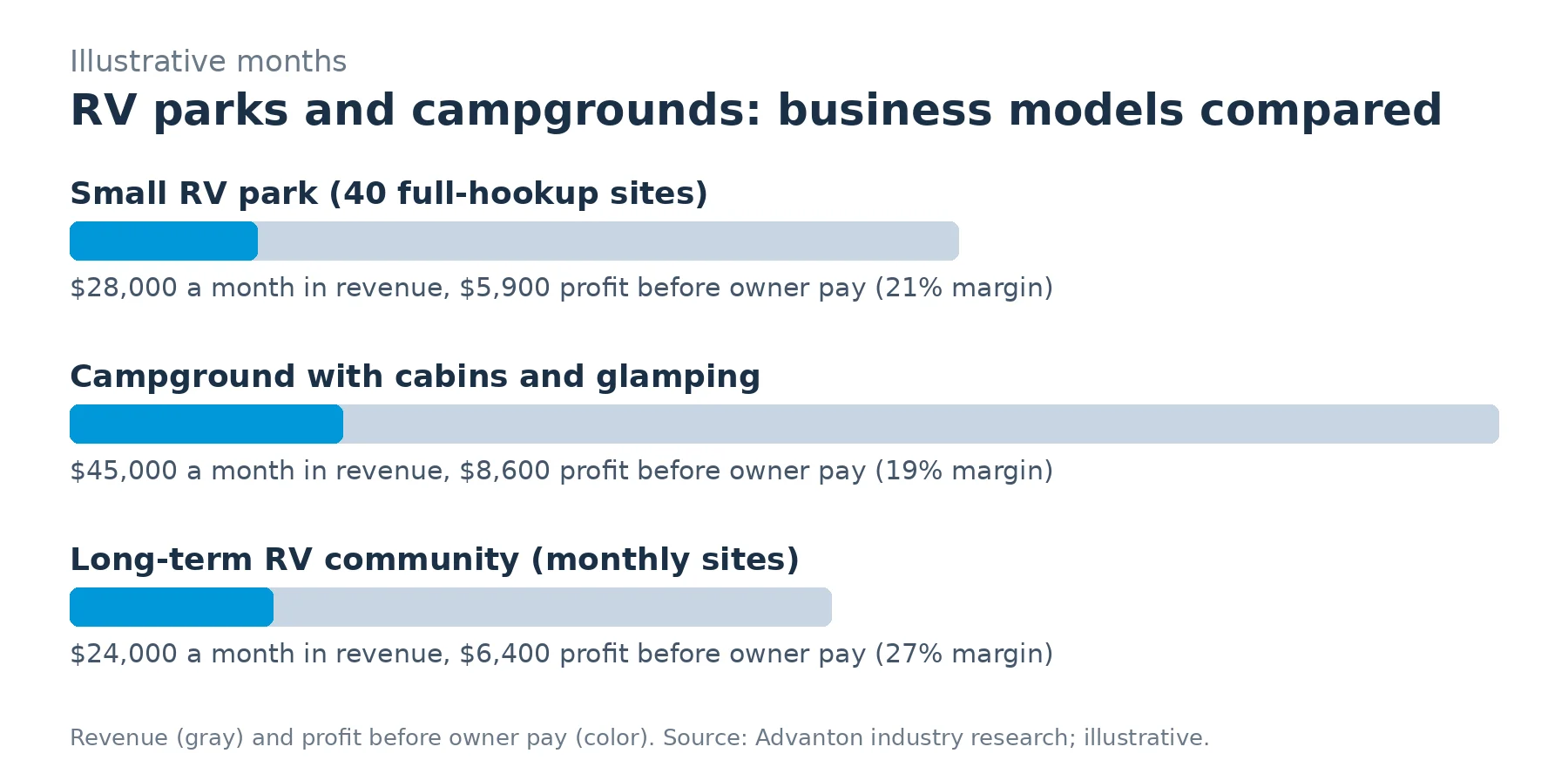
The figures below are illustrative months from our research, not industry averages. They show how revenue and costs typically fit together; your market, prices and costs will differ.
| Business model | Startup costs | Example monthly revenue | Costs | Profit before owner pay | Margin |
|---|---|---|---|---|---|
| Small RV park (40 full-hookup sites) | High: land, utilities, pads, roads, office | $28,000 | $22,100 | $5,900 | 21% |
| Campground with cabins and glamping | Very high: land, cabins, tents, bathhouses | $45,000 | $36,400 | $8,600 | 19% |
| Long-term RV community (monthly sites) | High: land, utilities, permits | $24,000 | $17,600 | $6,400 | 27% |
Fixed and variable costs
For projections, the most useful split is between variable costs, which rise and fall with sales (materials, supplies, hourly labor, fees), and fixed costs, which you pay every month regardless (rent, salaried staff, insurance, loan payments).
| Business model | Variable costs (% of revenue) | Fixed costs per month | What it means |
|---|---|---|---|
| Small RV park (40 full-hookup sites) | 15.4% | $17,800 | Mostly fixed: needs steady volume to cover overhead |
| Campground with cabins and glamping | 18.4% | $28,100 | Mostly fixed: needs steady volume to cover overhead |
| Long-term RV community (monthly sites) | 12.1% | $14,700 | Mostly fixed: needs steady volume to cover overhead |
What the numbers say
Land and utility infrastructure dominate costs, so financing and occupancy decide results.
Cabins and glamping raise revenue per site but add cleaning, linens and maintenance.
Long-term sites trade higher nightly rates for steady monthly income with fewer turnovers.
The three models in brief
Small RV park. Full-hookup sites for travelers near highways, attractions or work sites. See travel and tourism data.
Campground with cabins and glamping. Tent sites, cabins and upscale tents near outdoor attractions. See bed and breakfasts data for small-lodging comparisons.
Long-term RV community. Monthly sites for workers, retirees and remote workers. See rental property data.
Cost structure: campground with cabins and glamping
Each cost as a share of the example month’s revenue ($45,000):
| Cost | Monthly amount | Share of revenue | Type |
|---|---|---|---|
| Mortgage and cabin loans | $14,000 | 31.1% | Fixed |
| Staff | $7,000 | 15.6% | Fixed |
| Cleaning and linens | $3,500 | 7.8% | Variable |
| Utilities | $3,000 | 6.7% | Variable |
| Property taxes and insurance | $3,000 | 6.7% | Fixed |
| Maintenance and grounds | $2,000 | 4.4% | Fixed |
| Booking and card fees | $1,800 | 4.0% | Variable |
| Marketing | $1,500 | 3.3% | Fixed |
| Software and Wi-Fi | $600 | 1.3% | Fixed |
| Profit before owner pay | $8,600 | 19% |
A first-year projection: campground with cabins and glamping
New businesses rarely start at full speed. This projection assumes revenue ramps from 35% of the example month in month 1 to 100% by month 12, variable costs move with revenue, and fixed costs stay the same every month. It’s a planning illustration, not a forecast.
| Month | Revenue | Variable costs | Fixed costs | Profit | Cumulative |
|---|---|---|---|---|---|
| 1 | $15,750 | $2,898 | $28,100 | -$15,248 | -$15,248 |
| 2 | $20,250 | $3,726 | $28,100 | -$11,576 | -$26,824 |
| 3 | $24,750 | $4,554 | $28,100 | -$7,904 | -$34,728 |
| 4 | $27,900 | $5,134 | $28,100 | -$5,334 | -$40,062 |
| 5 | $31,500 | $5,796 | $28,100 | -$2,396 | -$42,458 |
| 6 | $34,200 | $6,293 | $28,100 | -$193 | -$42,651 |
| 7 | $36,900 | $6,790 | $28,100 | $2,010 | -$40,641 |
| 8 | $39,150 | $7,204 | $28,100 | $3,846 | -$36,795 |
| 9 | $40,950 | $7,535 | $28,100 | $5,315 | -$31,480 |
| 10 | $42,750 | $7,866 | $28,100 | $6,784 | -$24,696 |
| 11 | $44,100 | $8,114 | $28,100 | $7,886 | -$16,810 |
| 12 | $45,000 | $8,280 | $28,100 | $8,620 | -$8,190 |
Year one: revenue $403,200, profit before owner pay -$8,190. The first profitable month is month 7. Cumulative results bottom out at -$42,651, which is the minimum cash cushion this plan would need, before any startup costs.
The land loan, taxes, insurance and staff continue while bookings build, so this RV park illustration turns profitable in month 7, with a cumulative low of about $42,700, before land and infrastructure investment. Seasonality makes real results swing more in many regions.
How RV parks and campgrounds earn
- Nightly, weekly and monthly site fees.
- Cabin and glamping rentals.
- Seasonal and long-term sites.
- Camp store, firewood and propane sales.
- Events, group bookings and storage.
Utilities are the backbone
Full hookups (water, sewer and 30 or 50 amp electrical service) attract RV travelers but are expensive to install and permit. Plan capacity for peak demand, and decide whether to meter or rebill electricity for long-term guests where state rules allow.
Location and demand
Parks near national and state parks, lakes, beaches, highways, events and workforce centers fill more nights. Study nearby parks’ rates and occupancy before buying land.
A startup checklist
- Confirm zoning and campground permits.
- Plan water, septic and electrical capacity.
- Design site layouts for large RVs and safe traffic flow.
- Register for occupancy taxes.
- Choose reservation software.
Seasonality
Many campgrounds earn most revenue in warm months. Long-term sites, winter RV storage, events and off-season discounts help smooth cash flow.
Where the opportunities are
- Workforce RV housing near energy, construction and industrial projects.
- Glamping and cabins near attractions.
- Upgrading older parks with better utilities and Wi-Fi.
- Event parking and camping.
- RV and boat storage on extra land.
Key terms
| Term | Meaning |
|---|---|
| Full hookup | Water, sewer and electrical connections at a site |
| Pull-through site | A site RVs can drive through without backing |
| Glamping | Upscale camping in furnished tents or cabins |
| Occupancy tax | Tax collected on short-term stays |
Long-term guests and the law
Monthly guests may gain tenant protections depending on state law and length of stay. Understand eviction, notice and utility rules before offering long-term sites.
Key numbers to track
Track occupancy by site type, average daily rate, revenue per available site, utility costs, repeat guests and reviews.
Common mistakes
- Underestimating utility and permit costs.
- Too few large or pull-through sites.
- Poor Wi-Fi.
- Ignoring long-term tenancy rules.
- No off-season plan.
Marketing a campground
Listings on RV and camping booking platforms, Google Business Profile, reviews, partnerships with attractions and clear photos of sites and amenities bring guests. See travel and tourism data.
Amenities that matter
Clean restrooms and showers, laundry, reliable Wi-Fi, level sites and pet areas drive reviews more than flashy extras.
Maintenance
Roads, utilities, bathhouses and landscaping need constant care. Schedule preventive maintenance in slower seasons.
Safety and guest rules
Clear rules on quiet hours, speed limits, pets, campfires and generator use keep guests safe and reviews strong. Post emergency information, maintain fire extinguishers and lighting, and train staff on severe weather plans, especially in areas prone to storms or wildfire.
Buying an existing park
Existing parks come with permits, utilities and booking history. Review financials, utility capacity, permits and deferred maintenance carefully.
Test these numbers with your own plan
Open this industry in our free Business Idea Reality Check to start from any model above, change prices, costs, startup budget and your own pay, and see your break-even month, the cash you’d need, three scenarios and how new businesses in this sector survive in your state.
- Start with the closest model and its cost structure.
- Replace every price and cost with local quotes.
- Estimate your ramp: how fast customers will realistically come in year one.
- Map cash month by month with the free Cash & Payroll Planner.
- Build the full plan in the free Business Planner.
About this data
Workforce figures come from the U.S. Bureau of Labor Statistics (Occupational Outlook Handbook and Occupational Employment and Wage Statistics, May 2024 wages and the 2024 to 2034 projections, unless noted). Market figures cite their sources above. Business model figures are illustrative months built from typical prices and costs to show how revenue, fixed costs and variable costs fit together; they are not industry averages or guarantees. We review these profiles when new government data is released, at least once a year, and the same figures power the Business Idea Reality Check.
Licensing and rules
Zoning approval and often conditional use permits; health departments commonly permit campgrounds and inspect water, sewage, restrooms and showers; wells, septic systems and electrical service require permits and inspections; state and local occupancy taxes apply to short stays; long-term site rentals may fall under landlord-tenant or manufactured housing laws, depending on the state; fire safety, propane rules and pool permits apply where relevant. Requirements change; confirm with your state and local agencies before you start.
Frequently asked questions
Is an RV park profitable?
It can be, with good locations, full hookups and steady occupancy, but land and utilities require large investment.
Do campgrounds need permits?
Yes: zoning, health department campground permits and utility permits are common.
What do RV parks charge?
Nightly, weekly and monthly rates vary by location, season and amenities.
Are long-term RV guests tenants?
Depending on state law and length of stay, they may have tenant protections.
Do campgrounds collect occupancy taxes?
Short stays usually trigger state and local occupancy taxes.
What amenities matter most?
Clean restrooms, reliable utilities, Wi-Fi and level sites.
How much land does an RV park need?
It depends on site sizes, roads, utilities, setbacks and local density rules; your zoning office and a site engineer can tell you how many sites a parcel can support.
Should I buy or build an RV park?
Buying brings permits and revenue history; building allows custom design but takes longer and risks permitting delays.
How can I test these numbers?
Open RV parks and campgrounds in the Business Idea Reality Check and enter your own rates and costs.
Keep learning
Sources
- Lodging managers median wage and outlook (BLS, as reported)
- U.S. Bureau of Labor Statistics, Property, real estate and community association managers
Last reviewed November 1, 2026. Startup costs are estimates; check local prices, licensing and tax rules before you commit money.

