
Tile work is skilled, visible and in steady demand: bathroom remodels, walk-in showers, kitchen backsplashes, floors and fireplaces. Homeowners judge a remodel by its tile, and a craftsman known for straight lines, clean grout and showers that never leak can build a business on referrals.
Tile setters are counted with flooring installers by the U.S. Bureau of Labor Statistics: together they held about 112,300 jobs in 2024, with a median wage of $52,000. Business owners who specialize, price well and manage projects carefully can earn more.
Tile business at a glance
Table of Contents
| Services | Showers and tub surrounds, bathroom floors and walls, backsplashes, floors, fireplaces, repairs |
| Customers | Homeowners, remodelers, builders, designers, tile showrooms |
| Licensing | Varies by state; some require a contractor license above a project value |
| Startup costs | Moderate: wet saw, mixers, levels, vehicle, insurance |
| Key to success | Waterproofing, prep and precise finish work |
Choose your focus
- Bathrooms and showers: the highest-value tile work, requiring waterproofing expertise.
- Backsplashes: quick, popular projects.
- Floors: kitchens, entries and whole-home tile.
- Large-format and natural stone: specialized, higher-value work.
- Repairs and regrouting: small jobs that lead to bigger ones.
Licensing and rules
- Contractor licensing varies by state: some states require licenses for tile work, sometimes above a project value; California, for example, has a tile classification. Check your state licensing board.
- Building permits may be required for bathroom remodels involving plumbing or structural changes, usually pulled by the general contractor or homeowner.
- Lead and asbestos: older homes may contain lead paint or asbestos in old tile, adhesives or plaster; test before demolition and follow the EPA’s lead-safe rules for pre-1978 homes.
Silica dust safety
Cutting, grinding and drilling tile, stone and mortar creates respirable crystalline silica dust, which can cause serious lung disease. OSHA’s silica standard applies to construction work, including tile cutting. Use wet cutting or tools with dust collection, wear appropriate respirators where required, cut outdoors when possible, and train your crew.
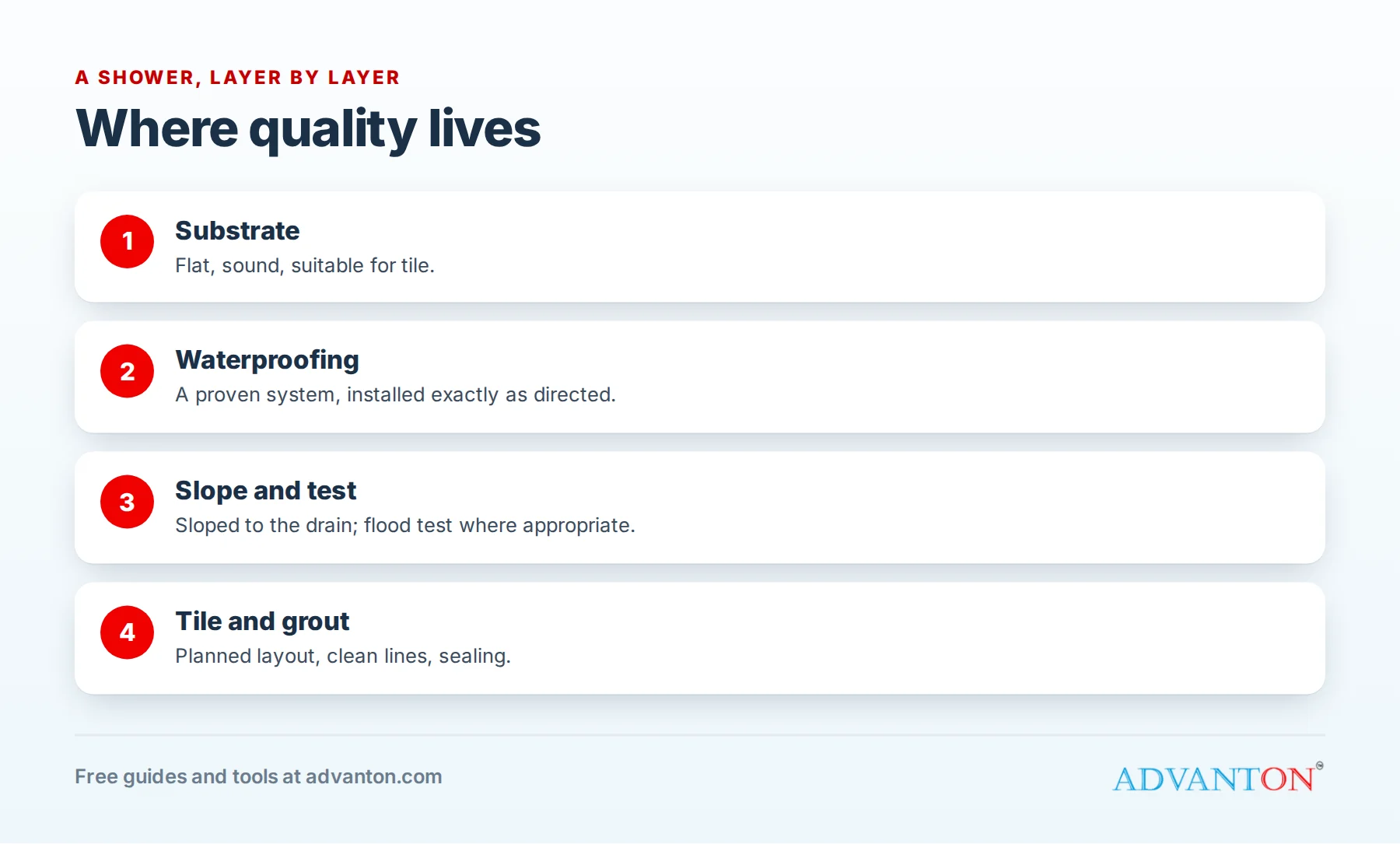
Waterproofing and prep: where quality lives
Most tile failures start beneath the tile:
- Substrate: flat, sound and suitable for tile.
- Waterproofing: for showers and wet areas, using a proven waterproofing system installed exactly to the manufacturer’s instructions.
- Slopes and drains: shower floors sloped correctly to the drain.
- Movement joints where required.
- Flood testing shower pans before tiling, where appropriate.
Follow industry installation standards and manufacturers’ instructions, and document your prep with photos; it protects you and reassures clients.
Layout planning
Great tile work is planned before the first tile is set. Find the room’s focal points, plan centered layouts so cuts at edges are balanced, avoid thin slivers at doorways and corners, align grout lines across walls and floors where possible, and plan niches and benches to fit full tiles. Show the client a simple layout sketch for approval.
Grout and sealing
Choose grout suited to the joint width and location: cement-based for many installations, or stain-resistant options for kitchens and showers. Seal natural stone and cement grout as the manufacturer recommends, and leave written care instructions. Clean, consistent grout lines are what clients notice most.
Tools and equipment
- Wet saw and tile cutters.
- Angle grinder with dust control.
- Mixing drill and paddles, buckets and sponges.
- Levels, laser level and straightedges.
- Trowels in various notch sizes, leveling systems and spacers.
- Waterproofing supplies and shower components.
- A vehicle for tools and materials.
Plan your list with our startup cost calculator.
Pricing
- Per square foot for floors and walls, varying with tile size, pattern and complexity.
- Per project for showers, bathrooms and backsplashes.
- Extras: demolition, waterproofing, niches, benches, trim, patterns and large-format tile.
- Materials: many clients choose tile from showrooms; you may supply setting materials and waterproofing.
Write detailed quotes with our free quote and invoice generator, and use our pricing calculator.
An example price list
| Service | Example price |
|---|---|
| Kitchen backsplash (up to 30 sq ft) | $900 |
| Floor tile installation | $6 per sq ft |
| Custom shower (walls, pan, niche) | From $5,500 |
| Large-format tile | Add $2 per sq ft |
| Regrouting | Quoted per area |
These prices are illustrative labor prices; they vary widely by region and complexity.
A worked example: a busy month
These figures are illustrative for a busy month, with clients supplying the tile. Slower months will be lower.
| Revenue | Amount |
|---|---|
| 4 projects × $5,800 | $23,200 |
| 4 repairs × $400 | $1,600 |
| Total revenue | $24,800 |
| Costs | Amount |
|---|---|
| Setting materials and waterproofing | $4,500 |
| Helper wages and payroll costs | $4,000 |
| Truck and fuel | $900 |
| Insurance | $800 |
| Tools and blades | $500 |
| Marketing | $900 |
| Disposal | $300 |
| Total costs | $11,900 |
Profit before owner’s pay and taxes: $12,900. Detailed, specialized work such as custom showers commands higher prices; plan for slower months with our cash flow forecast.
Insurance
You’ll need general liability (water damage claims can be expensive), commercial auto, tools and equipment coverage and workers’ compensation once you hire. See how to get business insurance.
An example bathroom timeline
| Day | Work |
|---|---|
| 1 | Demolition and disposal |
| 2 | Substrate repairs and backer board |
| 3 | Waterproofing and flood test |
| 4 to 6 | Tile setting: shower walls, floor, niche |
| 7 | Grout and trim |
| 8 | Sealing, caulking and final clean |
Timelines vary with size, materials and curing times; share a realistic schedule upfront.
Working with homeowners
- Help them choose tile wisely: suitable for floors or wet areas, slip resistance, and realistic expectations for natural stone.
- Agree on layout before starting: pattern, starting points, grout color and trim details.
- Explain timelines, including curing and drying times.
- Share progress photos, especially of waterproofing.
- Leave care instructions for grout and stone sealing.
Start with backsplashes
Backsplashes are a great way to start: smaller projects, quick completion, and visible results homeowners love to show friends. They build your portfolio and reviews while you develop the skills and reputation for full bathrooms and showers.
Sell valuable upgrades
Shower niches, benches, linear drains, decorative borders and heated floors add value and comfort. Heated floor systems need an electrician for wiring; coordinate with licensed trades for any work outside your scope.
Finding work
- Tile showrooms that refer installers.
- Remodelers, kitchen and bath designers, and builders.
- Homeowners via Google Business Profile, reviews and photos of finished work.
- Real estate agents for pre-sale bathroom and kitchen updates.
- A portfolio website; our free contractor website builder is built for trades.
Large-format tile and natural stone
Large-format tile requires flat substrates, proper trowels and back-buttering, leveling systems, and often two people to handle each piece. Natural stone needs careful handling, the right setting materials and sealing. Both command higher prices; get training before taking on large projects.
Offer a workmanship warranty
A written warranty on your installation, especially for showers, reassures clients and sets you apart. Explain what’s covered and how clients should maintain grout and sealant.
Numbers to track
Track square feet set per day by tile type, project profitability against estimates, callbacks, and referral sources. Showers and complex layouts take longer than you expect at first, so compare your actual hours with your quotes and adjust prices.
Document your work
Photograph each stage, especially waterproofing, flood tests and substrate prep. Photos show clients the quality hidden behind the tile, support your warranty, and make great portfolio content.
Coordinate with other trades
Bathroom remodels involve plumbers, electricians, painters and sometimes glass installers. Agree on the sequence (plumbing rough-in before waterproofing, shower glass after grout and caulk), share your schedule, and confirm valve heights and fixture locations before tiling. Good coordination prevents costly rework and keeps the project on schedule.
Common mistakes to avoid
- Skipping or rushing waterproofing.
- Poor substrate prep leading to cracked tile.
- Dry cutting without dust control.
- Underpricing complex layouts and large-format tile.
- No written agreement on layout and grout choices.
Your first 90 days
- Days 1 to 30: confirm licensing, get insured, and complete waterproofing manufacturer training.
- Days 31 to 60: build your portfolio and price list, and introduce yourself to showrooms, designers and remodelers.
- Days 61 to 90: complete first projects, photograph each step and gather reviews.
Frequently asked questions
Do I need a license to install tile?
It depends on your state and the project’s value. Check with your state contractor licensing board.
What’s the most profitable tile work?
Custom showers and bathrooms usually bring the highest value, but require excellent waterproofing skills.
Should I supply the tile?
Many clients choose their own tile from showrooms; you can supply setting materials and waterproofing.
How do I avoid callbacks?
Careful substrate prep, correct waterproofing, the right setting materials and following manufacturer instructions.
Can I tile over existing tile?
Sometimes, if the old tile is sound, flat and well bonded, but it raises floor heights and may not suit wet areas. Removal is usually the safer choice for showers.
Is training available for tile setters?
Yes. Manufacturers offer installation training for their waterproofing and setting systems, and industry organizations offer certifications that demonstrate skill to clients and builders. Many experienced setters also learn by working alongside a master installer for a season, which is one of the fastest ways to develop speed, judgment and a reputation for quality work.
Keep learning
- How to start a flooring installation business
- How to start a drywall business
- Contractor website builder
Sources
Last reviewed October 28, 2026. Startup costs are estimates; check local prices, licensing and tax rules before you commit money.


Leave a Reply