
Almost every home and commercial building has drywall, and it constantly needs installing, finishing and repairing: new construction, remodels, basement finishing, water damage and everyday holes and cracks. A drywall business can focus on large projects for builders, smaller remodels and repairs for homeowners, or both.
According to the U.S. Bureau of Labor Statistics, drywall and ceiling tile installers held about 103,100 jobs in 2024, with a median wage of $58,140. Owners who estimate accurately and run efficient crews can earn more, especially with steady builder relationships.
Drywall business at a glance
Table of Contents
| Services | Hanging, taping and finishing, textures, repairs, basement finishing, ceilings |
| Customers | Builders, remodelers, homeowners, property managers, insurance restoration companies |
| Licensing | Varies by state; contractor licenses often required above certain project values |
| Startup costs | Moderate: tools, vehicle, lifts and scaffolding, insurance |
| Pricing | Per sheet, per square foot or per project; repairs often flat-rate |
Choose your focus
- New construction: large volumes for builders, competitive pricing, steady work.
- Remodels and additions: smaller projects, more variety.
- Repairs: holes, cracks, water damage, patches; quick, profitable jobs.
- Finishing specialists: taping, mudding and textures.
- Commercial work: metal studs, fire-rated assemblies and ceilings, with stricter requirements.
Licensing and rules
- Contractor licensing varies by state: some states require licenses for drywall work, often above a project value; California, for example, has a drywall classification. Check your state licensing board.
- Building permits are often required for new walls, remodels and fire-rated work; the general contractor or homeowner may pull them.
- Lead-safe work: cutting or removing painted drywall in homes built before 1978 is covered by the EPA’s Renovation, Repair and Painting rule, which requires certification and lead-safe practices.
- Asbestos: some older joint compounds and textured ceilings may contain asbestos; test before disturbing suspect materials.
Insurance
Drywall contractors need general liability (damage to homes and property), commercial auto, tools and equipment coverage and workers’ compensation for employees. Builders require certificates of insurance before you start. See how to get business insurance.
Safety
Drywall work involves heavy lifting, ladders, scaffolding, stilts, dust and power tools. Use lifts for ceilings, team lifting, fall protection where required, dust control and respirators when sanding, and eye protection. Train every crew member.
Tools and equipment
- Drywall lift, screw guns, routers and saws.
- Taping tools: knives, banjos or automatic tapers, mud pans and corner tools.
- Sanders with dust extraction.
- Ladders, scaffolding and stilts (where allowed).
- Texture sprayer if you offer textures.
- A truck or van for tools and materials.
Use our startup cost calculator to plan.
Estimating
- Measure walls and ceilings, subtracting large openings.
- Convert to sheets of the right size and type (standard, moisture-resistant, fire-rated).
- Add waste and materials: screws, tape, joint compound, corner bead.
- Estimate labor for hanging, taping, finishing and sanding, by finish level.
- Add extras: high ceilings, curved walls, textures, cleanup and disposal.
- Write a clear quote; our free quote and invoice generator helps.
An estimating example
A homeowner wants a 12-by-14-foot basement room with 8-foot ceilings finished:
- Walls: 2 × (12 + 14) × 8 = 416 square feet, minus a door and window opening of about 30 square feet, leaves about 386 square feet.
- Ceiling: 12 × 14 = 168 square feet.
- Total: about 554 square feet, or about 18 sheets of 4-by-8 drywall (32 square feet each), plus 10% waste, rounded up to 20 sheets.
Then add screws, tape, mud, corner bead, labor for each stage and cleanup.
Finish levels
Industry finish levels describe how smooth the wall will be, from basic taping in hidden areas up to a fully skim-coated surface for critical lighting. Agree on the finish level in writing, especially for walls with strong side lighting or glossy paint, where imperfections show.
Pricing
- Per sheet or per square foot for hanging and finishing on larger jobs.
- Per project for remodels and basements.
- Flat-rate or minimum charges for repairs, which take several visits because of drying time.
Research local rates and use our pricing calculator.
A worked example: a busy month
These figures are illustrative.
| Revenue | Amount |
|---|---|
| 4 projects × $7,500 | $30,000 |
| 6 repair calls × $350 | $2,100 |
| Total revenue | $32,100 |
| Costs | Amount |
|---|---|
| Drywall, mud and supplies | $7,500 |
| Crew wages and payroll costs | $9,600 |
| Truck and fuel | $1,200 |
| Insurance | $1,100 |
| Tools and scaffolding | $400 |
| Marketing | $800 |
| Disposal | $400 |
| Total costs | $21,000 |
Profit before owner’s pay and taxes: $11,100. Builder work often pays on terms, so plan cash flow with our cash flow forecast.
Loading the calculator…
An example price list
| Service | Example price |
|---|---|
| Hang and finish, new construction | $2.25 per sq ft |
| Small patch (under 6 inches) | $150 minimum |
| Larger repair (up to 4 by 4 feet) | $350 |
| Ceiling water damage repair | Quoted per job |
| Texture matching | Add $75 to $150 |
These prices are illustrative; research your local market.
Working in occupied homes
Protect floors and furniture, seal doorways with plastic to contain dust, use dust-extracting sanders, keep work areas tidy each evening, and explain drying times and visit schedules upfront. Clean, respectful work in occupied homes earns referrals.
Repairs: a profitable niche
Drywall repairs are in constant demand from homeowners, landlords and property managers. Because mud must dry between coats, repairs usually take two or three short visits. Charge minimums that reflect those trips, group repairs by area, and offer painting touch-ups if you have the skills.
Working with builders
Builders value drywall contractors who show up when scheduled, keep crews clean and finish on time. Agree on scope, schedule, change orders, cleanup responsibilities and payment terms in writing. Payment often arrives 30 days or more after invoicing, and some contracts hold back a portion until the project ends. Many states give contractors lien rights for unpaid work, with strict deadlines and notice requirements; learn your state’s rules.
Textures
Many regions favor textured walls and ceilings, such as orange peel or knockdown. Matching existing textures during repairs is a valuable skill: practice on scrap boards, and test your sprayer settings before working on a client’s wall.
Water damage and restoration
Insurance restoration companies need drywall contractors after leaks, floods and fires. The work requires coordinating with dryout teams, documenting with photos, and sometimes waiting for insurance approvals. It can bring steady, year-round work.
Finding work
- Builders and general contractors need dependable drywall subcontractors.
- Remodelers, basement finishers and handymen.
- Insurance restoration companies after water and fire damage.
- Property managers for turnovers and repairs.
- Homeowners through Google Business Profile, reviews and referrals.
- A website with photos; our free contractor website builder is built for trades.
Building a crew
As work grows, build a crew of hangers and finishers. Pair new workers with experienced ones, standardize your methods so quality is consistent, and check the full cost of employees with our hiring cost calculator. Reliable crews let you take on larger builder contracts.
Numbers to track
Track sheets hung and finished per crew day, job profitability compared with estimates, callbacks for cracks or visible seams, and payment timing from builders. Accurate numbers make every future estimate better.
Manage drying time
Drying time drives drywall schedules. Use humidity and temperature to your advantage (fans, heat and ventilation where appropriate), schedule several jobs so crews move between sites while mud dries, and use setting-type compounds for faster repairs.
Communicate clearly with homeowners
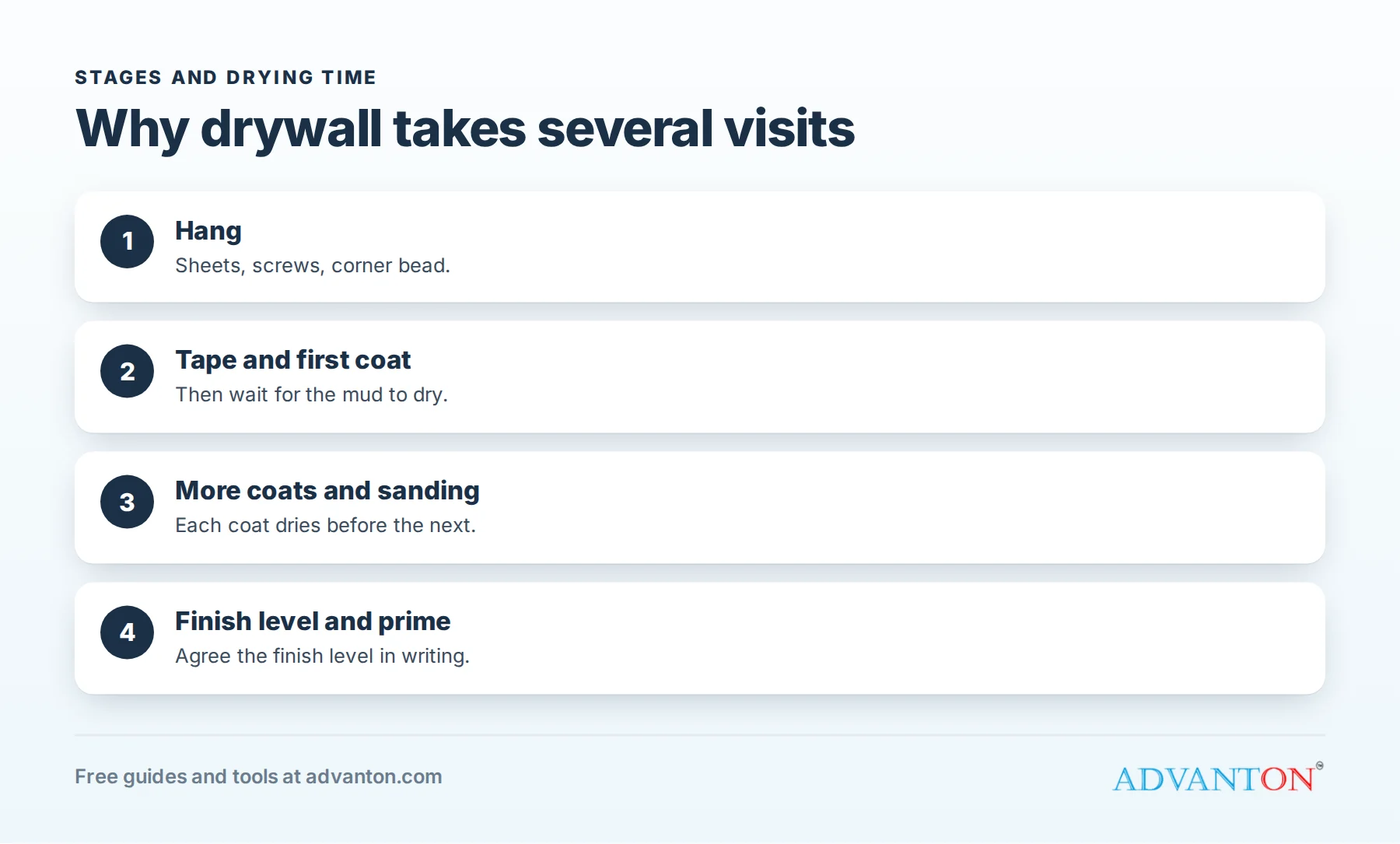
Homeowners often don’t realize drywall needs several visits. Explain the stages (hang, tape, coat, sand, prime), how long each takes, how much dust to expect and when the wall will be ready for paint. Send a quick message before each visit, and confirm the finish level they expect. Clear communication prevents frustration and earns reviews.
Common mistakes to avoid
- Underestimating finishing time and drying time.
- Unclear finish levels in quotes.
- Poor dust control in occupied homes.
- Skipping lead and asbestos precautions in older buildings.
- Relying on one builder for all your work.
Your first 90 days
- Days 1 to 30: confirm licensing and certifications, get insured, and buy core tools.
- Days 31 to 60: create estimating templates and a price list, and introduce yourself to builders, remodelers and property managers.
- Days 61 to 90: complete first jobs, photograph your work and collect references.
Frequently asked questions
Do I need a license to do drywall?
It depends on your state and project size. Check your state contractor licensing board.
How long does drywall take?
Hanging is fast; taping and finishing take several days because each coat must dry.
Should I hang, finish, or both?
Many businesses do both; some specialize in finishing, which requires the most skill.
Can I start with repairs?
Yes. Repairs need fewer tools and build a customer base quickly.
Should I repair or replace damaged drywall?
Small holes and cracks can be patched; water-damaged, moldy or crumbling drywall should usually be cut out and replaced after the moisture source is fixed.
What’s the hardest part of drywall to learn?
Finishing: smooth, invisible seams take practice and a good eye for light and shadow. Practice on scrap panels, and learn from experienced finishers whenever you get the chance to.
Keep learning
- How to start a flooring installation business
- How to start a tile installation business
- Contractor website builder
Sources
Last reviewed October 28, 2026. Startup costs are estimates; check local prices, licensing and tax rules before you commit money.
This article is general information, not financial, legal or tax advice. Check the rules that apply to you or talk to a qualified professional before making decisions. See our disclaimer.
Leave a Reply