
New floors transform a home, and homeowners, landlords, builders and businesses replace them constantly: worn carpet, outdated tile, water damage, a new kitchen or a home being prepared for sale. A skilled flooring installer can build a steady business working directly for homeowners, as a subcontractor for retailers and builders, or both.
According to the U.S. Bureau of Labor Statistics, flooring installers and tile and stone setters held about 112,300 jobs in 2024, with a median wage of $52,000. Business owners who price well, manage materials and keep a full calendar can earn considerably more.
Flooring business at a glance
Table of Contents
| Services | Luxury vinyl plank, laminate, hardwood, engineered wood, carpet, sheet vinyl, subfloor repair |
| Customers | Homeowners, landlords, builders, remodelers, flooring retailers, businesses |
| Licensing | Varies by state; some require a contractor license above a project value |
| Startup costs | Moderate: tools, vehicle, insurance |
| Pricing | Usually per square foot, plus prep, removal and materials |
Choose your services
Most installers specialize in a few materials:
- Luxury vinyl plank (LVP) and laminate: popular, water-resistant and fast to install.
- Hardwood and engineered wood: higher skill, higher value.
- Carpet: specialized tools and stretching skills.
- Sheet vinyl and commercial resilient flooring.
- Subfloor repair and leveling, often essential and valuable.
- Stairs and trim: detailed, profitable work.
Licensing and rules
- Contractor licensing varies by state. Some states require a license for flooring work, sometimes only above a project dollar value; California, for example, has a specific flooring contractor classification. Check your state’s contractor licensing board.
- Local business license and any city contractor registration.
- Lead-safe work: if you disturb painted surfaces in homes built before 1978 (for example, removing painted trim or baseboards), the EPA’s Renovation, Repair and Painting rule requires lead-safe certification and practices.
- Old flooring materials: some older floor tiles and adhesives may contain asbestos; don’t disturb suspect materials without testing and proper procedures.
See business licenses and permits explained.
Insurance
You’ll need general liability (damage to homes and property), commercial auto, tools and equipment coverage, and workers’ compensation once you hire. Builders and retailers usually require certificates of insurance. See how to get business insurance.
Tools and vehicle
- Saws: miter, table, jamb and flooring-specific cutters.
- Nailers and staplers for hardwood.
- Moisture meter, levels, straightedges and measuring tools.
- Carpet tools: knee kicker, power stretcher, seaming iron.
- Floor scraper, grinder and leveling supplies.
- Dust control and vacuums.
- A van or truck with racks and space for materials.
Total your list with our startup cost calculator.
Measuring and estimating
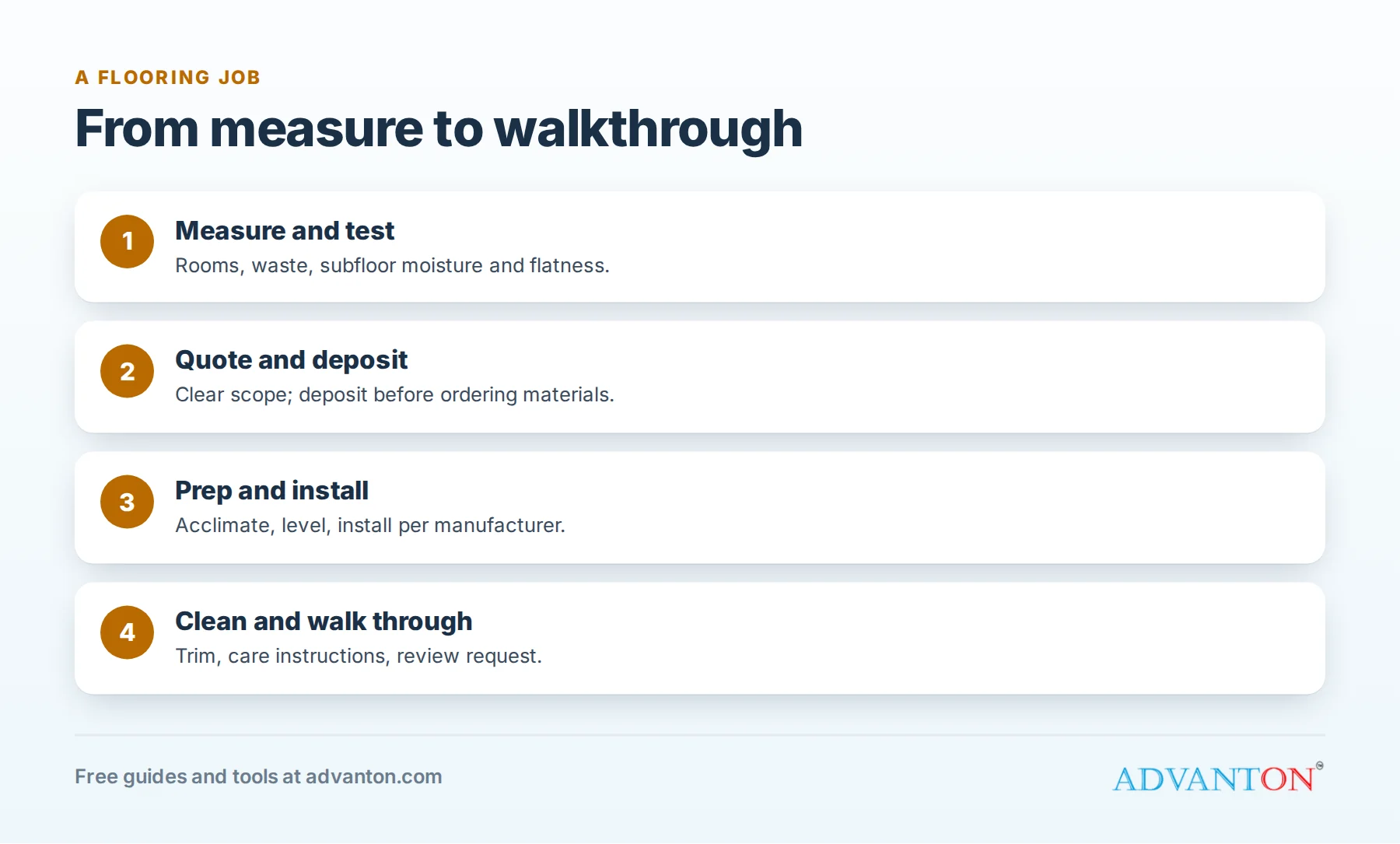
- Measure each room carefully, including closets and transitions.
- Add waste: typically more for diagonal layouts and patterned materials.
- Check the subfloor: flatness, moisture and damage.
- List all tasks: removal and disposal, prep, underlayment, installation, trim, transitions, moving furniture and appliances.
- Write a clear quote with what’s included and what’s extra; our free quote and invoice generator works well.
Pricing
Installers usually price labor per square foot by material type, with separate prices for removal, subfloor work, stairs, trim and furniture moving. Many supply materials with a markup; others install materials the customer buys. Research local rates and use our pricing calculator to cover tools, travel, insurance and your time.
An example labor price list
| Service | Example price |
|---|---|
| Luxury vinyl plank or laminate installation | $2.50 per sq ft |
| Hardwood installation (nail-down) | $4.50 per sq ft |
| Carpet installation | $1.25 per sq ft |
| Removal and disposal of old flooring | $1.00 per sq ft |
| Subfloor leveling | Quoted per area |
| Stairs | Priced per step |
These prices are illustrative labor rates; they vary widely by region and job.
A worked example: a busy month
These figures are illustrative for a busy month with materials included. Slower months will be lower.
| Revenue | Amount |
|---|---|
| 6 installs, labor and materials | $42,000 |
| Costs | Amount |
|---|---|
| Flooring materials | $16,000 |
| Helper wages and payroll costs | $4,800 |
| Truck and fuel | $1,200 |
| Insurance | $900 |
| Tools and blades | $400 |
| Marketing | $1,200 |
| Disposal | $500 |
| Total costs | $25,000 |
Profit before owner’s pay and taxes: $17,000. Plan cash for the year with our cash flow forecast, since materials are often paid before the job is finished.
Moisture and subfloors
Moisture is a leading cause of flooring failures. Test concrete and wood subfloors with a moisture meter, follow the flooring manufacturer’s moisture limits, and use vapor barriers where required. Fix squeaks, soft spots and uneven areas before installing; flooring can’t hide a bad subfloor for long.
A homeowner prep checklist
- Clear the rooms of small items, decor and breakables.
- Confirm who moves furniture and appliances.
- Plan for pets and children during the work.
- Arrange access and parking for the crew.
- Expect dust and noise, and plan around it.
Send it a week before the job; prepared homes make installations faster and smoother.
Deposits and payment
Collect a deposit before ordering materials, often enough to cover them, with the balance due on completion. Put payment terms in writing, and confirm material selections in writing before ordering, since custom-ordered flooring often can’t be returned.
Quality: the details that matter
- Acclimate materials as manufacturers require.
- Prepare the subfloor: flat, clean, dry and sound.
- Follow manufacturer instructions to protect the warranty.
- Plan layouts for balanced cuts and smooth transitions.
- Protect the home: floor and doorway protection, dust control, clean up daily.
Good prep prevents most flooring failures, and protects your reputation.
Working for flooring retailers
Many retailers and big-box stores hire independent installers for the floors they sell. It can provide steady volume without marketing, but rates are set by the retailer and terms vary. Read agreements carefully: payment timing, callbacks, insurance requirements and who handles customer complaints. Many installers combine retailer work with direct homeowner jobs, which usually pay more.
Cleanup and the final walkthrough
Finish every job by cleaning thoroughly, removing debris, reinstalling transitions and trim, and walking the floor with the customer. Explain care instructions and the warranty, collect the final payment, take photos and ask for a review while the customer is happy.
Finding work
- Flooring retailers that need reliable installers.
- Builders, remodelers and property managers.
- Homeowners through Google Business Profile, reviews and referrals.
- Real estate agents preparing homes for sale.
- A website with photos of your work; our free contractor website builder is built for trades.
- Yard signs at jobs, with permission; see our yard sign maker.
Offer a workmanship warranty
Manufacturers warrant the flooring; you should warrant your installation. Offer a clear workmanship warranty, such as one or two years, and explain what’s covered and what isn’t, like damage from leaks or misuse. A written warranty builds trust and sets you apart.
Commercial flooring
Offices, stores, medical facilities and apartments need durable flooring, often installed after hours on tight schedules. Commercial work brings larger projects but requires higher insurance limits, safety programs and sometimes specific certifications.
Hiring your first helper
A reliable helper speeds up removal, carrying materials and cleanup, and lets you take larger jobs. Train them on safety, tools and your quality standards, and check the full cost of an employee with our hiring cost calculator.
Numbers to track
Track square feet installed per day by material, average job value, quote acceptance rate, callbacks and where customers come from. Knowing your real installation speed makes estimates more accurate and profitable.
Protect your knees and back
Flooring is hard on the body. Use quality knee pads, kneeling boards, lifting aids and dollies for heavy materials, and share heavy lifting with a helper. Rotate tasks during the day and take short breaks. Staying healthy keeps your business running for years.
Common mistakes to avoid
- Skipping moisture testing and subfloor prep.
- Underestimating waste and removal time.
- Ordering materials without a deposit.
- Vague quotes that lead to disputes.
- Disturbing old materials that may contain lead or asbestos without proper precautions.
Your first 90 days
- Days 1 to 30: confirm licensing and certifications, get insured, and set up your tools and vehicle.
- Days 31 to 60: build your price list and quote template, launch your Google Business Profile and website, and approach retailers and builders.
- Days 61 to 90: complete first jobs, photograph every project and collect reviews.
Frequently asked questions
Do I need a license to install flooring?
It depends on your state and sometimes on project value. Check your state’s contractor licensing board.
Should I supply materials?
Supplying materials can add profit and control quality, but requires deposits, storage and handling returns.
What flooring is easiest to start with?
Many installers start with luxury vinyl plank and laminate, then add hardwood, tile or carpet as skills grow.
How do I get steady work?
Combine direct homeowner jobs with reliable relationships with retailers, builders and property managers.
How long does a typical install take?
Many single-room LVP or laminate installs take a day; larger homes, hardwood and extensive prep take longer.
Can I install over existing flooring?
Sometimes, depending on the old floor’s condition and the new product’s instructions; check heights at doors, transitions, cabinets and appliances before agreeing to the job and writing your final quote.
Keep learning
- How to start a tile installation business
- How to start a drywall business
- Contractor website builder
Sources
Last reviewed October 28, 2026. Startup costs are estimates; check local prices, licensing and tax rules before you commit money.


Leave a Reply