
Owning a dental practice lets dentists shape their clinical approach, build long-term relationships with patients, and build a valuable business asset. It’s also one of the larger small business investments: a dental office needs specialized build-out, equipment, skilled staff and enough patients to cover substantial overhead.
According to the U.S. Bureau of Labor Statistics, dentists held about 149,300 jobs in 2024 with a median wage of $179,210, and employment is projected to grow 4% from 2024 to 2034. This guide covers the business side of opening a practice.
Dental practice at a glance
Table of Contents
| Owner requirements | Dental degree (DDS or DMD) and state license; some states restrict ownership |
| Paths | Start a new practice ("startup"), buy an existing practice, or join a partnership |
| Investment | High: build-out, equipment, technology, working capital |
| Payment | Dental insurance (in-network or out-of-network), fee-for-service, membership plans |
| Biggest challenges | Financing, staffing, patient growth, overhead |
Start new or buy?
| Startup practice | Buying a practice | |
|---|---|---|
| Patients | Built from zero | Existing patient base |
| Revenue | Grows over months and years | From day one |
| Design | Your layout and technology | Inherited office and equipment |
| Risk | Slower start | Purchase price; transition risk |
Buying requires careful review of financial records, active patient counts, payer mix, staff, equipment age and lease terms. Many dentists use practice brokers, valuation experts and dental-focused attorneys and accountants.
Licensing and ownership
- State dental license for each dentist, and licensing or permits for hygienists, assistants and radiography as your state requires.
- Ownership rules: many states restrict ownership of dental practices to licensed dentists or specific entity types.
- Business entity (often a professional entity where required) and an NPI for billing.
- X-ray equipment registration and inspections under state radiation rules.
Financing
Lenders that specialize in dental practices are common, and banks often view dentists favorably. Expect to present a business plan, projections, location analysis and personal financial information. SBA loans are another option. Model loan payments carefully, since they’re a large fixed cost while the patient base grows. See how to get a startup loan.
Location and build-out
- Demographics and competition: population, income, growth and the number of dentists nearby.
- Visibility, parking and accessibility.
- Space for operatories (treatment rooms), sterilization, lab, X-ray, reception, offices and staff areas.
- Plumbing, electrical, compressed air and suction requirements make dental build-outs specialized.
Work with designers and contractors experienced in dental offices.
Startup costs to plan for
- Build-out of operatories, sterilization area and plumbing.
- Dental equipment, imaging and sterilization.
- Technology: practice management software, computers and networks.
- Initial supplies and instruments.
- Licensing, legal and accounting fees.
- Insurance: malpractice, property and general liability.
- Marketing for opening.
- Working capital for payroll, rent and loan payments while patients grow.
Total your list with our startup cost calculator.
Equipment and technology
Chairs and delivery units, imaging (digital X-rays, and possibly cone beam scanners), sterilization equipment, practice management software, intraoral cameras and scanners. Lease or finance major items, and start with what you need, adding technology as the practice grows.
Infection control, HIPAA and compliance
- Infection control following CDC guidelines and state rules.
- OSHA requirements for workplace safety, bloodborne pathogens and hazardous chemicals.
- HIPAA for patient information: compliant software, vendor agreements, staff training.
- Documentation and billing compliance with insurers.
Regular training and written policies protect patients, staff and the practice.
Staffing
Typical teams include dental hygienists, dental assistants and front office staff (scheduling, insurance and billing). Hire for skill and attitude, train thoroughly, and include payroll taxes and benefits in your budget with our hiring cost calculator.
Insurance participation
Decide which dental insurance plans to join. In-network participation can bring patients but means accepting negotiated fees; out-of-network or fee-for-service practices set their own fees but must attract patients willing to pay. Many practices also offer in-house membership plans for uninsured patients, covering preventive care for a yearly fee.
A worked example: an established solo practice
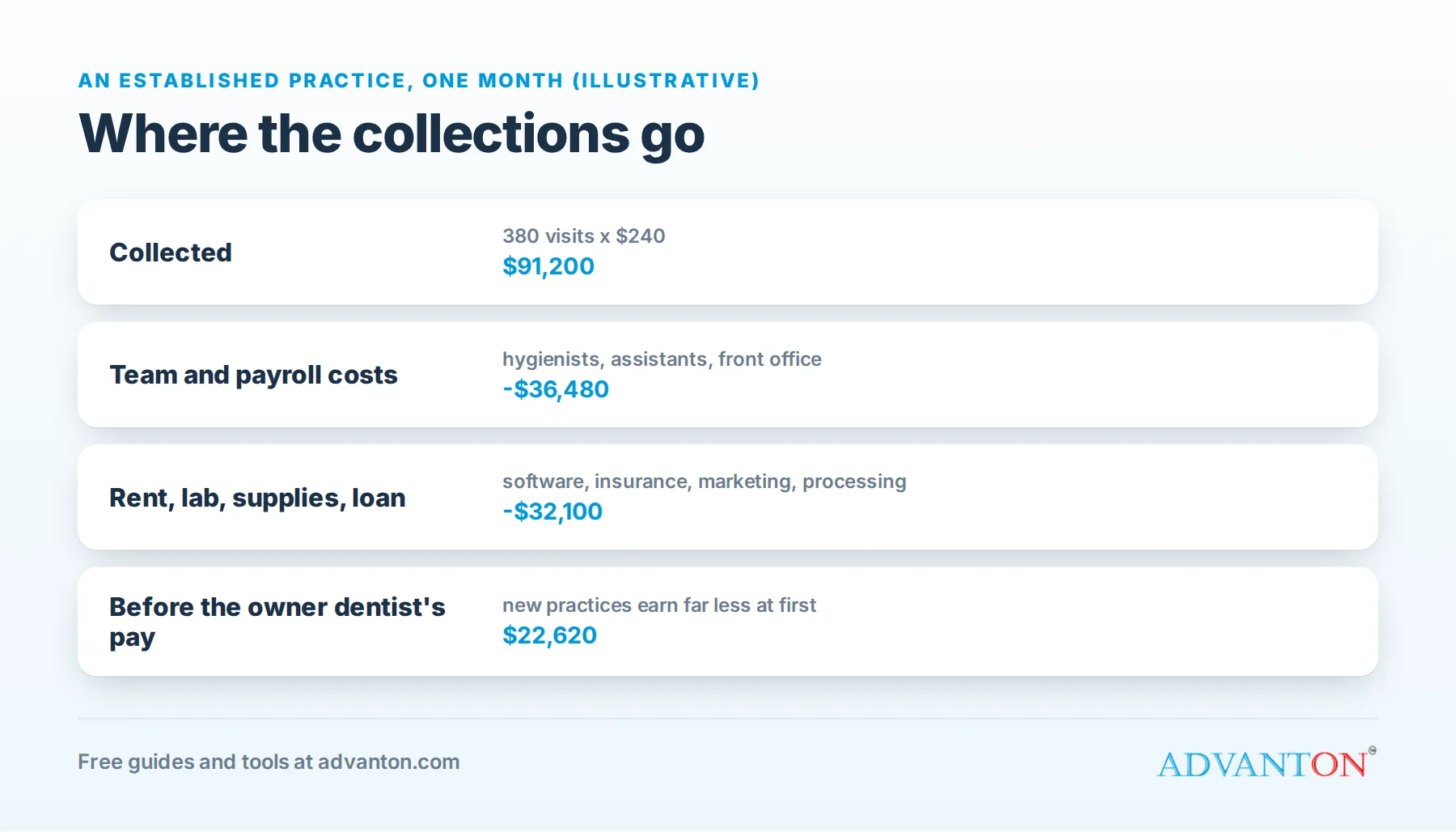
These figures are illustrative for one month in an established practice. New practices typically collect far less while they build a patient base.
| Revenue | Amount |
|---|---|
| 380 visits × $240 average collected | $91,200 |
| Costs | Amount |
|---|---|
| Two hygienists | $14,000 |
| Two dental assistants | $8,400 |
| Two front office staff | $8,000 |
| Payroll taxes and benefits (about 20%) | $6,080 |
| Rent | $8,000 |
| Lab fees | $6,500 |
| Dental supplies | $5,500 |
| Equipment and build-out loan | $6,000 |
| Practice software | $900 |
| Malpractice and business insurance | $1,500 |
| Marketing | $2,500 |
| Card processing and billing | $1,200 |
| Total costs | $68,580 |
Profit before the owner dentist’s pay and taxes: $22,620, which is effectively the owner’s income for clinical work and running the practice. Plan working capital for the first year with our cash flow forecast.
Key numbers to track
| Metric | Why it matters |
|---|---|
| New patients per month | Shows growth and marketing results |
| Active patients | Seen in the past 18 to 24 months; the base of the practice |
| Hygiene recall rate | How many patients return for cleanings |
| Treatment acceptance | How much recommended care patients schedule |
| Collections vs production | How much billed work is actually collected |
| Overhead percentage | Costs as a share of collections |
An in-house membership plan
Uninsured patients often delay care because of cost. A simple membership plan, such as a yearly fee covering two cleanings, exams and routine X-rays, plus a discount on other treatment, gives them predictable costs and gives you loyal patients and steady revenue. Check your state’s rules on dental membership plans, and keep the terms clear and simple.
Growing your patient base
- Google Business Profile, reviews and a clear website with services, insurance accepted and online booking; our website builder is free.
- Community involvement: schools, sports teams and local events.
- Referrals from patients and local physicians.
- Recall systems that bring patients back for cleanings every few months.
- Clear, upfront treatment estimates that build trust.
Same-day and emergency care
Patients with toothaches, broken teeth or lost fillings need quick help, and they often become long-term patients if you see them promptly. Keep a few same-day slots open, answer calls quickly, and make emergency visits easy to book online.
Your hygiene program
Regular cleanings keep patients healthy and coming back, and they often reveal treatment needs early. A strong hygiene program depends on reliable recall reminders, enough hygienist time, comprehensive periodontal care and clear communication about why visits matter. For many general practices, hygiene is the foundation of a steady schedule.
Patient experience
On-time appointments, gentle care, clear explanations, transparent costs and easy scheduling turn first visits into long-term patients and referrals. Train your front office as carefully as your clinical team.
Work as an associate first?
Many dentists work as associates for a few years before owning a practice, learning scheduling, insurance, staff management and patient communication while earning a steady income. Some later buy into or purchase the practice where they worked, which can make the transition smoother for patients and staff.
Build a strong team culture
Your team shapes every patient’s experience. Hold short daily huddles to review the schedule, set clear roles and expectations, recognize good work and invest in training. Low staff turnover improves patient trust, efficiency and the value of your practice.
Referrals with specialists
Build relationships with local oral surgeons, orthodontists, endodontists and periodontists. Clear, timely referrals and communication help patients get the right care, and specialists often refer patients back for general dentistry.
Your practice is an asset
A well-run practice becomes valuable: a strong patient base, good systems and steady collections increase what it’s worth when you eventually sell or bring in a partner. Keep clean financial records from the start.
Common mistakes to avoid
- Overbuilding before patient demand supports it.
- Underestimating working capital.
- Weak recall and scheduling systems.
- Poor insurance verification leading to surprise bills.
- Hiring in a hurry.
Your first 90 days of planning
- Days 1 to 30: decide startup vs acquisition, assemble advisers, and study locations.
- Days 31 to 60: secure financing, choose a site and begin design or purchase due diligence.
- Days 61 to 90: plan build-out, equipment, insurance participation, staffing and marketing for opening.
Frequently asked questions
How long does it take to open a new dental practice?
Often many months, from finding a site through design, build-out, equipment installation, permits and hiring.
Should I join insurance networks?
Many startups join some networks to attract patients, then adjust as the practice grows. Model the fees carefully.
Can a non-dentist own a dental practice?
Many states restrict ownership to licensed dentists. Check your state’s rules with a healthcare attorney.
What’s better, buying or starting?
Buying brings immediate patients and revenue; starting gives you full control. It depends on your market, finances and goals.
How much financing will I need?
It varies widely with location, size and whether you build new or buy. Get detailed quotes and include working capital for the first year.
How many patients do I need?
It depends on your overhead and fees. Many practices track active patients and new patients each month; model your break-even point before opening your doors, and revisit it every quarter as fees, insurance contracts and operating costs change over time, with our break-even calculator.
Keep learning
Sources
Last reviewed October 28, 2026. Startup costs are estimates; check local prices, licensing and tax rules before you commit money.


Leave a Reply