
Kayaking, hiking, fishing, climbing, biking, rafting and wildlife tours turn natural places into unforgettable experiences, and travelers increasingly pay for guided adventures. The Bureau of Labor Statistics counted about 327,700 recreation workers in 2024, with a median wage of $35,380 in May 2024, 4% projected growth and about 68,100 openings a year. Experienced guides who own their businesses can earn considerably more.
Outdoor businesses range from guided tour operators to rental and outfitter shops and multi-day adventure companies. Permits for public lands and waters, safety systems and insurance are the foundation of every model.
The workforce
| Occupation | Jobs (2024) | Median pay (May 2024) | Projected growth, 2024 to 2034 |
|---|---|---|---|
| Recreation workers | 327,700 | $35,380 | +4% |
Source: U.S. Bureau of Labor Statistics, Occupational Outlook Handbook and Occupational Employment and Wage Statistics.
Market data
| Measure | Value |
|---|---|
| Openings projected each year, 2024 to 2034 | about 68,100 |
Business models compared
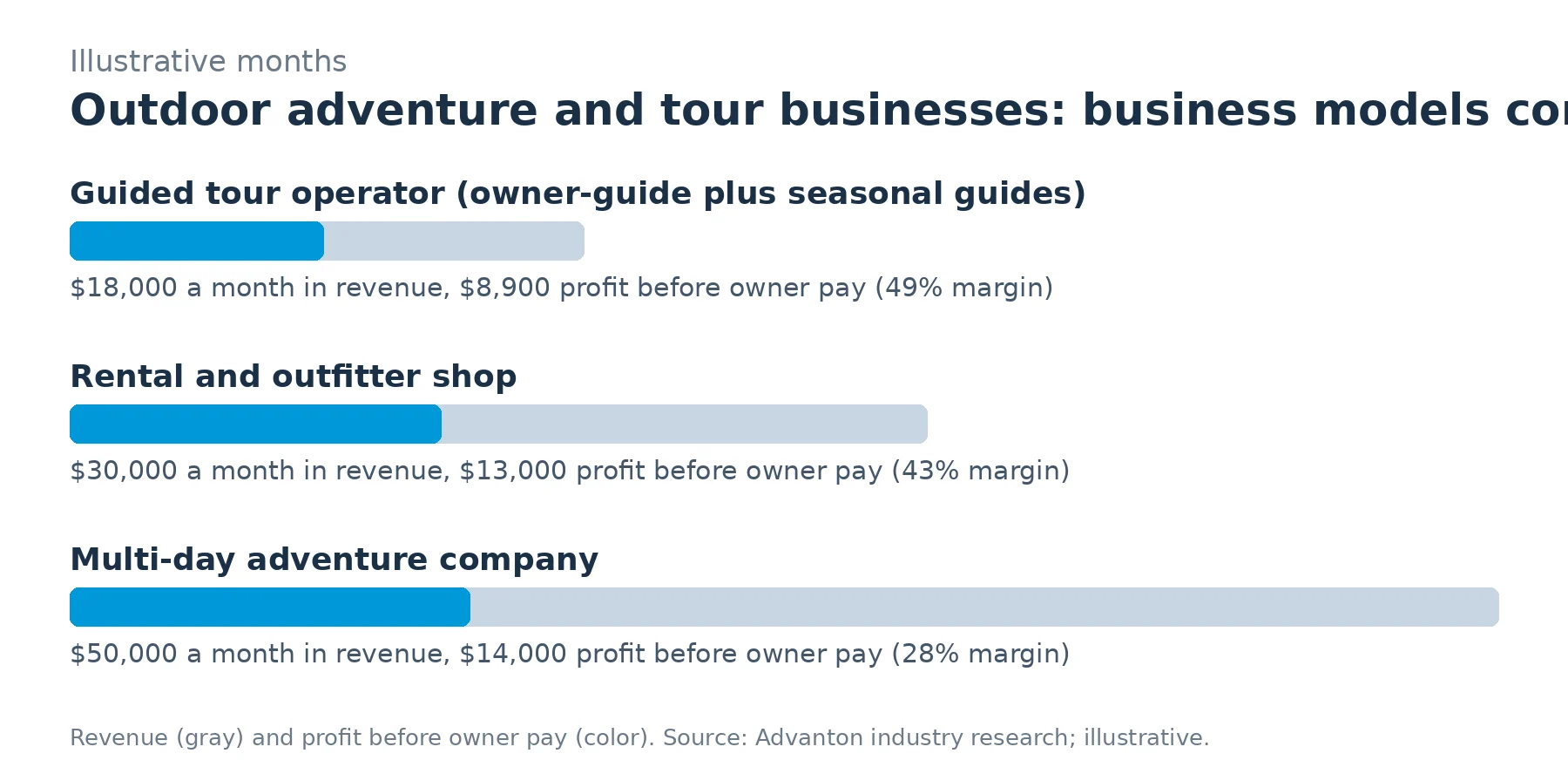
The figures below are illustrative months from our research, not industry averages. They show how revenue and costs typically fit together; your market, prices and costs will differ.
| Business model | Startup costs | Example monthly revenue | Costs | Profit before owner pay | Margin |
|---|---|---|---|---|---|
| Guided tour operator (owner-guide plus seasonal guides) | Low to moderate: gear, permits, insurance, booking system | $18,000 | $9,100 | $8,900 | 49% |
| Rental and outfitter shop | Moderate: rental fleet, storage, shop, shuttle vehicle | $30,000 | $17,000 | $13,000 | 43% |
| Multi-day adventure company | Moderate to high: group gear, vehicles, permits, food logistics | $50,000 | $36,000 | $14,000 | 28% |
Fixed and variable costs
For projections, the most useful split is between variable costs, which rise and fall with sales (materials, supplies, hourly labor, fees), and fixed costs, which you pay every month regardless (rent, salaried staff, insurance, loan payments).
| Business model | Variable costs (% of revenue) | Fixed costs per month | What it means |
|---|---|---|---|
| Guided tour operator (owner-guide plus seasonal guides) | 33.9% | $3,000 | Balanced: margins improve as volume grows |
| Rental and outfitter shop | 28.0% | $8,600 | Mostly fixed: needs steady volume to cover overhead |
| Multi-day adventure company | 52.0% | $10,000 | Mostly variable: profitable early, but watch cash flow |
What the numbers say
Guide pay and permit fees move with bookings, while insurance and marketing are fixed.
Rental shops depend on fleet utilization and good weather days.
Multi-day trips raise revenue per client with more logistics, food and permits.
The three models in brief
Guided tour operator. Half-day and full-day guided hikes, paddles, fishing or wildlife tours. See travel and tourism data.
Rental and outfitter shop. Kayak, bike or gear rentals with shuttles and advice. See sports and recreation data.
Multi-day adventure company. Overnight and multi-day trips with meals and camping or lodging.
Cost structure: rental and outfitter shop
Each cost as a share of the example month’s revenue ($30,000):
| Cost | Monthly amount | Share of revenue | Type |
|---|---|---|---|
| Staff | $6,000 | 20.0% | Variable |
| Rent | $3,000 | 10.0% | Fixed |
| Fleet financing | $2,000 | 6.7% | Fixed |
| Fleet maintenance and replacement | $1,500 | 5.0% | Variable |
| Insurance | $1,200 | 4.0% | Fixed |
| Marketing | $1,200 | 4.0% | Fixed |
| Card and booking fees | $900 | 3.0% | Variable |
| Shuttle vehicle | $800 | 2.7% | Fixed |
| Utilities | $400 | 1.3% | Fixed |
| Profit before owner pay | $13,000 | 43% |
A first-year projection: rental and outfitter shop
New businesses rarely start at full speed. This projection assumes revenue ramps from 35% of the example month in month 1 to 100% by month 12, variable costs move with revenue, and fixed costs stay the same every month. It’s a planning illustration, not a forecast.
| Month | Revenue | Variable costs | Fixed costs | Profit | Cumulative |
|---|---|---|---|---|---|
| 1 | $10,500 | $2,940 | $8,600 | -$1,040 | -$1,040 |
| 2 | $13,500 | $3,780 | $8,600 | $1,120 | $80 |
| 3 | $16,500 | $4,620 | $8,600 | $3,280 | $3,360 |
| 4 | $18,600 | $5,208 | $8,600 | $4,792 | $8,152 |
| 5 | $21,000 | $5,880 | $8,600 | $6,520 | $14,672 |
| 6 | $22,800 | $6,384 | $8,600 | $7,816 | $22,488 |
| 7 | $24,600 | $6,888 | $8,600 | $9,112 | $31,600 |
| 8 | $26,100 | $7,308 | $8,600 | $10,192 | $41,792 |
| 9 | $27,300 | $7,644 | $8,600 | $11,056 | $52,848 |
| 10 | $28,500 | $7,980 | $8,600 | $11,920 | $64,768 |
| 11 | $29,400 | $8,232 | $8,600 | $12,568 | $77,336 |
| 12 | $30,000 | $8,400 | $8,600 | $13,000 | $90,336 |
Year one: revenue $268,800, profit before owner pay $90,336. The first profitable month is month 2. Cumulative results bottom out at -$1,040, which is the minimum cash cushion this plan would need, before any startup costs.
Insurance, permits and marketing start before the season’s bookings build, so this tour operator illustration turns profitable in month 2, with a cumulative low of about $1,000. Real results follow seasons and weather closely.
How outdoor businesses earn
- Guided trips priced per person.
- Private and custom trips.
- Equipment rentals by hour or day.
- Lessons and skills courses.
- Retail, photos and merchandise.
Permits for public lands and waters
Most great adventures happen on public land. Federal agencies issue permits or authorizations for commercial use, often limited in number and requiring insurance, safety plans and fees. Apply early, since some permits are allocated through competitive processes.
Safety is the business
Trained guides, safe guide-to-client ratios, weather decisions, emergency plans, communication devices and first aid certifications protect clients. One serious accident can end a business, so build safety into every trip.
A startup checklist
- Secure permits for the lands and waters you’ll use.
- Get guide, captain or other licenses required in your state.
- Write risk management plans and waivers reviewed by an attorney.
- Insure the business with appropriate liability coverage.
- Choose a booking system with waivers built in.
Seasonality and weather
Many outdoor businesses earn most revenue in a few months. Shoulder-season offerings, winter activities, gift cards and corporate events help smooth cash flow, and clear weather policies prevent disputes.
Where the opportunities are
- Beginner-friendly adventures.
- Wildlife and photography tours.
- Corporate team-building trips.
- E-bike and accessible adventures.
- Women-only and youth programs.
Key terms
| Term | Meaning |
|---|---|
| Commercial use authorization | Federal permission for commercial activities on park land |
| Guide-to-client ratio | Number of clients per guide |
| Waiver | Signed acknowledgment of risks |
| Outfitter | A business providing gear and services for trips |
Hiring guides
Great guides combine skill, judgment and storytelling. Train them on your safety standards, pay fairly and give them a path to lead guide roles.
Key numbers to track
Track bookings per trip, fill rate, revenue per client, cancellations, incidents and review scores.
Common mistakes
- Operating without required permits.
- Weak risk management.
- No weather or cancellation policy.
- Underpricing to compete.
- Ignoring off-season planning.
Marketing an adventure business
Online booking platforms, Google Business Profile, reviews, social video, hotel and visitor center partnerships and corporate outreach bring clients. See travel and tourism data.
Environmental stewardship
Leave No Trace practices and respect for wildlife protect the places you depend on, appeal to clients and support good relationships with land managers who issue permits.
Equipment care
Inspect, maintain and replace gear on schedules, and keep records of inspections; equipment failures are safety risks.
Pricing
Price trips to cover guides, permits, gear, insurance and marketing, with group and private options.
Cancellations and weather
Clear policies for cancellations, weather delays and refunds, explained at booking, prevent disputes. Many operators offer rescheduling or credits for unsafe weather and full refunds only within set windows. Decide policies before the season and apply them consistently.
Reviews and repeat clients
Memorable trips earn reviews and repeat bookings; follow up with photos and future trip offers.
Test these numbers with your own plan
Open this industry in our free Business Idea Reality Check to start from any model above, change prices, costs, startup budget and your own pay, and see your break-even month, the cash you’d need, three scenarios and how new businesses in this sector survive in your state.
- Start with the closest model and its cost structure.
- Replace every price and cost with local quotes.
- Estimate your ramp: how fast customers will realistically come in year one.
- Map cash month by month with the free Cash & Payroll Planner.
- Build the full plan in the free Business Planner.
About this data
Workforce figures come from the U.S. Bureau of Labor Statistics (Occupational Outlook Handbook and Occupational Employment and Wage Statistics, May 2024 wages and the 2024 to 2034 projections, unless noted). Market figures cite their sources above. Business model figures are illustrative months built from typical prices and costs to show how revenue, fixed costs and variable costs fit together; they are not industry averages or guarantees. We review these profiles when new government data is released, at least once a year, and the same figures power the Business Idea Reality Check.
Licensing and rules
Commercial trips on federal lands and waters require permits or authorizations, such as National Park Service commercial use authorizations and Forest Service outfitter and guide permits, often with fees per client; some states license hunting, fishing or river guides; carrying passengers for hire on boats generally requires a U.S. Coast Guard captain’s license; first aid and wilderness medical certifications are standard; signed waivers, risk management plans and liability insurance are essential; transportation of clients may require commercial vehicle insurance. Requirements change; confirm with your state and local agencies before you start.
Frequently asked questions
Do I need a permit to guide on public land?
Usually yes; commercial trips on federal lands and waters require permits or authorizations.
Do boat tour operators need a license?
Carrying passengers for hire generally requires a U.S. Coast Guard captain’s license.
What do recreation workers earn?
BLS reported a median of $35,380 in May 2024.
Are waivers enough to protect my business?
Waivers help, but safety practices and insurance are essential.
Is an outdoor adventure business profitable?
It can be, with strong bookings, safety and off-season planning.
How do adventure businesses find clients?
Booking platforms, reviews, social media and tourism partnerships.
What certifications should guides have?
First aid or wilderness first aid, CPR and activity-specific certifications, plus any licenses your state or permits require.
How many clients can one guide take?
It depends on the activity, conditions and permit rules; safe ratios protect clients.
How can I test these numbers?
Open outdoor adventure and tours in the Business Idea Reality Check and enter your own prices and costs.
Keep learning
- Travel and tourism data
- Sports and recreation data
- RV parks and campgrounds data
- Business Idea Reality Check
Sources
Last reviewed November 1, 2026. Startup costs are estimates; check local prices, licensing and tax rules before you commit money.

