
A laundromat provides self-service washers and dryers, and often wash-and-fold, pickup and delivery and commercial laundry services. Laundromats serve renters, families without in-unit machines, people washing bulky items and local businesses, and demand is steady in all economic conditions.
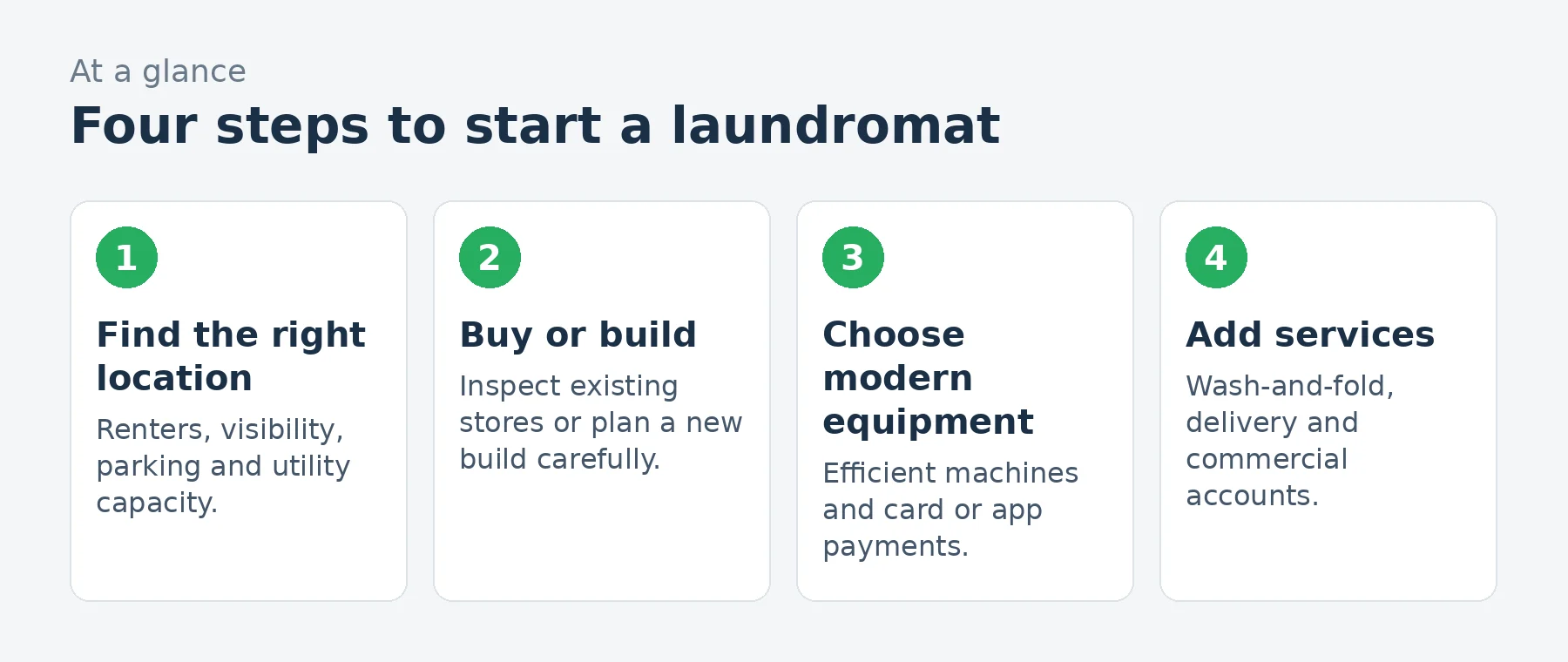
Laundromats are capital-intensive: commercial machines, plumbing, water heating, gas, electrical and venting, plus a long lease in the right neighborhood. Many owners buy existing stores; others build new ones with modern machines and card or app payments. Adding attended services such as wash-and-fold raises revenue considerably. Advanton’s laundry data shows a median pay of $33,800 for laundry and dry-cleaning workers (May 2024), across about 202,600 jobs, with employment projected to grow about 5%. Owners earn the profit after equipment, utilities, rent and labor. This guide covers location, buying vs building, equipment, utilities, services, a worked example and a 90-day plan.
A laundromat at a glance
Table of Contents
| Topic | What to expect |
|---|---|
| Startup cost | High: commercial washers and dryers, plumbing, water heaters, electrical and gas work, venting, build-out and payment systems; or the purchase price of an existing store |
| Key factors | Location near renters, a long lease with renewal options and enough water, sewer, gas and electrical capacity |
| Licenses | Business license, building and plumbing permits, health or water department approvals where required |
| How you earn | Self-service washes and dries, wash-and-fold by the pound, pickup and delivery, commercial accounts and vending |
| Best for | Investors and hands-on operators who like equipment, maintenance and steady local businesses |
Who a laundromat suits
It suits investors and hands-on owners comfortable with equipment, repairs and managing a small staff. Some owners run largely unattended stores, while attended stores with services earn more but need more management.
Choosing a location
Look for dense neighborhoods with many renters, especially apartments without in-unit laundry, visible storefronts with parking or walkability and nearby businesses customers visit while waiting. Compare competition, check crime and lighting and confirm the building’s water, sewer, gas and electrical capacity, which can be expensive to upgrade.
Buying vs building
Buying an existing laundromat provides revenue history and installed equipment, but verify financials carefully: utility bills (which reflect actual usage), machine age and condition, lease terms and competition. Building new costs more but lets you choose efficient machines, layout and payment systems. In either case, a long lease with renewal options is essential, since equipment and plumbing are hard to move.
Equipment
- Front-load commercial washers in several sizes, including large machines for bedding.
- Stacked and single dryers with proper venting.
- Water heaters or boilers sized for peak demand.
- Payment systems: coins, cards, loyalty cards or mobile apps.
- Folding tables, carts, seating, Wi-Fi and security cameras.
Efficient machines reduce water, gas and electricity costs, which helps margins every month.
Permits and accessibility
Build-outs require building, plumbing, electrical and mechanical permits and inspections, and some cities require approvals for water use or wastewater. As a public accommodation, a laundromat must meet ADA requirements, including accessible entrances, routes and some accessible machines and controls.
Startup costs for a laundromat
| Item | What to budget for |
|---|---|
| Machines | Commercial washers and dryers |
| Plumbing and utilities | Water heaters, gas lines, electrical service, venting, drains |
| Build-out | Flooring, lighting, seating, restrooms, signage |
| Payment systems | Card readers, app systems, change machines |
| Lease | Deposits and any landlord requirements |
| Opening marketing | Grand opening, local advertising |
Use our startup cost calculator for your total.
Pricing
Set vend prices by machine size and cycle, compared with local competitors and your utility costs, and price wash-and-fold by the pound with minimums. Card and app systems make it easier to adjust prices and offer loyalty rewards. Use our pricing calculator.
A worked example: a mid-sized laundromat
These are illustrative assumptions for a mid-sized laundromat with wash-and-fold, not predictions.
| Assumption | Monthly | |
|---|---|---|
| Self-service washers and dryers | $22,000 | |
| Wash-and-fold | 5,500 pounds at $1.75 | $9,625 |
| Pickup and delivery and commercial accounts | $4,500 | |
| Vending and supplies | $800 | |
| Revenue | $36,925 | |
| Utilities | Water, sewer, gas and electricity | $(7,500) |
| Rent and common area charges | $(6,000) | |
| Attendant and wash-and-fold staff | With payroll costs | $(8,500) |
| Equipment loan payments and repairs | $(4,800) | |
| Insurance, payment fees and marketing | $(1,800) | |
| Profit before owner pay and taxes | $8,325 |
That leaves about $8,325 a month before the owner’s pay and taxes, on about $36,925 of revenue. Utilities are the largest variable cost, so efficient machines and monitoring for leaks protect margins.
Loading the calculator…
Wash-and-fold and delivery
Attended services turn a laundromat into a service business: customers drop off laundry, attendants wash and fold it and many stores add pickup and delivery. These services can serve busy households, Airbnb hosts, gyms, salons and small businesses, and use your machines during quieter hours.
Maintenance and security
Machines need regular preventive maintenance, lint cleaning and quick repairs, since broken machines cost revenue and reviews. Keep spare parts, track machine performance and use cameras, good lighting and attendants to keep the store safe and clean.
Marketing
- Google Business Profile with photos, hours and services.
- Loyalty programs through card or app systems.
- Flyers and partnerships with apartment managers.
- Commercial outreach to restaurants, gyms and salons.
- A clean, comfortable store, which drives word of mouth.
Check your local visibility with our Local SEO Check.
Extra services and amenities
Amenities such as free Wi-Fi, charging stations, comfortable seating, restrooms, children’s areas and long hours make customers choose your store. Dry cleaning drop-off, alterations partners and vending add revenue without much space.
Monitoring utilities
Water, gas and electricity are your biggest costs. Track utility bills monthly, fix leaks immediately, maintain water heaters and dryers for efficiency and consider newer machines that use less water and energy. Some utilities offer rebates for efficient equipment.
Staffing
Attendants keep the store clean, help customers, handle wash-and-fold and deter problems. Train staff on machine troubleshooting, customer service and cash handling, and schedule coverage for peak weekend hours.
Growing to more stores
Successful owners often add stores in nearby neighborhoods, sharing delivery vans, wash-and-fold capacity and management. Standard systems for maintenance, cleaning and pricing make multiple stores manageable.
Card and app payment systems
Modern payment systems accept cards and mobile payments, track machine use, support loyalty programs and let owners adjust prices and monitor machines remotely. They reduce coin handling and theft, and many customers now prefer them.
Financing a laundromat
Equipment distributors often arrange equipment financing, and SBA-backed loans can fund purchases or build-outs. Lenders look for location analysis, lease terms, equipment quotes and projections. Use our business planner to prepare.
Cleanliness and safety
A clean, bright, safe store is the strongest competitive advantage. Clean lint traps and floors throughout the day, keep restrooms spotless, light the parking lot and use cameras. Customers choose and return to laundromats where they feel comfortable.
Commercial accounts
Local businesses such as salons, gyms, restaurants and vacation rental hosts need regular laundry. Offering commercial wash-and-fold with pickup turns idle machine time into steady revenue.
Common mistakes to avoid when starting a laundromat
- Buying a store without reviewing utility bills and lease terms.
- Underestimating utility upgrade costs.
- Short leases without renewal options.
- Letting broken machines sit.
- Ignoring wash-and-fold and delivery revenue.
Your first 90 days as a laundromat owner
- Days 1-30: study neighborhoods, review stores for sale and talk to equipment distributors.
- Days 31-60: secure financing and a lease, and plan equipment and utility work.
- Days 61-90: complete the build-out or takeover, launch wash-and-fold and market to neighbors and businesses.
Frequently asked questions about starting a laundromat
How much does it cost to open a laundromat?
It is capital-intensive; machines, plumbing, utilities and build-out are the major costs, or the purchase price of an existing store.
Is a laundromat a passive business?
It can be less hands-on than many businesses, but machines, cleaning, security and services still need management.
How do laundromats make money?
From self-service machines, wash-and-fold, pickup and delivery, commercial accounts and vending.
Should I buy an existing laundromat?
It can be faster, but verify utility bills, equipment condition, lease terms and competition.
What utilities does a laundromat need?
Enough water, sewer, gas and electrical capacity for commercial machines and water heaters.
Do laundromats need to be accessible?
Yes, as public accommodations under the ADA, including accessible routes and some accessible machines.
How long do laundromat machines last?
Commercial machines often last many years with good maintenance, but plan replacement budgets as they age.
Do laundromats need attendants?
Not always, but attended stores tend to be cleaner and safer and can offer wash-and-fold services.
What size laundromat should I open?
It depends on the neighborhood and competition; many stores have a mix of small and large washers and enough dryers to match.
Can I run a laundromat while working another job?
Some owners do, with attendants or remote monitoring, but hands-on management improves results.
How do laundromats attract customers?
Through a clean store, working machines, convenient hours, card payments, loyalty rewards and strong online reviews.
Is a laundromat a good investment?
It can provide steady income in the right location, but success depends on lease terms, utility costs, equipment and management.
How do I price washers and dryers?
Compare local competitors, then set vend prices by machine size that cover utilities, maintenance and profit.
Keep learning
- Laundromats industry data
- How to start a laundry pickup and delivery business
- How to start a dry cleaning business
- Local SEO Check
Sources
- Coin Laundry Association, Industry resources
- ADA.gov, Title III regulations for public accommodations
- US Bureau of Labor Statistics, Laundry and dry-cleaning workers
- US Small Business Administration, Apply for licenses and permits
Last reviewed November 3, 2026. Startup costs are estimates; check local prices, licensing and tax rules before you commit money.

