
Moving after decades in one home is one of the hardest transitions older adults face: a lifetime of belongings, emotional decisions, a smaller new space, and often family members who live far away. A senior move manager guides the whole process, from planning and downsizing to packing, coordinating movers and setting up the new home so it feels familiar on the first night.
It’s a business built on patience, organization and trust, and it’s in growing demand as more older adults move to smaller homes, senior living communities or closer to family.
Senior move manager at a glance
Table of Contents
| Services | Move planning, downsizing, floor plans, sorting, packing, coordinating movers, resettling, home clear-out |
| Clients | Older adults, their adult children, senior living communities, elder law attorneys |
| Licensing | Usually a business license; you generally don’t need a moving license if licensed movers transport belongings |
| Startup costs | Low: supplies, software, insurance, marketing |
| Key skills | Empathy, organization, project management, calm under pressure |
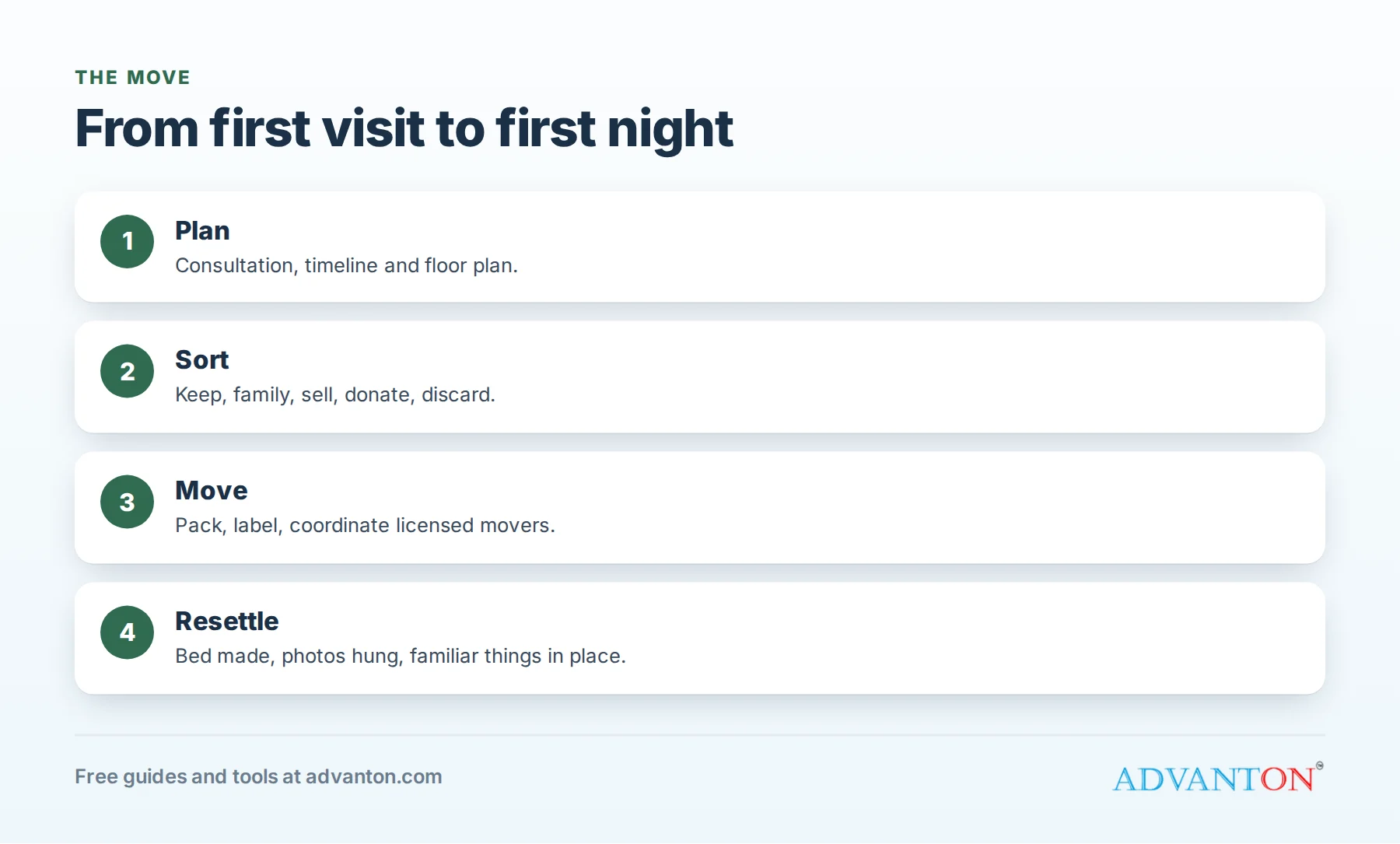
What a senior move manager does
- Initial consultation: understand the client’s needs, timeline, budget and new home.
- Floor plan: map which furniture fits the new space, so decisions are clear.
- Sorting and downsizing: help decide what to keep, give to family, sell, donate or discard.
- Coordinating services: movers, estate sale companies, donation pickups, junk removal and cleaners.
- Packing: careful packing and labeling by room.
- Move day: supervising the move and checking inventory.
- Unpacking and resettling: beds made, pictures hung, kitchen arranged, familiar items in familiar places.
- Home clear-out: preparing the old home for sale or return.
Creating a floor plan
Measure the new home’s rooms, doors and windows, then measure the furniture the client wants to keep. Draw each room to scale, on paper or with floor planning software, and place furniture so the client can see exactly what fits. A floor plan turns hard decisions into simple ones: "the blue armchair fits by the window, but the second sofa won’t." Mark plans with room labels that match box labels for move day.
A simple sorting system
| Category | What happens |
|---|---|
| Keep | Packed and labeled for the new home |
| Family | Offered to relatives, with a deadline for pickup |
| Sell | Estate sale, consignment or online sale |
| Donate | Charity pickup, with receipts for the client |
| Discard | Recycling, shredding and junk removal |
Use colored stickers or labels for each category so everyone on the team knows where items go.
Moving licenses and your role
In most cases, move managers coordinate licensed moving companies rather than transporting belongings themselves, which avoids the licensing and insurance requirements for movers. If you plan to transport goods for pay, check your state’s moving and transportation licensing rules first. Choose reputable, properly licensed and insured movers, and get written estimates for clients.
Ethics and trust
Older clients can be vulnerable, and you’ll handle their belongings, homes and personal information:
- Get background checks for you and your team.
- Never buy clients’ belongings yourself, or accept gifts beyond token thanks.
- Disclose any referral fees from movers, estate sale companies or senior communities.
- Respect the client’s decisions, even when family members disagree.
- Protect valuables, documents and medications with clear procedures.
- Know the warning signs of financial exploitation, and how to report concerns.
Professional associations for senior move managers offer codes of ethics and training, which help build credibility.
Insurance
Plan for general liability, professional liability, coverage for clients’ property in your care, commercial auto if you use a vehicle for work, workers’ compensation once you hire, and consider a fidelity bond. See how to get business insurance.
Startup costs
- Packing supplies: boxes, tape, labels, bubble wrap, furniture pads.
- Tools: tape measures, floor planning software, tool kits for hanging pictures and assembling furniture.
- Software: project management, scheduling and invoicing.
- Insurance, background checks and training.
- Marketing: website, brochures and referral materials.
Use our startup cost calculator to plan.
Pricing
- Hourly rates for consultations, sorting, packing and unpacking, often with a minimum.
- Project pricing for full moves, based on home size and services.
- Consultation fee for the first visit, sometimes credited toward the project.
- Third-party services (movers, estate sale companies) usually billed directly to the client.
Give written estimates with clear scope. Use our pricing calculator and the free quote and invoice generator.
A worked example: a busy month
These figures are illustrative.
| Revenue | Amount |
|---|---|
| 6 full moves × $3,200 | $19,200 |
| 4 consultations × $200 | $800 |
| Total revenue | $20,000 |
| Costs | Amount |
|---|---|
| Helpers and crew | $4,800 |
| Truck, packing supplies | $1,200 |
| Insurance | $300 |
| Marketing | $700 |
| Software | $100 |
| Total costs | $7,100 |
Profit before owner’s pay and taxes: $12,900. The owner typically manages each project and works on site, so this is largely the owner’s pay for a demanding month.
Estate sales, consignment or donation?
- Estate sales suit homes with many items of value, run by companies that typically take a percentage of sales.
- Consignment works for selected furniture, art and collectibles.
- Online sales suit a few valuable items, but take time.
- Donations clear items quickly and may provide tax receipts.
Explain the options and realistic values honestly; many belongings are worth less than clients expect, and setting expectations kindly prevents disappointment.
Building your team
As you grow, hire helpers who are patient, careful and trustworthy. Train them on your process, labeling system, packing standards and ethics, and run background checks. A lead team member can manage a project day while you meet new clients.
Working with families
Adult children often hire and pay for the move, sometimes from far away. Agree at the start who makes decisions, who approves costs and how you’ll communicate: a short update after each work day with photos is reassuring. Stay neutral in family disagreements, and keep the client’s wishes at the center.
A move-day checklist
- Essentials box kept with the client: medications, glasses, phone and charger, important documents, toiletries and a change of clothes.
- Walkthrough with movers to confirm what goes and what stays.
- Inventory check as items leave and arrive.
- Bed set up first, with fresh linens, so the client can rest.
- Bathroom and kitchen basics unpacked the same day.
- Final check of the old home for forgotten items, closets and drawers.
Emotional care
Letting go of belongings is emotional. Allow time for stories, photograph treasured items that can’t move, suggest giving heirlooms to family now, and focus on what the client is keeping. Make the new home feel familiar first: the favorite chair, family photos, the bedside table arranged just like before.
Finding clients
- Senior living communities, which often recommend move managers to new residents.
- Real estate agents who specialize in older adults.
- Elder law attorneys, financial planners, geriatric care managers and home care agencies.
- Hospital and rehab discharge planners.
- Community talks at senior centers and libraries about downsizing.
- A clear website with services, process and reviews; our website builder is free.
Numbers to track
Track hours per project compared with your estimate, average project value, referral sources and client reviews. Over time, you’ll estimate more accurately and know which partners send the best clients. Our free lead source tracker helps.
Common mistakes to avoid
- Underestimating time for sorting and decisions.
- Taking sides in family disagreements.
- Unclear estimates and scope.
- Working with unreliable movers.
- Rushing clients through emotional decisions.
Your first 90 days
- Days 1 to 30: register your business, get insured and background-checked, and complete senior move management training.
- Days 31 to 60: build a network of movers, estate sale companies, donation services and cleaners, and create your process and estimate templates.
- Days 61 to 90: introduce yourself to senior communities and referral partners, and complete your first moves.
Frequently asked questions
Do I need a moving license?
Usually not if licensed movers transport belongings and you coordinate. Check state rules if you plan to transport goods.
How long does a senior move take?
Often several weeks from first consultation to unpacking, depending on the home size and how quickly decisions are made.
Who pays: the senior or the family?
Either, and sometimes both. Agree in writing who approves and pays costs.
Is training required?
Not legally in most places, but professional training and an ethics code build credibility and skills.
What if the client changes their mind?
It happens often. Build flexibility into timelines, confirm major decisions in writing, and keep "maybe" items until the end when possible.
Do senior living communities refer move managers?
Often, yes. Many communities keep a list of trusted move managers for new residents. Build relationships by providing excellent service and keeping move-in dates on schedule.
What about storage?
When the new home is smaller and decisions aren’t finished, short-term storage can help. Recommend reputable storage providers and agree with the family on a deadline to decide.
Can I start part-time?
Yes. Many move managers begin with weekend sorting and packing projects, then grow into full moves as referrals build. Keep weekdays flexible for consultations, since families often schedule them around work and travel.
Keep learning
- How to start a non-medical home care agency
- How to start a home staging business
- How to start a senior transportation service
Last reviewed October 28, 2026. Startup costs are estimates; check local prices, licensing and tax rules before you commit money.


Leave a Reply