
Home staging prepares a house for sale so buyers can picture themselves living there: rearranging, decluttering and furnishing rooms to show their best. It’s a natural business for people with an eye for design, and it’s grounded in real results that agents care about.
According to the National Association of Realtors’ 2025 Profile of Home Staging, 83% of buyers’ agents said staging makes it easier for buyers to visualize a property as their future home. 29% of agents reported that staging led to a 1% to 10% increase in the dollar value offered, and 49% of sellers’ agents said staging reduced time on the market. To be balanced: 41% of buyers’ agents reported no change in the value offered. Staging helps most when it’s done well, in the rooms that matter.
Home staging at a glance
Table of Contents
| Main clients | Real estate agents, home sellers, builders, investors and flippers |
| Services | Consultations, occupied staging, vacant staging, virtual staging |
| Licensing | Business license; no special staging license in most places |
| Startup costs | Low for consultations; significant for a vacant-staging inventory |
| Typical cost to clients | NAR’s median for a staging service: $1,500 |
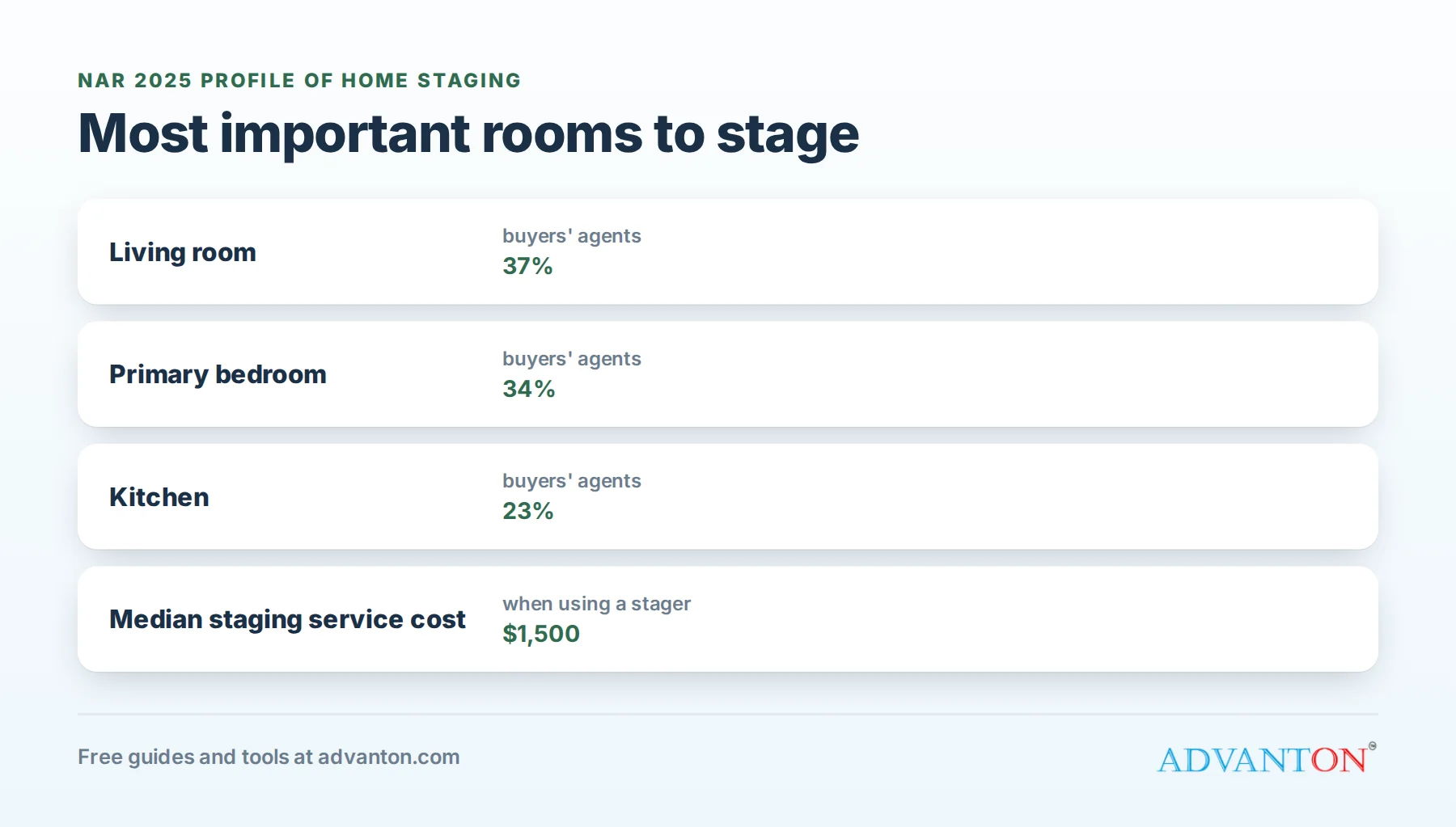
Which rooms matter most
In NAR’s 2025 survey, buyers’ agents said the most important rooms to stage are the living room (37%), the primary bedroom (34%) and the kitchen (23%). If a seller’s budget is limited, focus there first.
Services to offer
- Consultation: a walk-through with a written or verbal action plan the seller carries out themselves. Low cost, quick, and a great entry point.
- Occupied staging: working with the seller’s own furniture and decor, adding accessories, and rearranging rooms.
- Vacant staging: furnishing an empty home with your inventory for the listing period, billed for an initial term with monthly extensions.
- Virtual staging: digitally furnishing photos of empty rooms, which is affordable and fast, with clear disclosure in listings.
- Pre-listing services: coordinating declutter, painting, repairs and cleaning before staging.
Many stagers start with consultations and occupied staging, then build inventory for vacant homes.
Building inventory and storage
Vacant staging requires furniture and accessories for several homes at once: sofas, beds, dining sets, rugs, art, lamps, linens and decor.
- Start small: inventory for one or two homes, then grow.
- Choose neutral, versatile pieces that work in many styles.
- Buy smart: outlet stores, estate sales and furniture rental partnerships.
- Store carefully: a clean, climate-controlled storage unit, with an inventory list and photos.
- Plan logistics: a moving crew or truck rental for installs and pickups.
Inventory for one vacant home
| Room | Typical pieces |
|---|---|
| Living room | Sofa, two chairs, coffee table, side table, rug, lamps, art, pillows, throw, plants |
| Dining area | Table, four chairs, centerpiece, art |
| Primary bedroom | Bed frame with mattress or riser, bedding, two nightstands, lamps, art, rug |
| Secondary bedroom | Bed or desk setup, bedding, lamp, art |
| Kitchen and bathrooms | Towels, a few accessories, bowls, plants |
Keep each room’s pieces grouped in storage with a photo, so packing for the next job is quick.
Pricing your services
The NAR survey found a median cost of $1,500 for using a staging service, compared with $500 when the seller’s agent staged the home themselves. Common pricing approaches:
- Consultations: a flat fee for a set time.
- Occupied staging: a flat fee by home size or hours.
- Vacant staging: a fee for design, installation, removal and the first month, plus a monthly rental fee if the home takes longer to sell.
Research local stagers, and price for your time, moving costs, inventory wear and storage. Our pricing calculator helps.
A worked example: a busy month
These figures are illustrative.
| Revenue | Amount |
|---|---|
| 4 vacant stagings × $2,800 (first month) | $11,200 |
| 5 rental extensions × $650 | $3,250 |
| 8 occupied consultations × $275 | $2,200 |
| Total revenue | $16,650 |
| Costs | Amount |
|---|---|
| Movers and truck | $3,200 |
| Storage unit for inventory | $650 |
| Inventory replacement and repairs | $1,200 |
| Insurance | $200 |
| Marketing and photos | $600 |
| Total costs | $5,850 |
Profit before owner’s pay and taxes: $10,800. Extensions are valuable: homes that take longer to sell keep paying monthly while your inventory sits in place. But inventory tied up in unsold homes also limits how many new jobs you can take, so track it closely.
Loading the calculator…
Install day, step by step
- Confirm access, parking and timing with the agent.
- Load inventory using a room-by-room plan and photos from your walkthrough.
- Unload and place large furniture first, then rugs, lamps and art.
- Style: bedding, pillows, towels, plants and accessories.
- Light every room, open blinds and walk through as a buyer would.
- Take your own photos for your records and portfolio.
- Leave care instructions for the agent, and schedule the photographer.
Contracts protect you
Use a written agreement for every job covering: services and fees, the staging term and extension fees, payment timing (usually up front for vacant staging), who’s responsible for damage or theft of your inventory, access and removal dates, and what happens if the home sells or is taken off the market. Have an attorney review your template once.
Virtual staging: disclose it
Virtual staging digitally adds furniture to photos of empty rooms. It’s affordable and fast, but buyers should never be misled: label virtually staged photos clearly in listings, and avoid changing permanent features like walls, views or flooring. Many agents show an empty-room photo alongside the staged version.
Training and credentials
There’s no required license for home staging in most places, but training courses teach design principles, pricing and business practices, and some professional associations offer credentials. Training also gives you confidence and a network of peers.
Working with sellers sensitively
Staging an occupied home means asking people to remove personal photos, collections and furniture they love. Be kind and clear: explain that staging is about appealing to as many buyers as possible, not judging their taste, and give them a simple checklist to work through.
Insurance
Plan for general liability, coverage for your inventory (in storage, in transit and in client homes), commercial auto if you use a business vehicle, and workers’ compensation if you hire movers or staff. See how to get business insurance.
Winning agents and sellers
- Build a portfolio with professional before-and-after photos.
- Partner with real estate agents, who refer most staging work. Show them NAR’s data and your results.
- Network with real estate photographers, builders and investors.
- Offer a simple agent package, such as consultation pricing agents can include for every listing.
- Post before-and-after content on social media and your website. Our Brand & Print Studio creates matching flyers and cards.
Growing your staging business
As demand grows, add a part-time stylist and a reliable moving crew, expand inventory in the styles your market sells most, and consider a small warehouse once storage units become crowded. Track how long inventory stays out and your average fee per home, so you know when expansion pays.
Common mistakes to avoid when starting a home staging business
- Over-personalizing: staging should appeal broadly, not reflect your own taste.
- Buying too much inventory before you have steady work.
- Weak contracts that leave you exposed to damage or late payments.
- Underpricing moving and labor, often the biggest hidden costs.
- Ignoring photos: staging is judged online first, so work with good photographers.
Your first 90 days as a home staging business owner
- Days 1 to 30: register your business, get insured, and create a portfolio by staging homes for friends or at a discount.
- Days 31 to 60: set your packages and prices, write your contract, and launch a website with our free website builder.
- Days 61 to 90: meet agents, offer consultations, complete your first paid jobs, and decide when to invest in vacant-staging inventory.
Frequently asked questions about starting a home staging business
Do I need a design degree to be a home stager?
No. Many successful stagers learn through training courses and practice. A strong eye, organization and reliability matter most.
Does staging really help homes sell?
In NAR’s 2025 survey, 83% of buyers’ agents said staging helps buyers visualize a home, and 29% of agents saw a 1% to 10% increase in the dollar value offered, though results vary.
What’s the difference between staging and interior design?
Design reflects how a client wants to live; staging presents a home to appeal to as many buyers as possible.
Can I start with virtual staging only?
Yes. Virtual staging needs no inventory or movers, so it’s a low-cost way to start, as long as photos are clearly labeled as virtually staged.
How long does a vacant staging stay in a home?
Usually until the home sells or for an agreed term, often with a first-month fee followed by monthly extensions. Your contract should state the minimum term and removal timing.
Should I charge before or after the home sells?
Most stagers charge vacant staging up front, because inventory, movers and design time are committed immediately. Monthly extensions are then billed in advance on the same date each month, with a reminder a few days before, so payments stay predictable and you can plan exactly which inventory will be free for new jobs next month.
Keep learning
Sources
- National Association of Realtors, 2025 Profile of Home Staging (press release)
- National Association of Realtors, 2025 Profile of Home Staging (report)
Last reviewed October 28, 2026. Startup costs are estimates; check local prices, licensing and tax rules before you commit money.
This article is general information, not financial, legal or tax advice. Check the rules that apply to you or talk to a qualified professional before making decisions. See our disclaimer.
Leave a Reply