
Every car needs maintenance and repairs, and many drivers would rather go to a trusted local shop than a dealership. An independent auto repair shop can be a durable, profitable business, but it’s capital-intensive and regulated, and its success depends on two things: skilled technicians and customer trust.
According to the U.S. Bureau of Labor Statistics, automotive service technicians and mechanics held about 805,600 jobs in 2024, earning a median of $49,670 a year, and employment is projected to grow 4% from 2024 to 2034. Demand is steady; finding and keeping good technicians is often the bigger challenge.
Auto repair shop at a glance
Table of Contents
| Services | Maintenance, brakes, suspension, diagnostics, electrical, A/C, engine and transmission work |
| Certifications | ASE (voluntary but expected), EPA Section 609 for A/C refrigerant work |
| Licensing | Business license; some states register or license repair facilities |
| Startup costs | High: lifts, diagnostic tools, a suitable building, insurance |
| Biggest challenges | Hiring technicians, cash flow, earning trust |
Certifications and licensing
- EPA Section 609 certification is required for technicians who service vehicle air conditioning systems and handle refrigerant.
- ASE certification (from the National Institute for Automotive Service Excellence) is voluntary but widely recognized; it requires work experience plus passing exams. Displaying ASE-certified technicians builds customer trust.
- State requirements vary: some states register or license auto repair facilities (California’s Bureau of Automotive Repair is a well-known example), and some states, such as California, require written estimates and customer authorization before work. Emissions and safety inspection programs have their own licensing where they exist.
- Local requirements: zoning for automotive use, business licenses, fire inspections and sign permits.
Environmental rules
Repair shops handle used oil, coolant, solvents, batteries, tires and refrigerant. Plan from day one for:
- Used oil and filter recycling through a licensed collector.
- Hazardous waste storage, labeling and disposal under federal and state rules.
- Refrigerant recovery equipment and Section 609-certified technicians.
- Floor drains and spill control, which local authorities may regulate.
Your state environmental agency and local fire department can explain the rules for your site.
Choosing your shop model
- General repair: the broadest market, and the most competition.
- Specialty shop: brakes, transmissions, European cars, diesel, hybrids and EVs, or fleet service. Specialists can charge more and stand out.
- Mobile mechanic: lower startup costs, limited to repairs that can be done on-site; a good way to build a client base before opening a shop.
Startup costs to plan for
- A building zoned for auto repair, with bays, parking and room for customers’ cars.
- Lifts, air compressor and air lines, tire and alignment equipment.
- Diagnostic scan tools and software subscriptions, essential for modern vehicles.
- Hand and power tools, often a major technician expense too.
- A/C recovery equipment, fluid handling and waste storage.
- Shop management software for estimates, invoices, parts and customer history.
- Insurance: garage liability, garagekeepers coverage (customers’ cars in your care), property and workers’ comp.
- Working capital for parts, payroll and rent before revenue builds.
Leasing equipment and buying a shop with equipment included are common ways to reduce upfront costs. See how to get a startup loan.
Garagekeepers coverage explained
General liability covers injuries and damage you cause, but customers’ vehicles in your care need garagekeepers insurance, which covers damage from fire, theft, vandalism or accidents while cars are at your shop or being test-driven. Many new owners assume general liability covers this; it usually doesn’t. Ask your insurer to explain both.
Pricing: labor rate and parts
- Labor rate: most shops bill by a published hourly rate times the standard time for each job (from labor guides). Rates vary widely by region and specialty; research local shops and dealerships.
- Parts: shops typically mark up parts to cover sourcing, handling and warranty, with a lower markup on expensive parts.
- Diagnostics: charge a fair diagnostic fee, often credited toward the repair.
- Written estimates and authorization before work, which some states require and every customer appreciates.
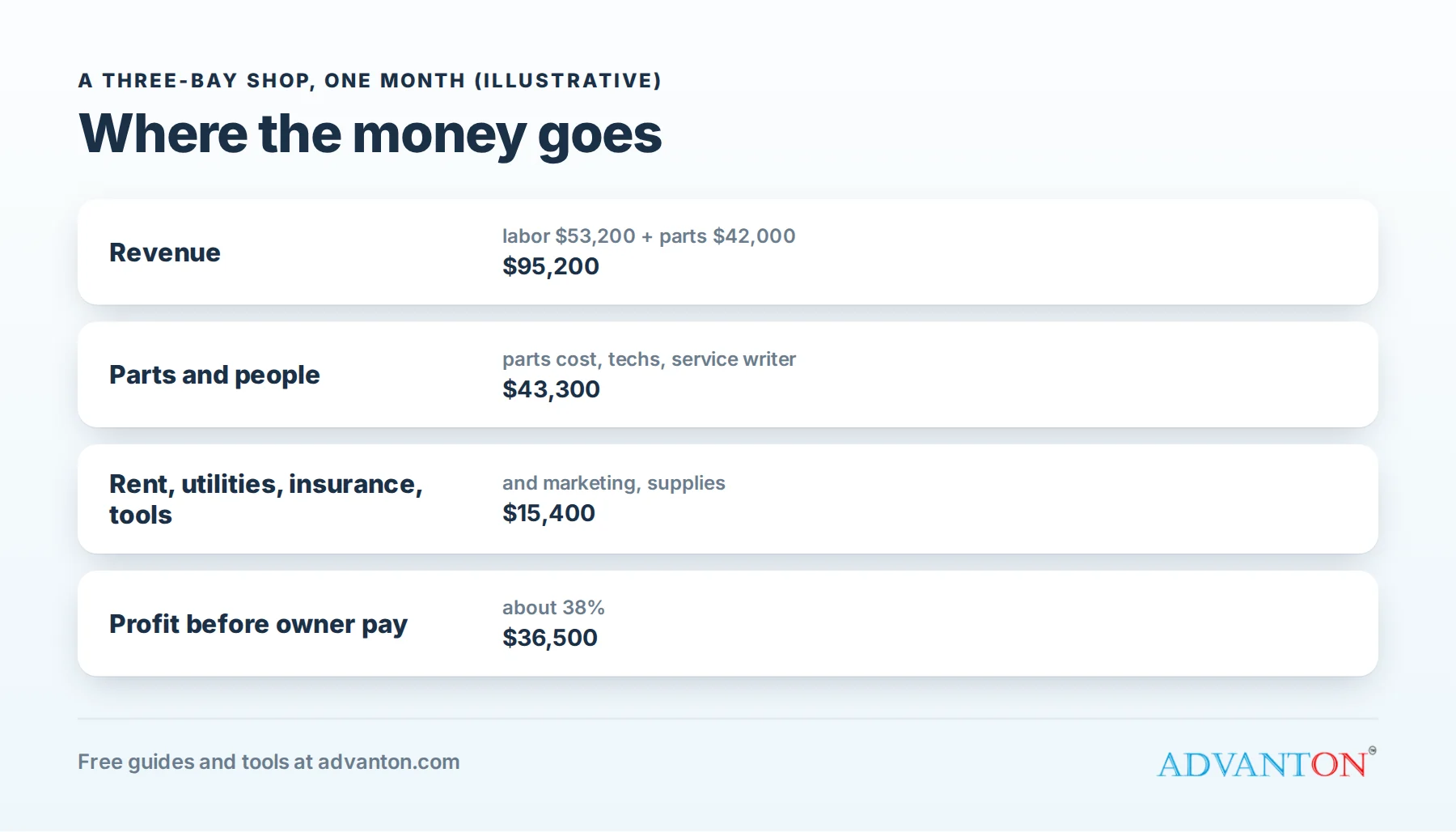
A worked example: a three-bay shop’s month
These figures are illustrative.
| Revenue | Amount |
|---|---|
| Labor: 380 billed hours × $140 | $53,200 |
| Parts sales | $42,000 |
| Total revenue | $95,200 |
| Costs | Amount |
|---|---|
| Parts cost (about 55% of parts sales) | $23,100 |
| 3 technicians, including payroll costs | $15,600 |
| Service writer | $4,600 |
| Rent | $6,500 |
| Utilities and waste disposal | $1,600 |
| Insurance | $2,400 |
| Diagnostic software and tool payments | $2,200 |
| Marketing | $1,200 |
| Shop supplies and miscellaneous | $1,500 |
| Total costs | $58,700 |
Profit before owner’s pay, loan payments and taxes: $36,500 (about 38%). The key number is billed hours: idle bays and technicians waiting on parts or approvals quickly erase profit. Track them weekly, and use our hiring cost calculator before adding a technician.
The numbers that run a shop
- Car count: vehicles serviced per day or week.
- Average repair order (ARO): revenue per visit.
- Billed hours vs available hours: how much of technicians’ time turns into billable work.
- Effective labor rate: labor revenue divided by billed hours, after discounts.
- Parts margin: what you keep after parts costs.
- Comeback rate: jobs that return for the same problem.
Review them weekly. Small improvements in billed hours and average repair order make a big difference to profit.
Shop workflow
A smooth workflow keeps bays busy: a service writer checks vehicles in and writes clear estimates, technicians diagnose and send findings with photos, customers approve by text or phone, parts arrive quickly from reliable suppliers, and finished cars are quality-checked before pickup. Shop management software ties these steps together.
Hiring and keeping technicians
- Pay competitively, and be clear about hourly vs flat-rate pay.
- Invest in training and certifications, especially for newer vehicle technology.
- Provide good tools and diagnostic equipment.
- Keep the shop organized and safe.
- Build a path from apprentice to master technician.
Hybrids and electric vehicles
As more hybrids and EVs reach the age where they need independent service, shops that invest in training, safety equipment for high-voltage systems, and the right diagnostic tools can stand out. Start with hybrid maintenance and brakes, tires and suspension on EVs, then build skills for more advanced work.
Buying an existing shop
Buying an established shop can bring customers, equipment and staff from day one. Review financial statements and tax returns, customer counts and repeat rates, equipment condition, lease terms, environmental history and whether key technicians will stay. A professional valuation and legal review are worth the cost.
Earning trust
- Explain repairs clearly, showing old parts or photos.
- Prioritize: separate "needed now" from "can wait".
- Offer a written warranty on parts and labor.
- Ask every satisfied customer for a review; our review request kit makes it easy.
- Send maintenance reminders based on mileage and time.
Digital vehicle inspections
Many shops now send customers a digital inspection report with photos and short videos of worn parts, color-coded by urgency. It builds trust, makes recommendations easier to understand, and often raises approval rates, because customers can see the problem for themselves.
Write a clear warranty policy
Decide what you cover (parts, labor or both), for how long or how many miles, and what isn’t covered, such as customer-supplied parts. Put it on every invoice and your website. A clear warranty sets you apart from shops that leave customers guessing.
Win fleet and business accounts
Local businesses with vans and trucks, such as contractors, florists and delivery services, need reliable maintenance with minimal downtime. Offer scheduled maintenance, priority service and monthly invoicing. A few fleet accounts can keep bays busy in slow weeks.
Common mistakes to avoid
- Underpricing labor to compete, then struggling to pay technicians.
- Ignoring environmental rules.
- Poor estimates and surprise charges, which destroy trust.
- Not tracking comebacks (repeat repairs) and their causes.
- Running out of cash while waiting for revenue to build.
Your first 90 days
- Days 1 to 30: secure a properly zoned location, confirm licensing and environmental requirements, arrange insurance and financing.
- Days 31 to 60: install equipment, set up shop software, hire your first technicians, and build a website with our website builder.
- Days 61 to 90: open with a maintenance special, ask for reviews, and set up reminder systems.
Frequently asked questions
Do I need to be a mechanic to own a repair shop?
No, but you need skilled, certified technicians, and understanding the work helps you manage quality and pricing.
How much does it cost to open a shop?
It varies widely with location and equipment. Buying an existing shop or leasing equipment can lower upfront costs.
What certifications matter most?
EPA Section 609 for A/C work is required. ASE certification is voluntary but widely trusted by customers.
Should I specialize?
Specializing in a vehicle brand or system can help you stand out and charge more, especially in areas with many general shops. Many shops start general and specialize as they learn what their market needs.
How do I find good technicians?
Build relationships with local technical schools and community colleges, offer apprenticeships, ask your current team for referrals, and advertise your training, tools and pay clearly. Good technicians often choose shops for culture and equipment as much as pay, so show both in your job ads.
Keep learning
Sources
Last reviewed October 28, 2026. Startup costs are estimates; check local prices, licensing and tax rules before you commit money.


Leave a Reply