
Roofing leads are expensive and roofing decisions are big, which makes Google Local Services Ads especially interesting for roofers. You pay per lead (calls, messages or bookings), not per click, and your ad appears at the top of many local roofing searches with the Google Verified badge, a strong trust signal in a trade where homeowners worry about storm chasers and scams.
But roofing LSA leads behave differently from plumbing or HVAC leads: many are inspections and repairs that can turn into replacements weeks later. This guide covers how roofers set up, budget and follow up to turn leads into signed roofs. For how the program works in general, including the October 2025 switch to the single Google Verified badge, see our Local Services Ads guide for contractors.
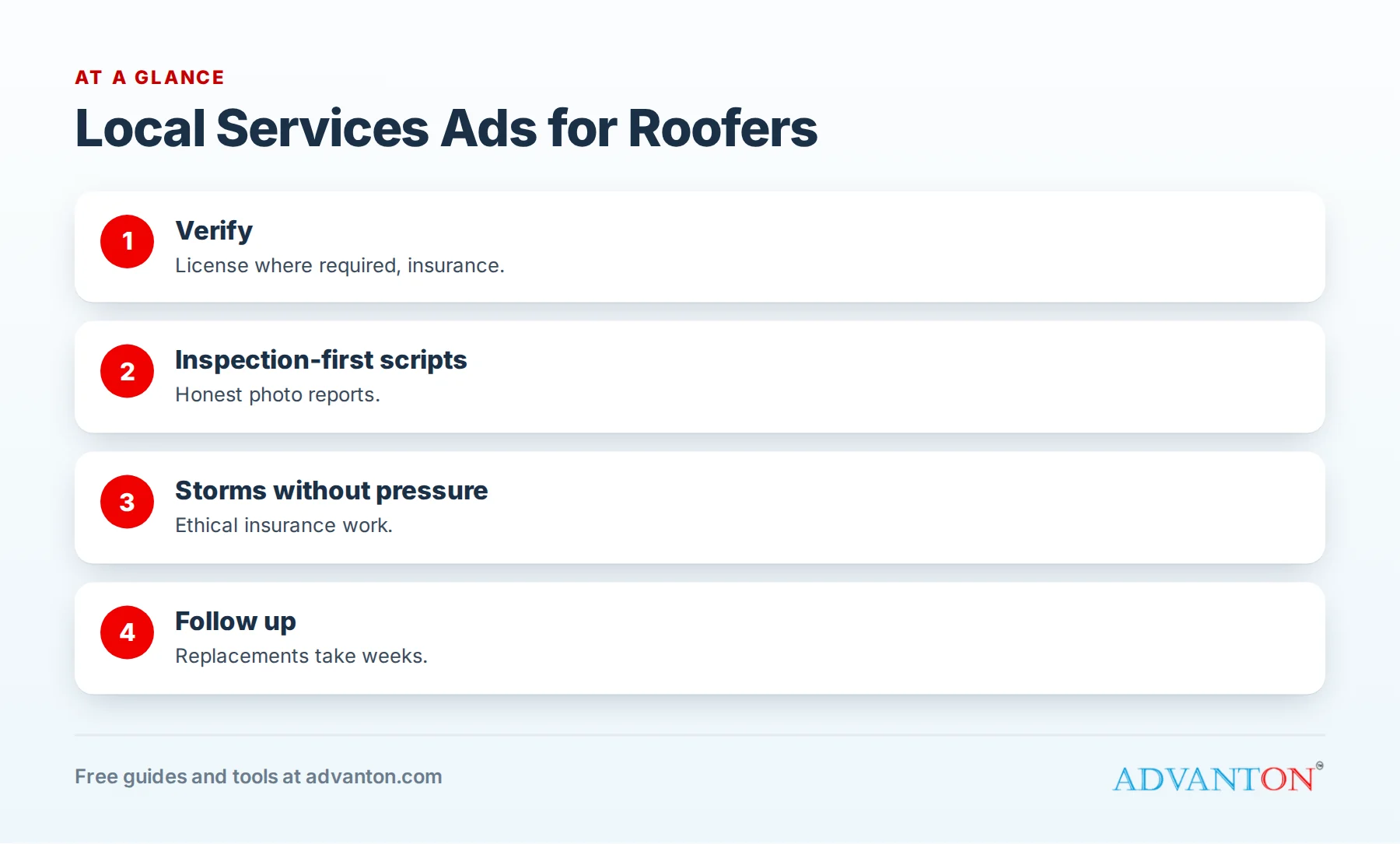
Why Local Services Ads suit roofers
Table of Contents
| Roofing reality | Why LSAs help |
|---|---|
| Trust concerns | The Google Verified badge separates you from unverified crews |
| Storm-driven demand | Ads appear at the top when damage searches spike |
| High-value jobs | One replacement can pay for many leads |
| Inspection-led sales | Leads book inspections that start the relationship |
Verification for roofing businesses
Roofing licensing varies widely: some states license roofers specifically, others under general contractor licenses, and some cities add their own rules. Prepare:
- Any license your state or city requires, with your business name matching your Google account.
- Proof of insurance meeting Google’s requirements.
- Background checks for the owner and, in many cases, crew members who meet customers.
- Consistent business details with your Business Profile.
Start verification well before storm season; it often takes several weeks.
Choose job types carefully
- Repairs and leaks: fast, frequent leads that build trust.
- Inspections: the start of many replacements.
- Replacements: fewer leads, high value.
- Gutters and related work where available.
- Turn off jobs you don’t do, such as flat commercial roofs if you only do residential shingles.
Budget around storms, not just seasons
| Period | Approach |
|---|---|
| Before storm season | Steady budget; book inspections and repairs |
| After major local storms | Raise budget if you can respond quickly and inspect honestly |
| Peak replacement season | Steady to higher budget while crews have capacity |
| Winter or fully booked | Lower budget or pause |
Google recommends budgeting for around 10 leads a week so the system can learn. Cost per lead varies by market and rises after storms.
Respond fast, especially after storms
After hail or wind, homeowners call several roofers. The first to respond with a clear, calm plan usually gets the inspection. Add phone coverage after storms, use missed-call text-back and schedule inspections quickly. Responsiveness also affects LSA ranking.
An inspection-first call script
"Thanks for calling [Business], this is [Name]. Is water coming in right now? If so, let’s get a temporary repair scheduled first. Otherwise, we can do a free photo inspection [day and time window], and we’ll show you exactly what we find, including if your roof doesn’t need anything. What’s the address?"
Promising honest photo reports builds trust immediately.
Handle insurance work ethically
Many storm leads involve insurance claims. Document damage honestly with photos, explain how the claims process generally works, let the homeowner and insurer agree on scope, and never offer to cover deductibles where your state prohibits it. Ethical claims work protects your license, your reviews and your LSA standing.
Follow up on replacement decisions
Replacement decisions can take weeks while homeowners wait for insurance, savings or second opinions. Follow up two to three days after your proposal, again after a week, then monthly with helpful information. Many signed roofs come from leads that went quiet for a while.
Reviews drive ranking and trust
Ask for a review at the final walkthrough, after cleanup, and encourage photos. Reviews mentioning repairs, replacements and inspections help homeowners choose you. Use our free review request kit.
Mark booked jobs and rate leads
Mark booked leads in your dashboard and rate the others. Google reviews leads automatically and credits invalid ones, such as spam or wrong numbers.
Measure cost per signed job
An illustrative quarter: a roofer spends $4,500 and receives 60 leads ($75 per lead). Thirty become inspections or repairs, and six become signed replacements, making the cost per signed replacement $750, plus profit from the repairs along the way. Track leads through to signed contracts with our free lead source tracker.
Make your profile persuasive
Photos of completed roofs, crews working safely and branded trucks, a short bio mentioning licensing, insurance, warranties and honest inspections, and accurate hours help you win calls from the same ad position.
Combine LSAs with SEO and neighborhood marketing
LSAs bring calls; your Business Profile, website galleries and yard signs on every job build long-term visibility. See roofing SEO and how to get more roofing leads.
Keep verification current
Update insurance, licenses and background checks before they lapse, so ads don’t pause right after a storm.
Respond to messages and bookings fast
Many roofing leads arrive as messages, especially after storms. Reply within minutes with two inspection times, and confirm any booking requests promptly. Alerts should go straight to whoever schedules inspections.
Train the team that answers
Every LSA lead is paid for. Give everyone who answers the inspection-first script, your service area, your repair and inspection policies, and the rule to book a specific time. Review missed calls weekly, especially after storms.
Hand repairs off to replacement conversations carefully
A repair visit often reveals a roof near the end of its life. Fix what’s needed, photograph the roof’s condition, and explain replacement timing honestly, without pressure. Homeowners remember the roofer who fixed the leak and told the truth about the rest.
Make safety part of your story
Mention your safety practices (fall protection, trained crews, insured work) in your profile and on calls. Homeowners worry about accidents on their property, and safety signals professionalism.
Commercial roofing leads
If you serve small commercial buildings, enable commercial job types where available and make sure your team understands commercial scheduling and flat-roof systems.
When to pause or lower budget
Pause or lower your budget when crews are booked for weeks, during long rain or snow, or over holidays. Missing leads wastes money and can hurt ranking.
Show your inspection reports
Customers who see a professional photo report choose roofers faster. Add a sample report image to your website and mention "free photo inspection reports" in your profile. It answers the biggest worry homeowners have about roofers: "Will they tell me the truth about my roof?" Honest reports, including telling customers when they don’t need anything, earn reviews and referrals that strengthen your LSA ranking over time.
Keep your business details consistent
Customers who see your ad often check your Business Profile, reviews and website before calling. Keep your name, phone, hours and photos identical everywhere, and keep reviews coming; they help both your ads and your free local ranking.
Common mistakes roofers make with LSAs
- Raising budgets after storms without capacity to inspect quickly.
- Pressure tactics on inspection visits.
- No follow-up on replacement proposals.
- Leaving unwanted job types on.
- Not asking for photo reviews.
- Judging by cost per lead instead of signed jobs.
A 30-day launch plan
| Week | Actions |
|---|---|
| 1 | Gather license, insurance and background check details; apply |
| 2 | Request photo reviews from recent customers; create a photo inspection report template |
| 3 | Choose job types and service areas; set a starter budget |
| 4 | Train phone staff on the inspection-first script; set up follow-up and tracking |
Frequently asked questions
Do roofers need a license for Local Services Ads?
Google verifies licensing where your state or city requires it, plus insurance and background checks.
Should roofers raise LSA budgets after storms?
Only if you can respond quickly and inspect honestly; missed calls and rushed inspections hurt reviews and ranking.
How do roofers measure LSA results?
Track leads through inspections to signed contracts, and calculate cost per signed job.
Are LSA leads good for replacements?
Many replacements start as inspection or repair leads, so follow-up matters as much as the first call.
Can I get credit for bad leads?
Google reviews leads automatically and credits invalid ones; rating leads in your dashboard helps too.
How long before roofing LSAs bring calls?
Once verified and live, calls can start within days; results depend on budget, reviews, storms and competition.
What job types work best for roofers?
Repairs, leaks and inspections bring the most leads and start the relationships that become replacements.
Should I offer free inspections through LSAs?
Many roofers do, with honest photo reports; they convert well and build trust.
Do LSAs work in winter for roofers?
Repair and leak leads continue in winter in many areas; lower budgets if crews can’t work safely.
How Advanton helps
Advanton is a free resource for small businesses. Free tools that help roofers: the roofing website builder, yard signs and door hangers, the review request kit and the lead source tracker. You can also add your business to the Advanton directory for free. Advanton earns money when you buy a domain or hosting through our store, which helps keep everything else free.
Keep learning
Sources
- PushLeads, Google Local Service Ads in 2026 for contractors (Google Verified badge)
- Emprise Digital, Local Services Ads guide (automated lead credits)
Last reviewed October 30, 2026. Startup costs are estimates; check local prices, licensing and tax rules before you commit money.


Leave a Reply