
Many older adults stop driving but still need to get to doctor’s appointments, pharmacies, grocery stores, church and family events. Public transit and rideshare don’t always work for them: they may need help getting from the door to the car, a wheelchair-accessible vehicle, or a driver who waits during the appointment. A senior transportation service fills that gap with patient, reliable, door-to-door help.
Senior transportation at a glance
Table of Contents
| Services | Medical appointments, errands, social outings, airport trips, wheelchair transport |
| Models | Private-pay rides, non-emergency medical transportation (NEMT), contracts with senior communities |
| Licensing | Varies by state and city: passenger carrier permits, NEMT requirements |
| Biggest costs | Drivers, vehicles, insurance, fuel |
| Key to success | Reliability, safety and kindness |
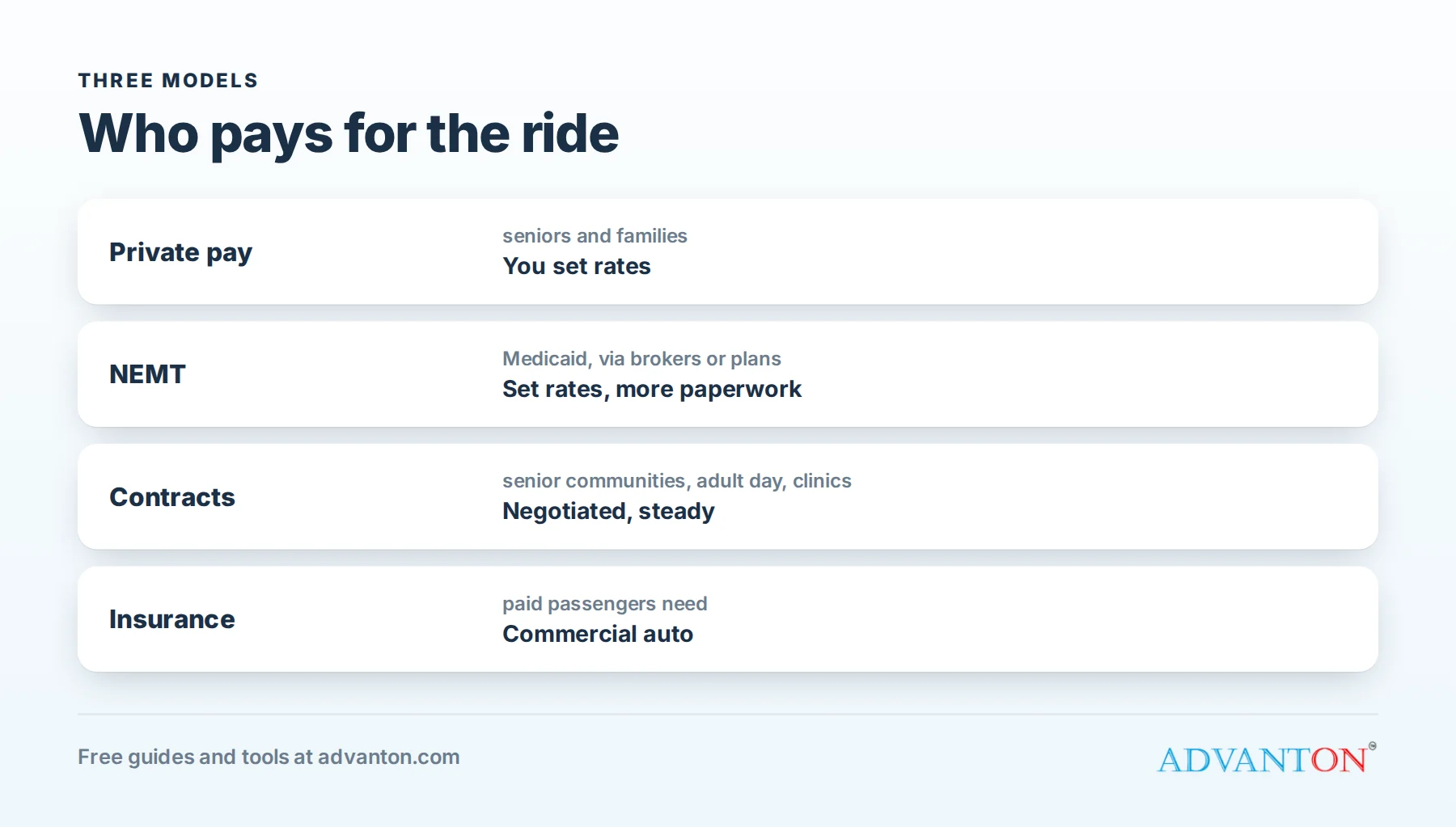
Choose your service model
| Private pay | NEMT (Medicaid) | Contracts | |
|---|---|---|---|
| Customers | Seniors and families | Medicaid members, through brokers or plans | Senior communities, adult day centers, clinics |
| Pricing | You set rates | Set by brokers or plans | Negotiated |
| Paperwork | Light | Heavy: trip logs, credentials, audits | Moderate |
| Volume | Builds with marketing | Can be steady | Steady |
Many services start with private pay and contracts, then add NEMT once they meet the requirements.
Door-to-door vs door-through-door
- Curb-to-curb: pickup and drop-off at the curb.
- Door-to-door: the driver helps the passenger from the door to the vehicle.
- Door-through-door: the driver helps the passenger inside, sometimes waiting during appointments or carrying groceries.
Higher levels of assistance are often what families value most, and can be priced accordingly.
Licensing and permits
Rules for transporting passengers for pay vary widely. Depending on your state and city, you may need:
- A passenger carrier or for-hire vehicle permit from a state agency or the city.
- Commercial vehicle registration and inspections.
- Specific driver’s license classes for larger vehicles.
- NEMT credentials required by your state’s Medicaid program or its brokers.
Contact your state transportation and Medicaid agencies, and your city, before your first paid ride.
Vehicles
- Sedans and minivans for ambulatory passengers.
- Wheelchair-accessible vans with ramps or lifts and proper wheelchair securement systems.
- Safety equipment: first aid kit, fire extinguisher, step stools and grab handles.
- Clean, comfortable and well-maintained vehicles, inspected regularly.
Buying used accessible vans can reduce startup costs; have them professionally inspected.
Startup costs to plan for
- Vehicles, bought or leased, including any accessibility equipment.
- Commercial insurance deposits.
- Permits, inspections and licensing fees.
- Driver background checks, screening and training.
- Dispatch and scheduling software.
- Safety equipment and vehicle branding.
- Marketing and working capital for the first months.
Total everything with our startup cost calculator.
Insurance
You’ll need commercial auto insurance with liability limits suited to carrying passengers (personal auto policies generally don’t cover paid passengers), plus general liability, workers’ compensation for drivers and possibly abuse and molestation coverage. NEMT brokers and contracts often set minimum coverage amounts. See how to get business insurance.
Drivers: screening and training
- Background checks and driving record checks.
- Drug and alcohol screening where required.
- Training: safe driving, passenger assistance, wheelchair securement, dementia awareness, CPR and first aid.
- Customer service: patience, punctuality and respect.
Drivers are the face of your service; hire for kindness as well as driving skill.
Pricing
- Per ride, often with a base fee plus mileage.
- Wait time charged by the hour or quarter hour.
- Higher rates for wheelchair transport and door-through-door help.
- Packages for regular trips, such as dialysis or weekly errands.
- Contract rates for senior communities and adult day centers.
Use our pricing calculator to cover fuel, insurance, vehicle payments and driver time, including time between rides.
An example price list
| Service | Example price |
|---|---|
| Local ride, up to 10 miles | $35 |
| Each additional mile | $2 |
| Wait time, per 15 minutes | $8 |
| Wheelchair transport | Add $20 |
| Door-through-door assistance | Add $10 |
These prices are illustrative; research local services and adjust for your costs and area.
A worked example: two vans
These figures are illustrative for one month.
| Revenue | Amount |
|---|---|
| 520 rides × $45 | $23,400 |
| Costs | Amount |
|---|---|
| Drivers | $9,000 |
| Fuel | $2,800 |
| Insurance | $2,600 |
| Maintenance | $1,200 |
| Vehicle payments | $2,200 |
| Dispatch software | $300 |
| Marketing | $500 |
| Total costs | $18,600 |
Profit before owner’s pay and taxes: $4,800. Efficient scheduling matters most: grouping rides by area and time reduces empty miles. Track business mileage with our free mileage log.
Passenger safety procedures
- Confirm the passenger’s needs at booking: mobility aids, assistance level, medical needs and emergency contacts.
- Help passengers in and out safely, with step stools and steady support.
- Secure wheelchairs and occupants correctly every time.
- Never leave a vulnerable passenger alone at an unlocked or empty location; confirm someone is there to receive them where needed.
- Report incidents immediately and document them.
Recurring trips
Regular trips, such as dialysis several times a week, physical therapy or weekly shopping, create steady, predictable work. Offer standing reservations, reliable drivers the passenger knows, and discounted packages. Communicate closely with clinics about schedule changes.
Accessibility basics
Wheelchair-accessible vehicles must be maintained so lifts, ramps and securement systems work safely. Train drivers on each vehicle’s equipment, inspect it daily, and keep maintenance records. Accessible service expands the riders you can serve and the contracts you can win.
Keeping families informed
Adult children often book rides for their parents. Offer text or email notifications for pickup and drop-off, a quick call if something goes wrong, and easy online booking. Peace of mind for families is one of your most valuable services.
Scheduling and dispatch
Use scheduling or dispatch software to book rides, plan routes, send reminders and track driver locations. Confirm rides the day before, build in time for passengers who need extra help, and have a plan for late appointments and cancellations.
Keeping good drivers
Drivers who are reliable and kind keep riders coming back. Offer fair pay, predictable schedules, respect and recognition, ongoing training, and well-maintained vehicles. Pair regular passengers with the same drivers where possible; familiarity builds trust for both.
Weather and emergencies
Have a plan for severe weather, vehicle breakdowns and medical emergencies during rides: emergency numbers in every vehicle, a backup vehicle or partner, clear communication with passengers and families, and driver training on what to do if a passenger becomes ill.
Finding riders
- Senior centers, senior living communities and adult day centers.
- Doctors’ offices, dialysis centers and clinics.
- Home care agencies and geriatric care managers.
- Churches and community groups.
- Adult children searching online for help for their parents.
- Google Business Profile, reviews and a clear website.
Growing your fleet
Add vehicles when your existing ones are consistently booked, prioritizing the type of vehicle your waiting customers need. Contracts with adult day centers, senior communities and clinics provide steady volume that justifies new vans. Track cost per ride and revenue per vehicle before expanding.
Partnerships that bring steady rides
Adult day centers, home care agencies, senior living communities, dialysis centers and clinics all need reliable transportation for clients. Offer contract rates, dependable scheduling and simple monthly invoicing. A few strong partnerships can fill your weekday schedule.
Keep good trip records
Record every trip: date, passenger, pickup and drop-off times and locations, mileage, assistance provided and any incidents. Records support billing, contracts, NEMT requirements and taxes, and they protect you if questions arise later.
Make booking easy
Many older passengers prefer to book by phone, while their adult children often book online. Offer both: a friendly person answering calls during business hours, and simple online booking with confirmations. Remind passengers the day before, and call if a driver is running late. Clear, patient communication prevents missed rides and builds trust with passengers and their families. Over time, a reputation for punctuality and kindness becomes your strongest marketing, as satisfied riders tell friends at senior centers, churches, clinics and community events every week. Ask happy riders and their families for reviews, too, since adult children often research services online first.
Common mistakes to avoid
- Personal auto insurance for paid passengers.
- Skipping permits required in your state or city.
- Underpricing wait time and empty miles.
- Poor driver screening.
- Overbooking and leaving vulnerable passengers waiting.
Your first 90 days
- Days 1 to 30: research state and local rules, form your business and arrange commercial insurance.
- Days 31 to 60: buy or lease vehicles, hire and train drivers, and set up scheduling software.
- Days 61 to 90: reach out to senior communities and medical offices, and start private-pay rides; explore NEMT requirements.
Frequently asked questions
Do I need a special license to drive seniors for pay?
Often, yes: many states and cities require passenger carrier permits, and NEMT has its own requirements. Check before offering rides.
Can I use my personal car?
Only with appropriate commercial insurance and permits. Personal auto policies generally don’t cover paid passengers.
How do I get NEMT trips?
Through your state’s Medicaid program, its brokers or health plans, after meeting their credentialing requirements.
Do I need wheelchair-accessible vehicles?
Not to start, but they expand the riders you can serve and the contracts you can win.
How fast can I start?
Private-pay rides can start once your permits, commercial insurance and vehicles are ready; NEMT credentialing usually takes longer.
Keep learning
Last reviewed October 28, 2026. Startup costs are estimates; check local prices, licensing and tax rules before you commit money.


Leave a Reply