
Property managers oversee rental homes, apartments, HOAs and commercial buildings, and they need contractors constantly: repairs, unit turnovers between tenants, emergencies and seasonal maintenance. The Bureau of Labor Statistics counted about 466,100 property, real estate and community association managers in 2024. For contractors who are reliable, responsive and organized, property management accounts can provide steady work that fills weekdays and smooths out seasonal slowdowns.
This guide explains what property managers need and how to become a vendor they rely on.
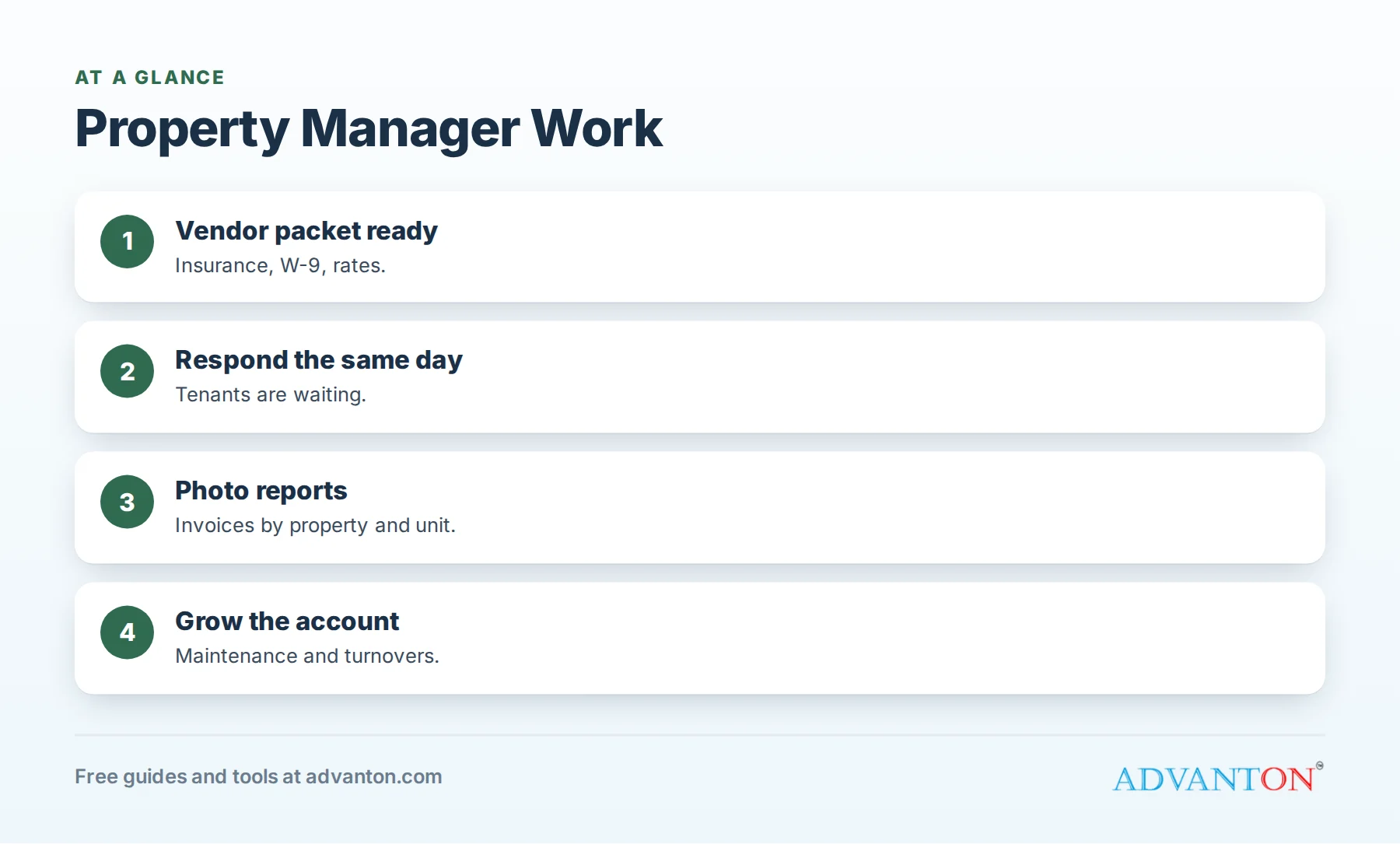
The work property managers send
Table of Contents
| Type | Examples | What matters most |
|---|---|---|
| Repairs | Leaks, electrical problems, broken appliances, doors | Fast response, fair pricing |
| Turnovers | Painting, cleaning, flooring, fixtures between tenants | Speed, so units rent again quickly |
| Emergencies | Burst pipes, no heat, roof leaks | Answering at any hour if you offer it |
| Maintenance | HVAC servicing, gutter cleaning, landscaping | Schedules and reliability |
| Projects | Roof replacements, renovations, upgrades | Clear bids and owner-ready paperwork |
What property managers value
- Response time: tenants call managers, and managers need you to call tenants quickly.
- Reliability: showing up when scheduled, every time.
- Clear communication: updates without being chased.
- Consistent pricing: predictable costs managers can approve and explain to owners.
- Clean paperwork: invoices by property and unit, with photos.
- Professionalism with tenants: courteous, respectful and careful in occupied homes.
Become an approved vendor
Most management companies keep approved vendor lists. Expect to provide:
- Certificate of insurance with required coverage, often naming the management company or owner as additional insured.
- W-9 for tax reporting.
- License information for your trade.
- Rates or a price list for common work.
- Emergency contact information and response times.
Have these ready in one packet so onboarding is fast.
Pricing and approvals
Property managers often have approval limits: they can authorize jobs below a certain amount without asking the owner. Learn each manager’s limit, provide quotes quickly for larger jobs and price common work consistently. A clear price list for frequent tasks (service calls, common repairs and turnover painting by unit size) speeds approvals.
Communication with tenants
When you enter occupied units:
- Schedule with tenants respectfully and confirm arrival windows.
- Introduce yourself and explain the work.
- Protect floors and belongings, and clean up.
- Report issues you notice, such as leaks or safety hazards, to the manager.
Tenants often tell managers how you behaved; courtesy keeps the account.
Photo reports and invoices
Send before-and-after photos, a short description of what you found and did, and an invoice by property and unit. Managers forward these to owners, so clear documentation makes their job easier and helps you get paid faster.
Turnover speed wins accounts
Vacant units cost owners rent every day. Contractors who complete turnovers quickly (painting, repairs, cleaning and flooring coordinated tightly) become essential. Offer turnover packages with clear timelines.
Emergencies
If you offer after-hours service, make it reliable and clearly priced. If you don’t, say so upfront. Managers need to know exactly who to call at 2 a.m.
Growing an account
Start with small jobs, prove reliability, then ask about maintenance schedules, turnovers and larger projects. Many managers oversee multiple properties and owners; strong work for one property often leads to more.
Where to find property managers
- Local management companies and their vendor coordinators.
- HOA management firms.
- Apartment complexes and their maintenance supervisors.
- Individual landlords with several rentals.
- Real estate agents who also manage rentals.
Introduce yourself with a short email, your vendor packet and a phone call. See our property management industry data to understand how these businesses work.
Getting paid
Property management payments often follow invoice cycles. Understand each company’s payment terms, invoice promptly and follow up politely. Steady volume makes predictable payment schedules manageable.
Trades that benefit most
Handymen, plumbers, electricians, HVAC contractors, painters, flooring installers, cleaners, landscapers, pest control and roofers all receive steady property management work.
A worked example
A handyman introduces himself to three local management companies with a vendor packet and a turnover price list. After a few small repairs done quickly, two companies add him to their turnover rotation. Within six months, property management work fills three weekdays a week, with predictable invoices and no advertising cost. These numbers are illustrative.
A vendor introduction email
Subject: Reliable [trade] for your properties in [Area]
Hi [Name], I’m [Name] with [Business], a licensed and insured [trade] serving [Area]. We work with landlords and property managers on repairs and unit turnovers, with same-day responses to tenant issues, photo reports and invoices by property and unit. I’ve attached our vendor packet (insurance certificate, W-9 and price list). Could we start with a small job to show you how we work? [Phone]
HOA and community association work
HOA management companies need contractors for common areas: landscaping, pressure washing, painting, fencing, lighting, pools and repairs. These jobs often go through bids and board approvals, so provide clear proposals, references and insurance certificates, and be patient with approval timelines.
Work orders and vendor portals
Many management companies use software that sends work orders and collects invoices through vendor portals. Learn their systems, update job statuses promptly and upload photos. Being easy to work with in their system is a quiet advantage.
Propose preventive maintenance
Once you know a portfolio, propose maintenance schedules (HVAC servicing, gutter cleaning, dryer vent cleaning, roof inspections) that prevent emergencies. Managers appreciate contractors who reduce surprises, and scheduled work smooths your calendar.
Handle disputes professionally
Occasionally a tenant complains or an owner questions an invoice. Respond calmly with photos, notes and the approved scope. Documentation resolves most disputes quickly and protects the relationship.
A seasonal checklist for rental portfolios
| Season | Services to offer |
|---|---|
| Spring | AC checks, gutter cleaning, exterior repairs, landscaping |
| Summer | Turnovers during moving season, painting, pest control |
| Fall | Furnace checks, gutter cleaning, weatherproofing |
| Winter | Freeze prevention, emergency readiness, interior repairs |
Individual landlords
Not every rental is professionally managed. Landlords with a few properties often handle repairs themselves and need trustworthy contractors just as much. Reach them through local landlord associations, real estate investor groups and referrals from agents. They value the same things managers do: fast response, fair prices and clear communication.
Insurance requirements in detail
Managers may require specific coverage amounts, additional insured endorsements and workers’ compensation certificates. Talk to your insurance agent about common property management requirements so you can respond quickly when asked, and keep certificates current; expired paperwork can pause your work orders.
Key performance measures managers watch
Many management companies track vendor performance, even informally. The measures that usually matter most: time to first contact with the tenant, time to completion, callbacks for the same problem, invoice accuracy and tenant complaints. Track these yourself, and share a short summary with managers every few months. Showing that you measure your own performance sets you apart from vendors who simply wait for the next work order.
Keep a dedicated contact
Give each management company one point of contact in your business, someone who knows their properties, approval limits and preferences. Consistency reduces mistakes and makes managers comfortable sending more work your way.
Common mistakes
- Slow responses to tenant issues.
- Inconsistent pricing.
- Poor communication with tenants or managers.
- Missing paperwork such as insurance certificates.
- Messy work in occupied units.
Your 30-day plan
| Week | Actions |
|---|---|
| 1 | Prepare your vendor packet: insurance, W-9, license, price list |
| 2 | Contact five management companies and landlords |
| 3 | Offer fast turnaround on any current repair or turnover |
| 4 | Send photo reports with every job; ask about maintenance schedules |
Frequently asked questions
How do contractors get work from property managers?
Become an approved vendor with insurance and paperwork ready, respond fast, price consistently and communicate clearly.
What do property managers require from contractors?
Usually a certificate of insurance, W-9, license information and rates, plus reliable response times.
Is property management work profitable?
It can be, especially for steady repairs and turnovers that fill weekdays without advertising costs.
How fast should contractors respond to property managers?
As fast as possible; tenant issues often need same-day contact.
Do I need to offer emergency service?
Only if you can do it reliably; tell managers clearly what you offer.
Do property managers pay less than homeowners?
Rates are often more consistent, but steady volume and no marketing costs can make the work very profitable.
How do I get on a property manager’s vendor list?
Send a complete vendor packet, ask for a small first job and respond quickly when it comes.
What paperwork do property managers need?
Usually a certificate of insurance, W-9, license information, rates and emergency contacts.
Can small contractors work with large management companies?
Yes, if you can meet insurance requirements and respond reliably; start with a few properties and grow.
How Advanton helps
Advanton is a free resource for small businesses. Free tools that help: the quote and invoice generator, the Brand & Print Studio for vendor packets and the lead source tracker. You can also add your business to the Advanton directory for free. Advanton earns money when you buy a domain or hosting through our store, which helps keep everything else free.
Keep learning
- How to get more handyman leads
- Property management industry data
- Real estate agent referrals for contractors
Sources
Last reviewed October 30, 2026. Startup costs are estimates; check local prices, licensing and tax rules before you commit money.


Leave a Reply