
HVAC searches follow the weather. The first heat wave brings a flood of "AC repair near me" searches; the first cold snap brings "furnace not working." HVAC contractors who rank well before those peaks win the most valuable calls of the year, while those who start marketing when the phones are already ringing compete for whatever is left.
This guide covers SEO specifically for HVAC contractors: the searches to target, the pages to build, seasonal timing and measurement. Google says local results depend mainly on relevance, distance and prominence; everything here strengthens one of those. For general foundations, see local SEO for contractors.
The searches that bring HVAC calls
Table of Contents
| Search type | Examples | What wins |
|---|---|---|
| Urgent repair | AC repair near me, furnace not working, no heat | Map pack visibility, accurate hours, fast answers |
| Replacement | AC replacement cost, new furnace, heat pump installation | Detailed pages with options and price ranges |
| Maintenance | AC tune-up, furnace inspection | Maintenance plan pages and seasonal offers |
| Technology | ductless mini split, heat pump vs furnace | Educational pages linked to services |
| Air quality | whole house air purifier, humidifier installation | Indoor air quality pages |
Plan for the seasons
| Months | SEO focus |
|---|---|
| February to April | Update AC repair, replacement and tune-up pages; request reviews from fall and winter customers |
| May to August | Keep hours and phone coverage accurate; post weekly photos; publish heat wave tips |
| August to October | Update furnace and heat pump pages; promote fall tune-ups |
| November to February | Publish no-heat troubleshooting; air quality and humidity content |
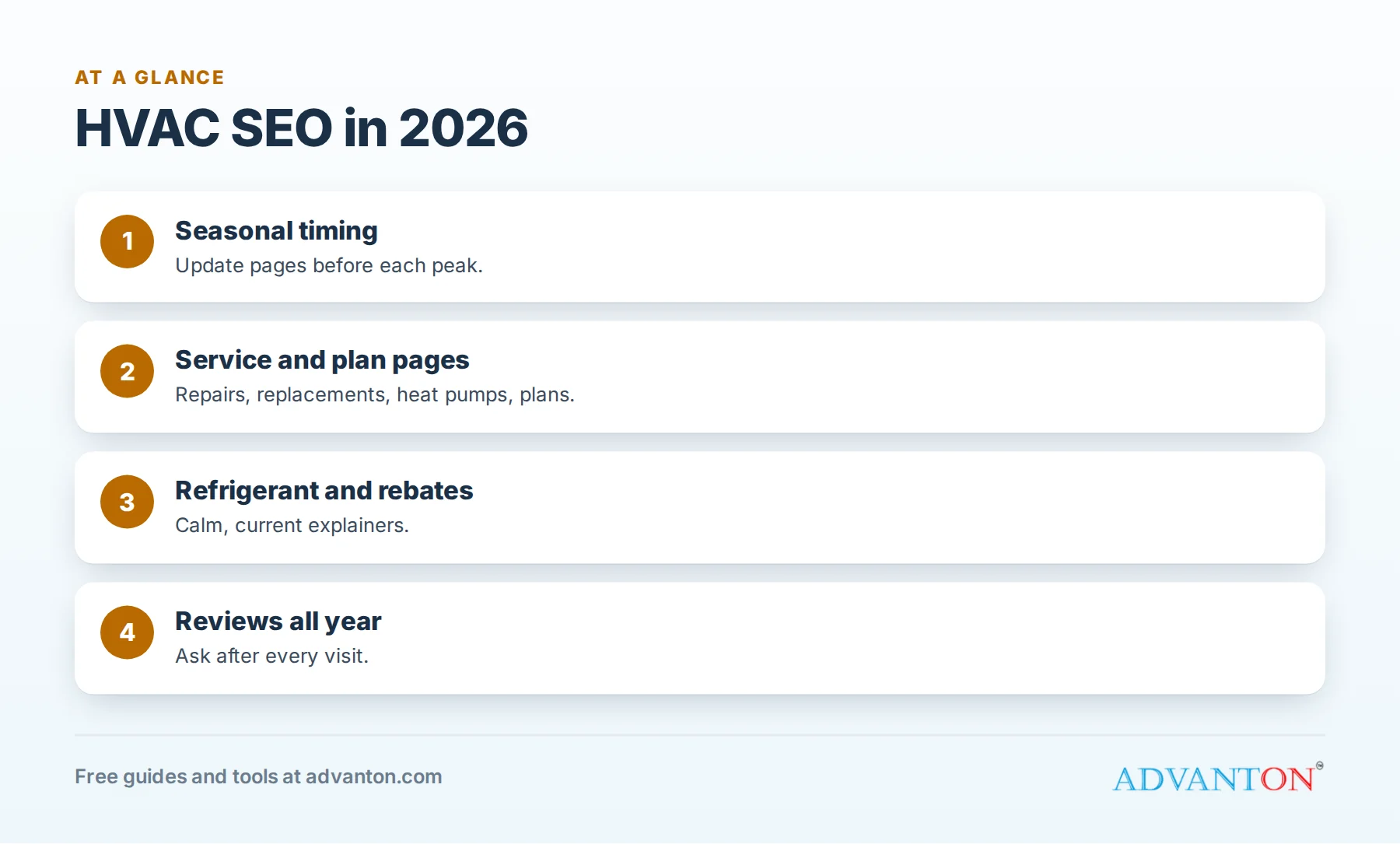
Pages updated before each season have time to be found when searches surge.
Step 1: Set up your Business Profile for HVAC
- Primary category: "HVAC contractor," with secondary categories only for services you offer, such as air conditioning repair or furnace repair.
- Services: list AC repair, AC installation, furnace repair and replacement, heat pumps, ductless systems, maintenance plans, duct cleaning if offered, and indoor air quality.
- Hours: accurate, including emergency availability.
- Photos: installations, technicians, trucks and clean mechanical rooms.
See Google Business Profile for contractors.
Step 2: Build service pages that sell
Create separate pages for AC repair, AC replacement, furnace repair, furnace replacement, heat pumps, ductless mini-splits, maintenance plans and indoor air quality. Each page should include signs customers need the service, options with efficiency and comfort trade-offs, price ranges, your process, photos, reviews and FAQs, plus a click-to-call button.
Step 3: Create a maintenance plan page
Maintenance agreements are central to steady HVAC businesses, and a dedicated page helps customers find and join them. Explain what’s included (tune-ups, priority service, discounts), how billing works, and how it helps systems last longer. Link it from every service page.
Step 4: Explain the refrigerant change
Homeowners hear confusing stories about "banned" refrigerants. New residential systems now use lower-impact refrigerants such as R-454B and R-32, and the EPA removed its January 1, 2026 installation deadline for R-410A equipment made or imported before 2025. A calm, plain-language page answering "What does the refrigerant change mean for me?" attracts searches and builds trust. See our Florida HVAC marketing guide for the details.
Step 5: Keep rebate and incentive content current
Utility rebates and incentives for heat pumps and high-efficiency equipment change often. If you publish them, show the date you last checked and link to the official program. Outdated incentive claims frustrate customers and hurt trust.
Step 6: Add genuine town pages
For your main towns, create pages with local substance: climate, common home types and systems, local utility programs and recent installations nearby.
Step 7: Earn reviews all year
Ask after every repair, tune-up and installation. Reviews mentioning "AC repair," "heat pump" or a town help similar customers choose you. Use our free review request kit, and reply to every review.
Step 8: Fix technical basics
Fast mobile pages, click-to-call on every page, clear titles with service and town, consistent business details, HTTPS and structured data where available. Our free HVAC website builder covers these.
Step 9: Build local links and listings
Manufacturer dealer locators, utility contractor lists, supplier pages, local associations and community sponsorships are valuable local links. Claim Apple Maps, Bing, Yelp and the free Advanton directory, with identical details.
Step 10: Publish helpful HVAC content
- How often should you change your air filter?
- Repair or replace: how to decide on an aging AC.
- Heat pump vs furnace in your climate.
- What to check before calling for no heat.
Link each article to the matching service page.
Page titles that earn clicks
| Page | Title example | |
|---|---|---|
| AC repair | AC Repair in Springfield, Same-Day Service | [Business] |
| Heat pumps | Heat Pump Installation in Springfield | |
| Maintenance plan | HVAC Maintenance Plans in Springfield |
Track what brings calls
Use Business Profile insights, Google Search Console and "How did you hear about us?" on every call. Our free lead source tracker compares channels by booked jobs. Watch how rankings and calls change before and during each peak season.
Local Services Ads alongside SEO
During peaks, Local Services Ads place you above the map for urgent searches while your SEO builds. Raise budgets only when you can answer every call. See our Local Services Ads guide.
Commercial HVAC pages
If you serve businesses, create pages for commercial maintenance agreements, rooftop units, restaurant HVAC and property management services, with photos of commercial work and a clear path for facility and property managers to request a proposal. Commercial searchers compare reliability and response times, so state them plainly.
Link your pages and optimize photos
Link every article to its service page, every service page to your maintenance plan and town pages, and every page to your contact page. Use real installation photos with descriptive file names and short alt text, compressed so pages load quickly.
Answer questions where customers ask
Business Profile questions, Nextdoor and local Facebook groups are full of HVAC questions during heat waves and cold snaps. Helpful, non-salesy answers build visibility and trust; turn common questions into FAQ sections on your pages.
Reviews beyond Google
Customers also check Yelp, Facebook, Angi and Nextdoor. Claim those profiles, keep details consistent and reply to reviews there too, while focusing your review requests on Google.
Growing into new towns
Rankings follow proximity, so expanding takes time. Build genuine town pages, earn reviews from customers in those towns, and partner with local businesses there. Create additional Business Profiles only for real, staffed locations that meet Google’s guidelines.
Use short videos
Thirty-second clips (how to change a filter, what a tune-up includes, how a heat pump works in winter) can rank in video results, build trust on your pages and give your profile fresh content.
Keep your hours and phone coverage aligned
Your profile’s hours affect when you appear and what customers expect. During peak seasons, keep hours accurate, add phone coverage or an answering service, and use missed-call text-back. Visibility is wasted if calls go unanswered. See speed to lead.
Keep your site fresh
Post new installation photos, reviews and short job stories every month, especially before each peak season. An active site and profile signal an operating local business to customers and search engines. Our free online presence checkup shows what to improve next.
HVAC SEO mistakes
- Updating pages only during peaks.
- One generic services page.
- Outdated rebate information.
- Keywords in your business name.
- Missing calls during heat waves, which wastes your visibility.
A 90-day HVAC SEO plan
| Month | Focus |
|---|---|
| 1 | Business Profile categories, services and photos; review requests |
| 2 | Service pages for AC, furnaces, heat pumps, ductless and maintenance plans |
| 3 | Town pages, refrigerant explainer, listings cleanup and two articles |
Frequently asked questions
When should HVAC companies work on SEO?
Year-round, with page updates a month or two before each peak season.
What pages should an HVAC website have?
Separate pages for each repair, replacement and maintenance service, plus heat pumps, ductless, air quality and your main towns.
Do reviews matter for HVAC SEO?
Yes. Google says review count and rating factor into local ranking, and customers compare reviews before calling.
Should I mention refrigerants on my website?
A calm, accurate explainer helps customers understand their options and builds trust.
Should HVAC companies post prices?
Showing starting prices for tune-ups and typical ranges for replacements builds trust; final prices depend on the inspection.
Do Local Services Ads replace SEO for HVAC?
No. They complement each other: ads bring urgent calls during peaks, while SEO builds steady visibility that doesn’t cost per lead.
How do I compete with large HVAC companies online?
Respond faster, earn steady reviews, publish genuinely helpful local pages and specialize in growing services such as heat pumps and ductless systems.
How Advanton helps
Advanton is a free resource for small businesses. Free tools that help HVAC contractors: the HVAC website builder, the review request kit, the EDDM postcard maker for tune-up mailings and the lead source tracker. You can also add your business to the Advanton directory for free. Advanton earns money when you buy a domain or hosting through our store, which helps keep everything else free.
Keep learning
Sources
Last reviewed October 30, 2026. Startup costs are estimates; check local prices, licensing and tax rules before you commit money.


Leave a Reply