
Updated October 2026
Real estate websites changed purpose after the industry’s 2024 practice changes. Following the National Association of Realtors settlement, from August 17, 2024, offers of buyer-agent compensation were removed from MLS listings, and agents working with buyers generally need a written buyer agreement before touring homes. Buyers and sellers now ask, early and directly, "What do you do for me, and what does it cost?" A good website answers that before they ask, and earns the first call.
This guide covers what an agent or brokerage website needs in 2026, how to stay compliant, and how to get found by local buyers and sellers.
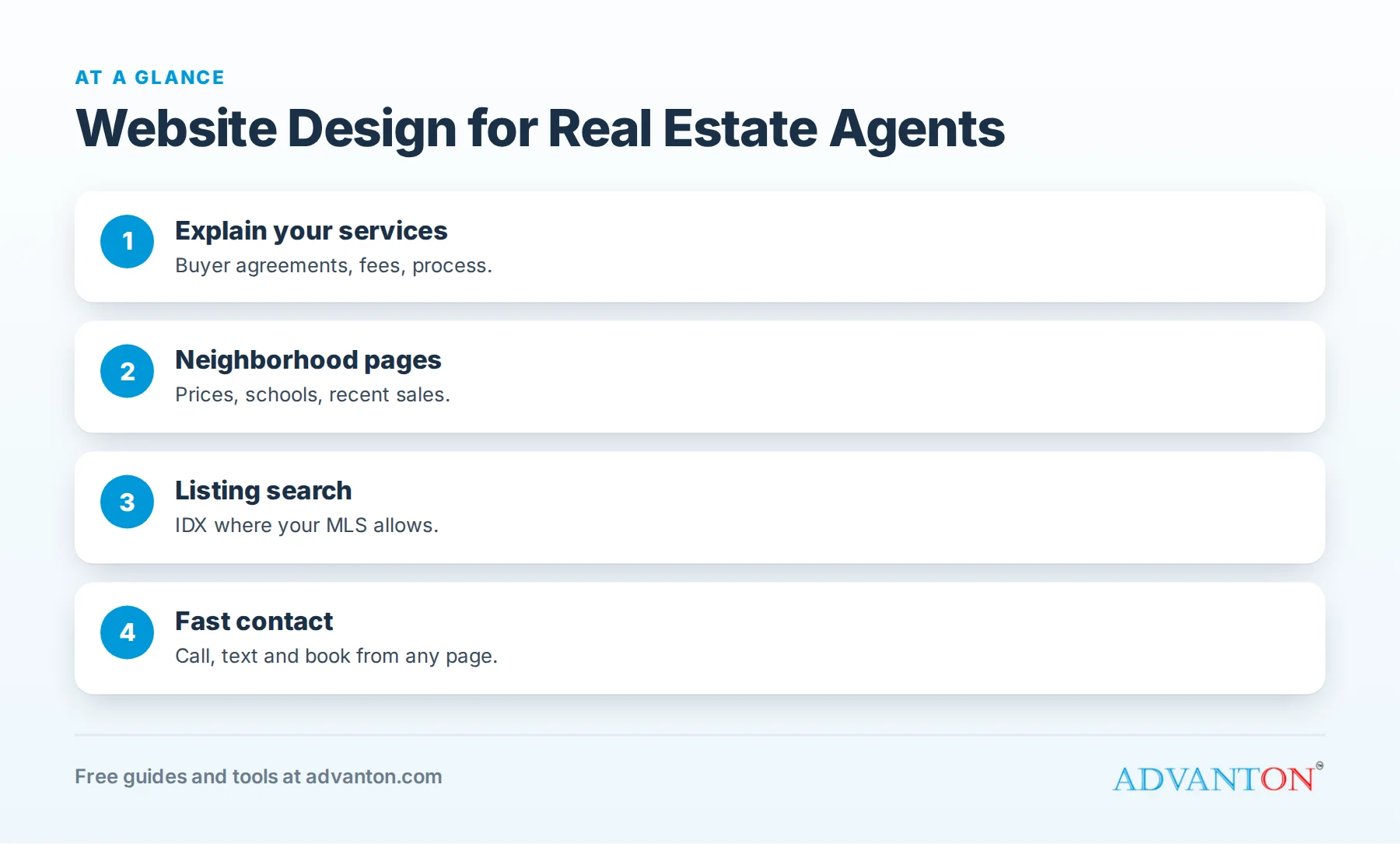
What a real estate website needs now
| Page or feature | Why it matters |
|---|---|
| Buyer services page | Explains what you do at each step, how you’re paid and what’s negotiable |
| Buyer agreement explainer | Makes first meetings about trust, not surprises |
| Seller services page | Pricing strategy, marketing plan, preparation and your fee structure |
| Neighborhood and town pages | Local prices, schools, commutes and recent sales attract searchers |
| Listing search (IDX) | Lets visitors search the MLS on your site, if your MLS and brokerage allow it |
| Reviews and past sales | Proof from real clients, with photos |
| Fast contact options | Call, text and book a consultation from every page |
| About page | Your experience, area knowledge and why clients choose you |
Write service pages buyers and sellers actually read
For buyers: walk through the process from first consultation to closing, explain the buyer agreement in plain language, describe how compensation works and what’s negotiable, and show how you help with financing, inspections and negotiations.
For sellers: explain how you price homes, your marketing plan (photography, listing exposure, open houses, online promotion), how you prepare a home for sale, and what your fees include.
Plain answers build trust faster than slogans.
Build local market content
Buyers search by neighborhood and town. A page for each area you serve, with typical prices, schools, parks, commutes, local amenities and recent sales, attracts searchers and shows expertise. Update a short market report each month; it gives past clients a reason to stay in touch.
Add listing search carefully
IDX (Internet Data Exchange) feeds let your website show MLS listings. Follow your MLS’s display rules, keep data current, and check with your broker about which IDX providers are approved.
Compliance basics
- License and brokerage information: show your brokerage name and license details as your state requires.
- Fair housing: follow fair housing rules in all content, photos and ads; describe properties and neighborhoods, not who should live there.
- MLS rules: display listing data only as your MLS allows.
- Privacy: explain how you use contact information collected through forms.
Check specifics with your broker and state real estate commission.
Get found locally
- Complete your Google Business Profile with your service areas, photos and reviews. Google says local results depend on relevance, distance and prominence.
- Ask every client for a review after closing, and reply to every review.
- Publish neighborhood guides and monthly market updates.
- Keep your name, brokerage and contact details consistent across your website, profiles and directories.
- Stay in touch with past clients through email; most agents’ best leads are repeat clients and referrals.
Design tips that convert
- Fast, mobile-friendly pages: most home searches start on phones.
- Large, high-quality photos of homes and neighborhoods.
- A clear call to action on every page: "Book a free consultation" or "Get a home value estimate."
- Short forms that ask only what you need.
- Real photos of you, not stock images.
Doing it yourself or hiring help
A free website builder can launch a clean agent site with service pages, neighborhood pages and contact forms; listing search usually requires an IDX provider and may cost extra. Many brokerages also provide agent websites. If you hire a designer, confirm you own your domain and content. See small business website design for questions to ask.
Frequently asked questions
What should a real estate agent website include?
Buyer and seller service pages, a buyer agreement explainer, neighborhood pages, listing search where allowed, reviews, past sales and fast contact options.
Do buyers need a written agreement with an agent?
Since August 17, 2024, agents working with buyers generally need a written agreement before touring homes. Explain what it covers on your website.
How do real estate agents get leads from their websites?
Local neighborhood content, a complete Google Business Profile, reviews, fast responses and consistent follow-up with past clients.
How Advanton helps
Advanton is a free resource that helps small businesses start, get online, find customers and grow. Free tools that help here: the website builder, launch your business online for your domain, hosting and email, the review request kit and the Brand & Print Studio for cards, flyers and open house signs. You can also list your business in the Advanton business directory for free.
There’s no contract and nothing to sign up for to read our guides or use the tools. Advanton earns money when you buy a domain or hosting through our store, which helps keep everything else free.
Keep learning
Sources
- National Association of Realtors, practice changes after the settlement
- Google Business Profile Help, Tips to improve your local ranking on Google
Last reviewed October 29, 2026. Startup costs are estimates; check local prices, licensing and tax rules before you commit money.

