
Mobile phlebotomists draw blood and collect specimens at patients’ homes, assisted living communities, workplaces, clinics without lab staff and clinical research sites. Homebound patients, busy professionals, people who fear clinics and research studies all value bringing the lab to them.
Phlebotomy is regulated: a few states license phlebotomists, draws must be ordered by a licensed provider and specimens must be handled correctly so lab results are valid. You’ll also need strong bloodborne pathogen safety, proper sharps disposal and HIPAA privacy practices.
A mobile phlebotomy business at a glance
Table of Contents
| Topic | What to expect |
|---|---|
| Startup cost | Low to moderate: certification, supplies, a portable draw kit, centrifuge, coolers, a reliable car, insurance and software |
| Key rules | State phlebotomy licensing where required, provider orders, lab partnerships, bloodborne pathogens, sharps and HIPAA |
| Revenue model | Per-draw fees paid by labs, clinics, patients, employers or research sponsors |
| How you earn | Home draws, facility rounds, workplace events, research visits and specimen delivery |
| Best for | Skilled, calm phlebotomists who like independence and careful procedures |
Who mobile phlebotomy suits
It suits experienced phlebotomists, nurses and medical assistants who are confident with difficult veins, calm with nervous patients and organized enough to run routes and paperwork. You’ll work alone in homes, so judgment, professionalism and safety habits matter.
Certification and licensing
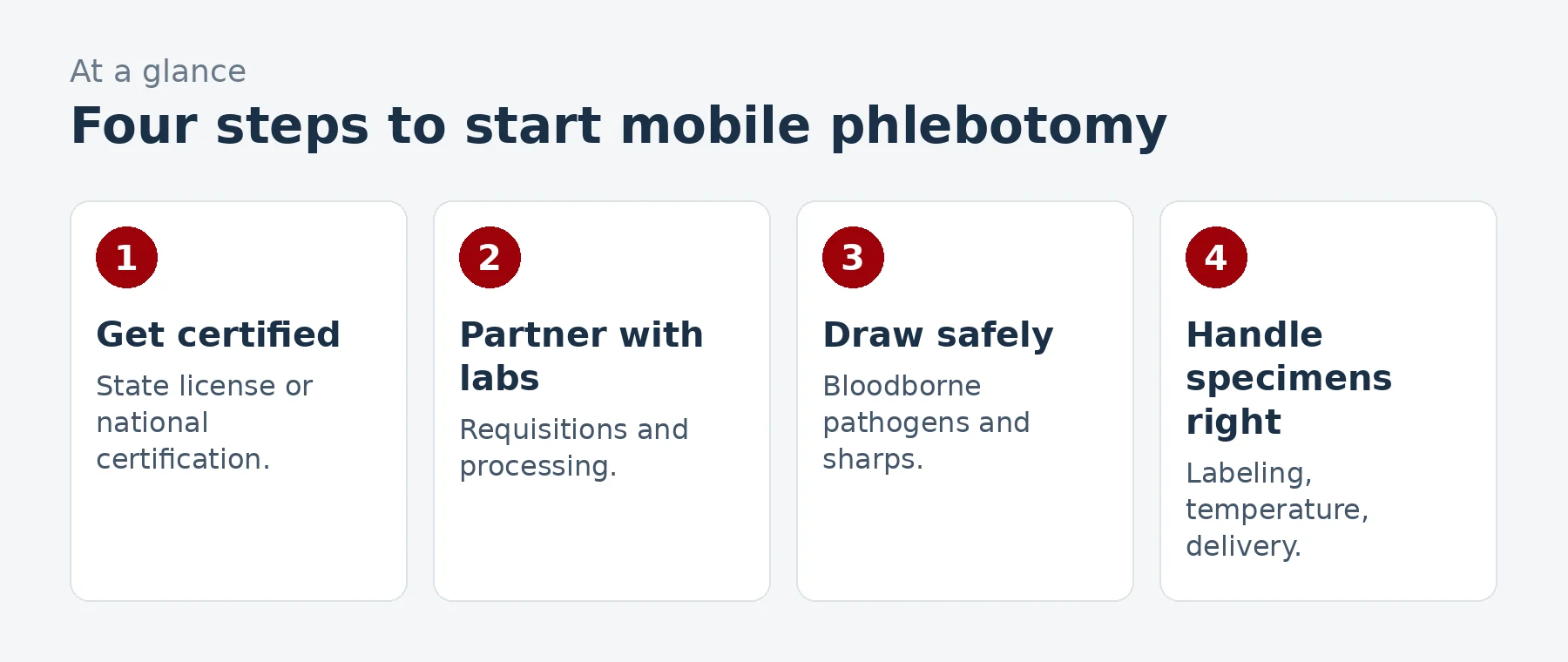
California, Louisiana, Nevada and Washington require phlebotomists to be licensed or certified by the state. Elsewhere, there’s no state license, but labs, clinics and insurers usually expect national certification from a recognized certifying body and documented training. Nurses and other licensed professionals may draw blood within their scope.
Orders and lab partners
Blood draws must be ordered by a licensed provider, such as a physician or nurse practitioner, with a requisition listing the tests. Most mobile phlebotomists partner with reference labs or clinics: the lab provides requisitions, tubes and pickup, and either the lab pays you per draw or the patient pays you a convenience fee while the lab bills the tests. Get agreements in writing.
When CLIA applies
The Clinical Laboratory Improvement Amendments (CLIA) regulate laboratory testing. A business that only collects specimens and sends them to a CLIA-certified lab generally doesn’t need its own CLIA certificate. If you perform any tests yourself, even simple waived tests such as glucose meters, you’ll need at least a CLIA certificate of waiver.
Safety and bloodborne pathogens
Health businesses handle sensitive information. If you’re a HIPAA covered entity (most providers who bill insurance electronically), or a business associate handling health information for one, you need privacy and security safeguards, signed business associate agreements and breach procedures. Follow OSHA’s bloodborne pathogens standard wherever staff could be exposed to blood, and carry professional liability insurance that names the services you provide.
Use safety-engineered needles, never recap needles, carry a sharps container to every visit, wear gloves and keep a spill kit and exposure plan. Dispose of sharps and regulated medical waste through a licensed medical waste company, following your state’s rules.
Specimen handling
Lab results are only as good as the specimen. Label tubes at the bedside with two identifiers, draw in the correct order, mix tubes properly, record draw times and follow the lab’s instructions for centrifuging, refrigerating or freezing. Transport specimens packaged as UN3373 Category B biological substances where required, and deliver them within the lab’s time limits.
Home visit safety
Confirm appointments and addresses, tell someone your schedule, keep your phone charged and trust your judgment if a situation feels unsafe. Ask patients to have a table and good lighting, and check whether they need to fast. Be prepared for fainting: have the patient seated or lying down and know when to call 911.
Privacy
You’ll see requisitions with diagnoses and personal details. Keep paperwork secure in your car, use HIPAA-compliant scheduling and messaging, and sign business associate agreements with labs and clinics when required. Never discuss patients or post about visits.
Pricing and billing
Common models include per-draw fees paid by labs or clinics, convenience fees paid by patients (with tests billed separately by the lab), contracts with facilities such as assisted living communities and research study rates per visit. Price for travel time and distance, and charge extra for rush or after-hours visits. Use our pricing calculator.
Startup costs to plan for
| Item | What to budget for |
|---|---|
| Certification | Training and national or state certification |
| Draw kit | Tourniquets, needles, tubes, gauze, sharps containers |
| Equipment | Portable centrifuge, coolers, temperature loggers |
| Vehicle | Reliable car with secure storage |
| Insurance | Professional and general liability |
| Software | HIPAA-compliant scheduling and records |
Use our startup cost calculator for your total.
A worked example: a solo mobile phlebotomist
These are illustrative assumptions for a solo mobile phlebotomist, not predictions.
| Assumption | Monthly | |
|---|---|---|
| Home and facility draws | 160 draws at $55 | $8,800 |
| Research study visits | $2,400 | |
| Workplace screening events | $1,200 | |
| Revenue | $12,400 | |
| Supplies and disposables | $(650) | |
| Sharps and medical waste disposal | $(120) | |
| Car, fuel and mileage | $(900) | |
| Professional liability insurance | $(110) | |
| Scheduling software and phone | $(150) | |
| Marketing | $(400) | |
| Profit before owner pay and taxes | $10,070 |
That leaves about $10,070 a month before the owner’s pay and taxes, on about $12,400 of revenue. Grouping appointments by area cuts driving time, which is the biggest limit on how many draws you can do.
Loading the calculator…
Research and clinical trials
Decentralized clinical trials hire mobile phlebotomists to collect samples at participants’ homes. These visits pay well but require training in study protocols, good clinical practice and detailed documentation. Register with trial service companies and research sites.
Facility and workplace work
Assisted living communities, group homes and home health agencies need regular draws for residents. Employers hire phlebotomists for wellness screenings and drug testing events. Facility rounds let you see many patients in one place, which is far more efficient than single home visits.
Hiring and growing
As you grow, add phlebotomists by area, standardize training and procedures, check their certifications and competence and use routing software. Classify workers correctly: phlebotomists following your schedule and procedures are usually employees.
Difficult draws and special patients
Mobile patients are often elderly, ill or hard to draw. Use butterfly needles and smaller tubes where appropriate, warm the site, choose veins carefully and know when to stop after two unsuccessful attempts. Some phlebotomists also draw children, which takes extra training, patience and a parent’s help.
Patient experience and reminders
Send reminders with fasting instructions the day before, arrive within your window and explain each step. A calm, gentle draw in someone’s home is why patients choose you, and they tell their doctors and friends.
Records and quality
Keep a log of every draw: patient identifiers, tests, draw time, problems, specimen condition and delivery time. Track rejected specimens and redraws with your lab partners and fix the causes, since a high rejection rate costs you clients.
Marketing
- Physicians, clinics and home health agencies.
- Assisted living and group homes.
- Reference labs seeking mobile partners.
- Clinical trial companies.
- Reviews from patients and families.
Staying current
Keep certifications current, complete continuing education, review lab requirements when they change and practice bloodborne pathogen procedures every year. Labs and clinics trust phlebotomists who keep their skills and paperwork up to date.
Common mistakes to avoid
- Drawing without a provider’s order.
- Working without the license your state requires.
- Mislabeled or poorly handled specimens.
- Throwing sharps in regular trash.
- Running simple tests without a CLIA waiver.
Your first 90 days
- Days 1-30: get certified or licensed, set up insurance and choose a medical waste company.
- Days 31-60: sign agreements with labs, build your draw kit and set up scheduling.
- Days 61-90: market to clinics, home health agencies and facilities and start visits.
Frequently asked questions
Do I need a license for mobile phlebotomy?
California, Louisiana, Nevada and Washington require state licensing; elsewhere, national certification is expected.
Do I need a CLIA certificate?
Not for specimen collection only; you need one if you perform any tests.
Who orders the blood work?
A licensed provider, such as a physician or nurse practitioner, with a requisition.
How do mobile phlebotomists get paid?
Per draw by labs or clinics, by patients as a convenience fee, or by facilities and research studies.
How do I dispose of needles?
In sharps containers, through a licensed medical waste company.
Do I need HIPAA compliance?
Yes; you handle health information, and labs may require business associate agreements.
Can I centrifuge samples in my car?
Many mobile phlebotomists carry portable centrifuges; follow the lab’s processing instructions.
What insurance do I need?
Professional liability and general liability, plus commercial auto coverage.
Can mobile phlebotomists draw children?
Yes, with extra training and a parent present; many specialize in adults only.
How many draws can I do in a day?
It depends on travel; grouping visits by area makes a big difference.
Do I need my own lab?
No; most mobile phlebotomists partner with reference labs that process the specimens.
Should patients fast before a home draw?
Only if the ordered tests require it; send fasting instructions with the appointment reminder.
Keep learning
- Diagnostic labs industry data
- How to start a medical courier service
- How to start a healthcare staffing agency
- Pricing calculator
Sources
- CMS, Clinical Laboratory Improvement Amendments (CLIA)
- OSHA, Bloodborne pathogens standard
- PHMSA, Hazardous materials transportation (including UN3373 specimens)
- HHS, HIPAA for professionals
- HHS, Business associate contracts under HIPAA
- US Small Business Administration, Apply for licenses and permits
Last reviewed November 4, 2026. Startup costs are estimates; check local prices, licensing and tax rules before you commit money.

