
Truffles, bars, bonbons and gift boxes make chocolate a natural gifting business, with big peaks around Valentine’s Day, Easter and the winter holidays. Chocolatiers turn purchased chocolate into confections, while bean-to-bar makers roast cacao and make chocolate from scratch. Food service managers earned a median of $65,310 in May 2024, according to the Bureau of Labor Statistics, and bakers earned about $37,160, according to BLS figures as reported.
Businesses range from cottage chocolatiers working under home food laws to chocolate shops and bean-to-bar makers selling online and wholesale.
The workforce
| Occupation | Jobs (2024) | Median pay (May 2024) | Projected growth, 2024 to 2034 |
|---|---|---|---|
| Food service managers | 352,800 | $65,310 | +6% |
| Bakers (figures as reported) | n/a | $37,160 | n/a |
Source: U.S. Bureau of Labor Statistics, Occupational Outlook Handbook and Occupational Employment and Wage Statistics.
Business models compared
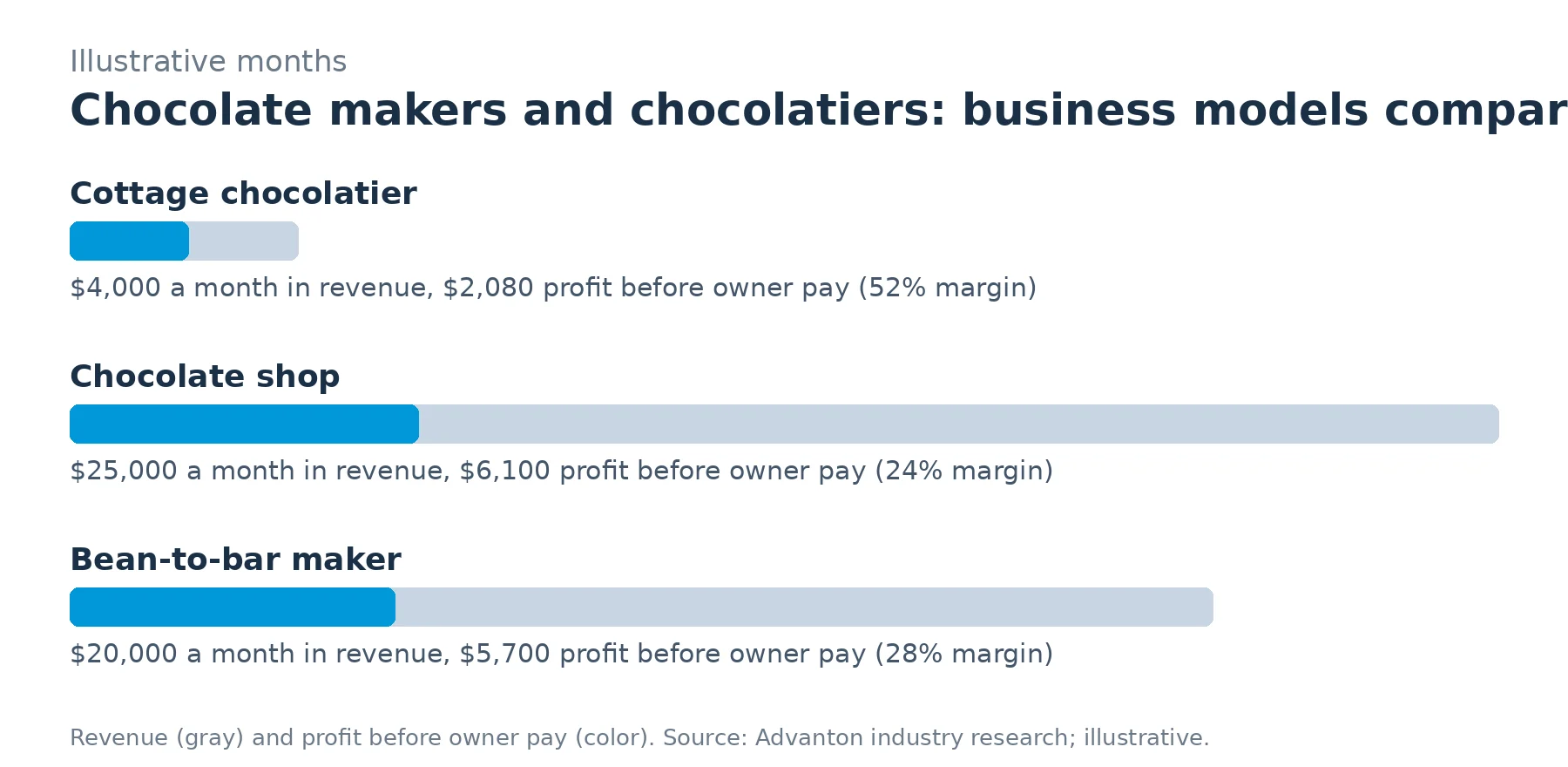
The figures below are illustrative months from our research, not industry averages. They show how revenue and costs typically fit together; your market, prices and costs will differ.
| Business model | Startup costs | Example monthly revenue | Costs | Profit before owner pay | Margin |
|---|---|---|---|---|---|
| Cottage chocolatier | Low: chocolate, molds, tempering tools, packaging | $4,000 | $1,920 | $2,080 | 52% |
| Chocolate shop | Moderate: retail space, tempering machine, display cases | $25,000 | $18,900 | $6,100 | 24% |
| Bean-to-bar maker | High: roaster, grinders, conching and tempering equipment, licensed facility | $20,000 | $14,300 | $5,700 | 28% |
Fixed and variable costs
For projections, the most useful split is between variable costs, which rise and fall with sales (materials, supplies, hourly labor, fees), and fixed costs, which you pay every month regardless (rent, salaried staff, insurance, loan payments).
| Business model | Variable costs (% of revenue) | Fixed costs per month | What it means |
|---|---|---|---|
| Cottage chocolatier | 41.8% | $250 | Balanced: margins improve as volume grows |
| Chocolate shop | 33.0% | $10,650 | Balanced: margins improve as volume grows |
| Bean-to-bar maker | 31.0% | $8,100 | Balanced: margins improve as volume grows |
What the numbers say
Ingredients are a modest share of price, but packaging, labor and seasonality decide profit.
Shops earn high margins on gifts with rent and staff costs year-round.
Bean-to-bar makers invest heavily in equipment and sell premium bars through wholesale and online channels.
The three models in brief
Cottage chocolatier. Truffles and bars sold at markets and online where cottage food allows. See bakery data.
Chocolate shop. Retail confections, gift boxes and tastings. See dessert shops data.
Bean-to-bar maker. Chocolate made from cacao beans, sold wholesale and online. See packaged food brands data.
Cost structure: chocolate shop
Each cost as a share of the example month’s revenue ($25,000):
| Cost | Monthly amount | Share of revenue | Type |
|---|---|---|---|
| Chocolate and ingredients | $5,500 | 22.0% | Variable |
| Staff wages | $4,500 | 18.0% | Fixed |
| Rent | $3,500 | 14.0% | Fixed |
| Packaging | $2,000 | 8.0% | Variable |
| Marketing | $800 | 3.2% | Fixed |
| Card fees | $750 | 3.0% | Variable |
| Utilities and cooling | $600 | 2.4% | Fixed |
| Equipment payments | $500 | 2.0% | Fixed |
| Payroll taxes | $450 | 1.8% | Fixed |
| Insurance | $300 | 1.2% | Fixed |
| Profit before owner pay | $6,100 | 24% |
A first-year projection: chocolate shop
New businesses rarely start at full speed. This projection assumes revenue ramps from 35% of the example month in month 1 to 100% by month 12, variable costs move with revenue, and fixed costs stay the same every month. It’s a planning illustration, not a forecast.
| Month | Revenue | Variable costs | Fixed costs | Profit | Cumulative |
|---|---|---|---|---|---|
| 1 | $8,750 | $2,888 | $10,650 | -$4,788 | -$4,788 |
| 2 | $11,250 | $3,712 | $10,650 | -$3,112 | -$7,900 |
| 3 | $13,750 | $4,538 | $10,650 | -$1,438 | -$9,338 |
| 4 | $15,500 | $5,115 | $10,650 | -$265 | -$9,603 |
| 5 | $17,500 | $5,775 | $10,650 | $1,075 | -$8,528 |
| 6 | $19,000 | $6,270 | $10,650 | $2,080 | -$6,448 |
| 7 | $20,500 | $6,765 | $10,650 | $3,085 | -$3,363 |
| 8 | $21,750 | $7,178 | $10,650 | $3,922 | $559 |
| 9 | $22,750 | $7,508 | $10,650 | $4,592 | $5,151 |
| 10 | $23,750 | $7,838 | $10,650 | $5,262 | $10,413 |
| 11 | $24,500 | $8,085 | $10,650 | $5,765 | $16,178 |
| 12 | $25,000 | $8,250 | $10,650 | $6,100 | $22,278 |
Year one: revenue $224,000, profit before owner pay $22,278. The first profitable month is month 5. Cumulative results bottom out at -$9,603, which is the minimum cash cushion this plan would need, before any startup costs.
Rent, staff and equipment payments start before holiday peaks arrive, so this shop illustration turns profitable in month 5, with a cumulative low of about $9,600, before build-out. Real chocolate sales concentrate around holidays.
How chocolate businesses earn
- Truffles, bonbons and bars.
- Holiday and corporate gift boxes.
- Wholesale to shops and cafes.
- Tastings and classes.
- Online sales and subscriptions.
Tempering and quality
Properly tempered chocolate snaps cleanly and shines. Consistent tempering, fresh ingredients and careful storage protect quality and shelf life, and they separate professional chocolate from homemade candy.
Labeling and standards
Federal standards define products such as milk chocolate and dark chocolate, so names on labels must match what’s in the product. Labels also need ingredients, net weight and allergens, since chocolate often contains milk, nuts and soy.
A startup checklist for chocolate makers and chocolatiers
- Check cottage food rules for chocolate and candy.
- Choose couverture suppliers or plan bean-to-bar equipment.
- Create compliant labels with allergens.
- Design gift packaging.
- Plan holiday production and cash flow.
Holiday seasonality
Valentine’s Day, Easter, Mother’s Day and the winter holidays drive most sales. Plan production weeks ahead, hire seasonal help and take preorders to manage demand.
Where the opportunities are
- Corporate gifting.
- Wedding favors and events.
- Local flavors and collaborations.
- Chocolate tastings and classes.
- Allergen-friendly and vegan chocolate.
Key terms
| Term | Meaning |
|---|---|
| Couverture | High-cocoa-butter chocolate used by chocolatiers |
| Tempering | Controlled heating and cooling for shine and snap |
| Bean-to-bar | Making chocolate from cacao beans |
| Bloom | White streaks from fat or sugar on chocolate |
Shipping in heat
Chocolate melts in warm weather. Use insulated packaging and cold packs, ship early in the week and pause or limit shipping in summer heat.
Key numbers to track
Track cost per piece, gross margin by product, holiday sales share, waste and wholesale accounts.
Common mistakes
- Underestimating packaging costs.
- Poor tempering.
- Shipping without heat protection.
- Missing allergen labels.
- No plan for slow months.
Marketing a chocolate business
Gift guides, corporate outreach, tastings, Instagram and local events bring customers. See dessert shops data.
Packaging
Beautiful packaging sells gifts and justifies premium prices; budget for it carefully, since boxes, inserts and ribbons can cost as much as the chocolate inside.
Corporate gifts
Companies buy custom boxes for clients and staff, often in large holiday orders.
Wholesale
Coffee shops, gift shops and grocers carry local chocolate; offer attractive margins and displays.
Storage
Cool, dry storage protects chocolate from bloom and preserves shelf life.
Classes and tastings
Classes and tastings add revenue and teach customers to appreciate fine chocolate.
Ethical sourcing
Many customers care about cacao sourcing; certifications must be legitimate.
Flavors and local collaborations
Signature flavors made with local honey, coffee, berries or spirits set a chocolatier apart and create partnerships with other local businesses. Seasonal flavors give regulars reasons to return and make great social media content.
Pricing chocolate
Price by piece or box to cover ingredients, packaging, labor and overhead, then compare with premium competitors. Gift boxes, custom orders and corporate gifts carry higher prices because customers pay for presentation and convenience.
Food safety and fillings
Cream, fruit and nut fillings affect shelf life and safety. Test shelf life, label best-by dates and keep fillings within the rules for your license type.
Slow seasons
Summer is often slow; classes, wholesale and baking chocolate products help.
Test these numbers with your own plan
Open this industry in our free Business Idea Reality Check to start from any model above, change prices, costs, startup budget and your own pay, and see your break-even month, the cash you’d need, three scenarios and how new businesses in this sector survive in your state.
- Start with the closest model and its cost structure.
- Replace every price and cost with local quotes.
- Estimate your ramp: how fast customers will realistically come in year one.
- Map cash month by month with the free Cash & Payroll Planner.
- Build the full plan in the free Business Planner.
About this data
Workforce figures come from the U.S. Bureau of Labor Statistics (Occupational Outlook Handbook and Occupational Employment and Wage Statistics, May 2024 wages and the 2024 to 2034 projections, unless noted). Market figures cite their sources above. Business model figures are illustrative months built from typical prices and costs to show how revenue, fixed costs and variable costs fit together; they are not industry averages or guarantees. We review these profiles when new government data is released, at least once a year, and the same figures power the Business Idea Reality Check.
Licensing and rules
Many state cottage food laws allow certain candies and chocolates made at home, with labeling and sales limits; larger operations need licensed kitchens and health permits, and facilities selling wholesale generally register with FDA; products labeled as specific chocolate types must meet FDA standards of identity; labels must list ingredients, net weight and major allergens such as milk, tree nuts, peanuts and soy; claims such as "organic" or "fair trade" require certification. Requirements change; confirm with your state and local agencies before you start.
Frequently asked questions about chocolate makers and chocolatiers
Can I make chocolate at home to sell?
Many states allow certain candies under cottage food laws; check your state.
What labels do chocolates need?
Ingredients, net weight and allergens, and chocolate names must match federal standards.
When do chocolate businesses sell most?
Around Valentine’s Day, Easter and winter holidays.
How do I ship chocolate in summer?
With insulated packaging and cold packs, or pause shipping during heat.
What is bean-to-bar?
Making chocolate from cacao beans rather than buying finished chocolate.
How long does homemade chocolate last?
It depends on fillings and storage; solid chocolate lasts much longer than cream-filled truffles.
Should chocolatiers sell wholesale?
Wholesale to cafes and gift shops builds volume and visibility.
Is a chocolate business profitable?
It can be, with strong gift sales, efficient production and controlled packaging costs.
How can I test these numbers?
Open chocolate makers in the Business Idea Reality Check and enter your own prices and costs.
Keep learning
Sources
- U.S. Bureau of Labor Statistics, Food service managers
- Bakers median wage and outlook (BLS OEWS, as reported)
Last reviewed November 2, 2026. Startup costs are estimates; check local prices, licensing and tax rules before you commit money.
In India
Small businesses like this in India
In MoSPI’s survey of unincorporated businesses (proprietorships, partnerships and similar firms), this falls under Food products manufacturing. In 2023-24 India had 21.8 lakh such establishments employing 44.7 lakh workers, and 81.4% were run without hired workers. Across the wider manufacturing group, the number of establishments grew 6.48% between 2023-24 and 2025.
| Urban | Rural | All India | |
|---|---|---|---|
| Value added per business a year | ₹4,39,316 | ₹2,02,804 | ₹2,91,926 |
| Value added per worker a year | ₹1,84,204 | ₹1,10,066 | ₹1,42,615 |
| Pay per hired worker a year | ₹1,37,909 | ₹1,08,520 | ₹1,25,947 |
Running it alone or with staff: businesses with no hired workers added about ₹1,46,818 a year on average, while those with hired workers added about ₹9,26,477 (all India).
Where these businesses are: the states with the most small manufacturing businesses are West Bengal (16.0%), Uttar Pradesh (11.8%), Maharashtra (7.7%), Gujarat (7.2%), Tamil Nadu (6.9%) of the national total (2023-24).
Value added is what a business produces minus what it spends on materials and other inputs, before paying its workers and owner, so it’s a rough guide to the income a typical small business generates. These figures cover the whole activity, which can be broader than this one business type. Across all small businesses, average fixed assets such as equipment, furniture and vehicles were ₹3,42,242 per establishment in 2025.
Licences and registrations to expect
- FSSAI registration (turnover up to ₹12 lakh), a state FSSAI licence (up to ₹20 crore) or a central licence above that.
- A health or trade licence from your municipality, and a fire NOC for restaurants and commercial kitchens where local rules require one.
- An eating house licence from the police in some cities.
- Registration under your state’s Shops and Establishments Act if you have premises or employees.
- A trade licence from your municipal corporation or council for many shop and service businesses.
- GST registration once turnover crosses ₹40 lakh for goods or ₹20 lakh for services (lower in some special category states), or earlier if you sell goods to other states or through e-commerce marketplaces.
- Professional tax registration in states that levy it.
- Free Udyam (MSME) registration, which helps with loans, government schemes and delayed-payment protection.
Rules differ by state and city. Check with your municipal corporation, state departments and a chartered accountant before you start.
Run a business like this in India? List it free in the India Business Directory, with your hours, deals and GST registration.
Free tools for India: Make a GST invoice · Compare business credit cards
Build a market report for Chocolate Makers and Chocolatiers in India Pick your state and see market size, earnings, competition and licences, from official data. Free, with a PDF download.
Sources: MoSPI, Annual Survey of Unincorporated Sector Enterprises (ASUSE) 2023-24, full report, Appendix A Tables 4, 29, 33, 35 and 37 (survey period October 2023 to September 2024); MoSPI, Annual Survey of Unincorporated Sector Enterprises (ASUSE) 2025, factsheet (survey period January to December 2025, released 24 March 2026). Licensing summary by Advanton, checked November 2026.