
A gift shop sells items people buy for others or as treats for themselves: home decor, cards, candles, jewelry, local art and food, souvenirs and seasonal gifts. Successful gift shops have a clear personality, from a coastal souvenir shop to a curated neighborhood boutique featuring local makers.
Location and buying are everything: the right products in front of the right shoppers, at the right season. The Bureau of Labor Statistics reports a median pay of $34,730 for retail sales workers (May 2024), across about 4.2 million jobs, with little change projected over the decade. This guide covers location, product mix, buying and consignment, pricing, merchandising, seasons, a worked example and a 90-day plan.
A gift shop at a glance
Table of Contents
| Topic | What to expect |
|---|---|
| Startup cost | Moderate: lease and fixtures, opening inventory, point-of-sale and working capital |
| Licenses | Business license, sales tax permit and resale certificate for buying wholesale |
| Typical pricing | Many gift products sell at about twice their wholesale cost (keystone), adjusted by product |
| Busy seasons | The holidays, plus tourist seasons in visitor areas |
| Best for | Owners with a strong eye for products and displays who enjoy customers |
Who a gift shop suits
It suits people with a good eye for products and displays who enjoy talking with customers and finding new makers. Buying well (what, how much and when) is the key skill.
Location and theme
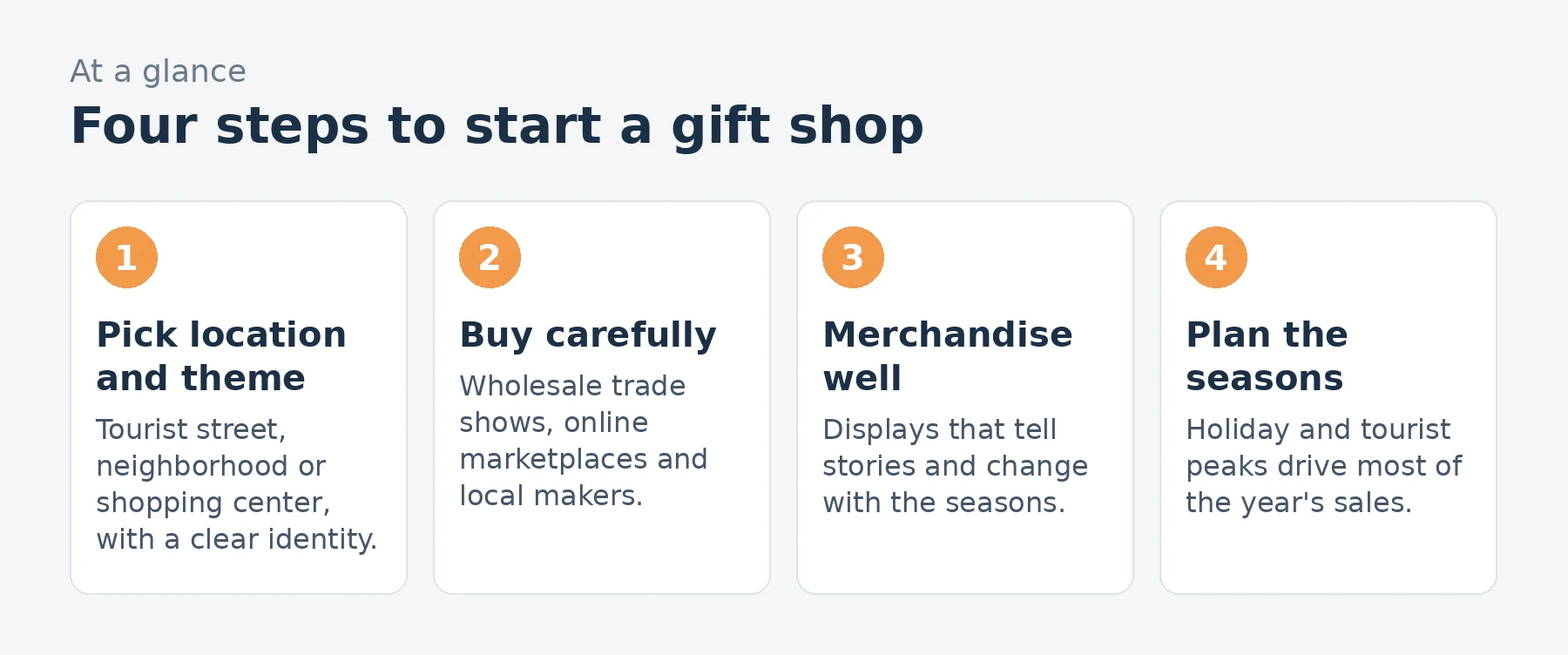
- Tourist areas: souvenirs, local food and art; strong seasonal peaks.
- Neighborhood shops: gifts, cards and home goods for locals; steadier year-round.
- Specialty themes: local makers, a hobby, a culture or a style.
- Inside other businesses: museums, hotels, hospitals and attractions.
Visit at different times to count foot traffic, and choose a theme that fits the shoppers who are already there.
Buying wholesale
Gift shops buy from wholesale suppliers at trade shows (regional gift markets), from online wholesale marketplaces and directly from brands. You will usually need a resale certificate so you do not pay sales tax on inventory. Watch minimum orders, shipping costs and reorder times, and test small quantities before buying deep.
Consignment with local makers
Local artisans’ products give shoppers something they cannot find elsewhere. Many shops sell local goods on consignment: the maker supplies items and is paid a share after they sell, so you do not pay upfront. Use written agreements covering the split, pricing, how long items stay, payment timing and responsibility for loss or damage.
Product safety
If you sell toys or other products for children 12 and under, they must meet federal safety rules, including testing and certificates for children’s products, and recalled products cannot be sold. Buy from reputable suppliers who can provide compliance documents, and check CPSC recalls.
Startup costs to plan for
| Item | What to budget for |
|---|---|
| Space | Lease deposits and build-out |
| Fixtures | Shelving, tables, display cases, lighting |
| Opening inventory | Wholesale products and consignment items |
| Systems | Point-of-sale with inventory tracking |
| Packaging | Bags, tissue, gift wrap |
| Working capital | Cash for holiday buying and slow months |
Use our startup cost calculator for your total.
Pricing
Many gift retailers use keystone pricing (doubling the wholesale cost) as a starting point, then adjust for shipping, competition and what shoppers will pay. Some items, such as local food and premium goods, may earn less; impulse items and seasonal decor may earn more. Track margins by category with our pricing calculator.
A worked example: a small gift shop
These are illustrative assumptions for an average month at a small gift shop, not predictions; holiday months are much higher.
| Assumption | Monthly | |
|---|---|---|
| Wholesale-bought products | Sold at about twice cost | $22,000 |
| Consignment sales from local makers | Shop keeps a share | $4,000 |
| Revenue | $26,000 | |
| Cost of wholesale goods | About half of wholesale-product sales | $(11,000) |
| Payments to consignors | Makers’ share of consignment sales | $(2,400) |
| Staff wages | With payroll costs | $(4,800) |
| Rent and utilities | $(3,800) | |
| Point-of-sale, card fees and software | $(800) | |
| Marketing and displays | $(600) | |
| Insurance and supplies | Bags, tissue, gift wrap | $(500) |
| Profit before owner pay and taxes | $2,100 |
That leaves about $2,100 in an average month before the owner’s pay and taxes, on about $26,000 of revenue. Many gift shops earn a large share of annual profit in November and December, so buying for the holidays is critical.
Merchandising and displays
Group products into stories (a cozy evening, a beach day, a teacher gift), refresh displays often, place impulse items near the register and make the window eye-catching. Good lighting and uncluttered displays make products look worth their price.
Seasons and holidays
Plan buying months ahead: holiday inventory is often ordered at summer trade shows. Tourist shops must stock up before the season and manage leftovers afterward. Use quiet months for planning, reorganizing and events.
Trade shows and buying trips
Regional and national gift markets let you see new products, meet sales reps and order for the coming season. Set a budget before you go, take photos and notes, and avoid buying everything you love at once. Many shops order holiday merchandise months ahead at summer shows.
Finding local makers
Local artists and makers give your shop personality and give shoppers stories to share. Find them at craft fairs, markets and online, and host maker events to introduce them to customers. Mix consignment and wholesale purchases as you learn what sells.
Pricing for tourists
In tourist areas, offer items at a range of price points: inexpensive souvenirs, mid-priced gifts and a few premium local pieces. Place lower-priced impulse items near the register and premium items where they can be appreciated.
Online and social media
Social media posts of new arrivals, maker stories and gift ideas bring locals back. A simple online shop or local pickup option extends sales, especially for holidays and for visitors who want to reorder after they return home.
Gift wrapping and corporate gifts
Free or low-cost gift wrapping encourages purchases and builds goodwill. Corporate gift baskets for local businesses, realtors and organizations can add significant holiday sales.
Sales tax and records
Collect and remit sales tax, keep records of consignment payouts and track sales by category and supplier. Records show which suppliers and makers earn their space.
Watching inventory turnover
Gift shops succeed by turning inventory into cash quickly. Track how fast each product sells, reorder winners, mark down slow items before they become stale and use sales data to plan your next buying trip. A product that sits for a year costs you the shelf space it could have used for a bestseller.
Events and community
In-store events such as maker meet-and-greets, holiday open houses, workshops and local artist showcases bring people in and give them reasons to return. Partner with nearby businesses for shopping events that bring more foot traffic to the whole street.
Choosing suppliers
Work with suppliers who ship reliably, offer reasonable minimums and reorders, and provide compliance documents for children’s and food products. Keep a short list of dependable vendors for your best sellers, and try new suppliers in small quantities.
Common mistakes to avoid
- Choosing a location without enough of the right shoppers.
- Buying too much of untested products.
- No written consignment agreements.
- Missing holiday buying deadlines.
- Stale displays that never change.
Your first 90 days
- Days 1-30: choose location and theme, register for a resale certificate and research trade shows.
- Days 31-60: buy opening inventory, sign consignment agreements and set up displays and point-of-sale.
- Days 61-90: open with a makers’ event, track what sells and plan holiday buying.
Frequently asked questions
How do gift shops price products?
Many start with keystone pricing, about twice wholesale cost, then adjust by product and competition.
Where do gift shops buy inventory?
At wholesale trade shows, online wholesale marketplaces, directly from brands and from local makers on consignment.
What is consignment?
A maker supplies products and is paid a share after they sell, so the shop does not pay upfront.
Do gift shops need a resale certificate?
Usually yes, to buy inventory without paying sales tax, then collect tax from customers.
When do gift shops make the most money?
During the holidays, and in tourist season for shops in visitor areas.
How much inventory should a gift shop start with?
Enough to fill displays attractively, with cash reserved for reorders and holiday buying. Test new products in small quantities.
Should I sell online?
Many gift shops add a simple online shop or local pickup to extend sales, especially for holidays.
How do I find local artisans?
At craft fairs, markets, maker events and online, and through referrals from other makers.
Is a gift shop profitable?
It can be with the right location, careful buying and strong holiday sales, but rent and slow inventory can erode profits.
What sells best in a gift shop?
It depends on location, but cards, candles, local food and art, jewelry and seasonal decor are common best sellers.
Do I need a resale certificate?
Usually yes, to buy wholesale inventory without paying sales tax, then collect tax from customers.
Keep learning
- Gift shops industry data
- How to start a bookstore
- Handmade goods and crafts industry data
- Pricing calculator
Sources
- US Bureau of Labor Statistics, Retail sales workers
- CPSC, Resale of children's products and recalled products
- US Small Business Administration, Apply for licenses and permits
- CPSC, Children's products and certificates
Last reviewed November 2, 2026. Startup costs are estimates; check local prices, licensing and tax rules before you commit money.

