
Updated October 2026
Selling online is easier than ever, and the number of choices can be overwhelming. The right platform depends on what you sell, how many orders you expect, how much control you want and how much time you can spend. This guide compares the main options and gives you a simple plan to launch.
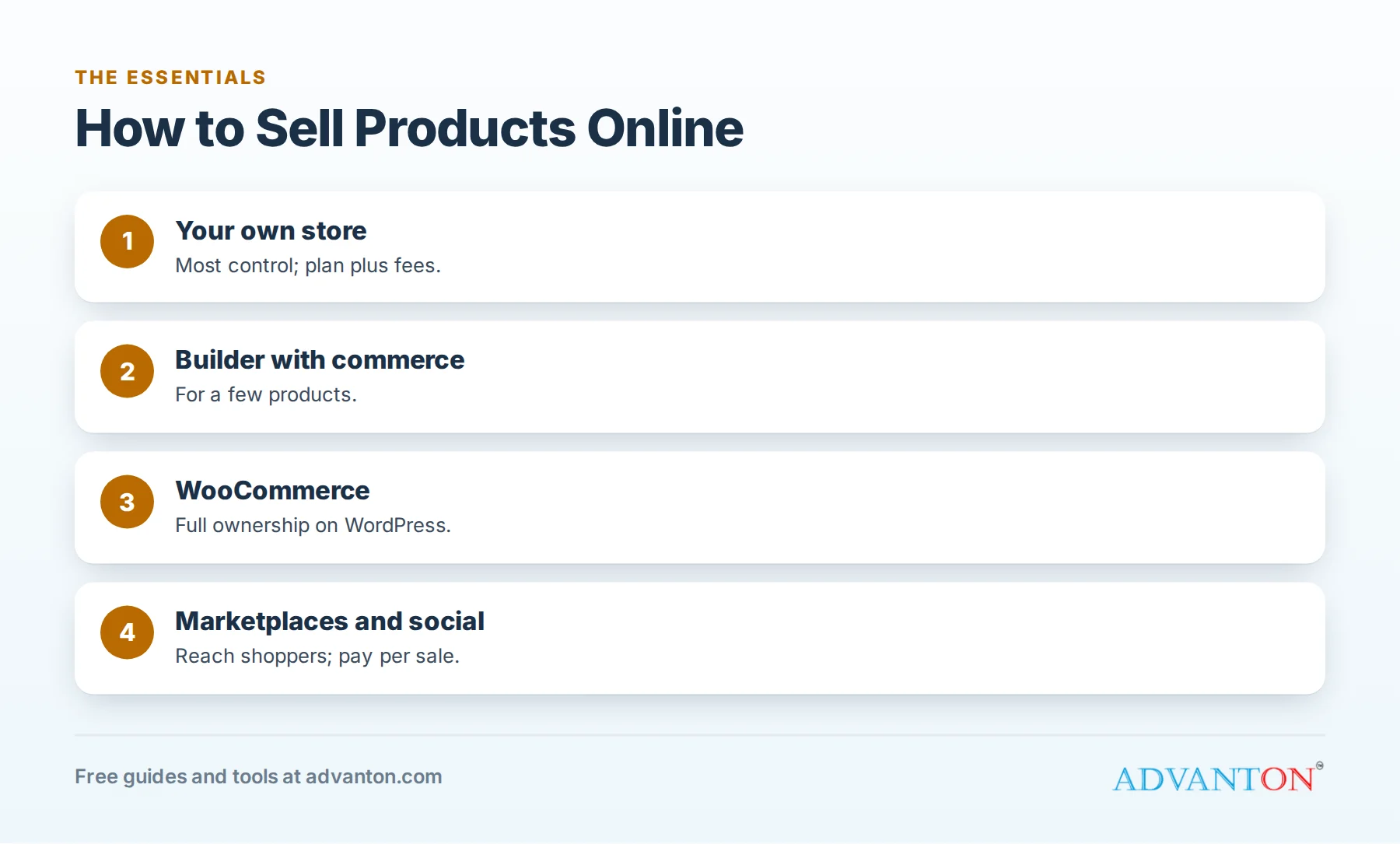
Your main options
| Option | Best for | Costs | Control |
|---|---|---|---|
| Your own store (for example Shopify) | Brands that want to grow direct sales | Monthly plan plus payment fees and apps | High |
| Website builder with commerce | Service businesses adding a few products | Higher-tier builder plan plus payment fees | Medium |
| WooCommerce on WordPress | Owners who want full ownership and flexibility | Hosting, domain, extensions, your time | Very high |
| Marketplaces (Etsy, Amazon and others) | Reaching shoppers already searching | Listing, referral or transaction fees | Low |
| Social selling | Visual products and engaged followers | Platform fees vary | Low to medium |
Many businesses combine options: a marketplace for discovery and their own store for repeat customers.
Comparing costs fairly
Your own store charges a plan fee plus payment processing; for example, Shopify’s Basic plan is $39 monthly (or $29 a month billed annually) with online card rates of 2.9% + 30¢ through Shopify Payments. Marketplaces charge per sale instead. Model both at your expected sales, including shipping and returns. Our guide to ecommerce website costs breaks this down further.
A step-by-step launch plan
- Choose your products and confirm your margins after fees and shipping.
- Pick a platform using the table above.
- Get your domain and business email.
- Write clear product pages with honest photos, sizes, materials and prices.
- Set up payments, taxes and shipping rates.
- Write policies: shipping, returns and privacy.
- Launch to existing customers first, then market more widely.
- Track results and adjust.
Rules to know
- Sales tax: you may need to collect sales tax in states where you meet economic nexus thresholds; check each state’s rules.
- Business registration and licenses where you operate.
- Product rules for food, cosmetics, children’s products and other regulated items.
Frequently asked questions
What’s the easiest way to start selling online?
A marketplace or a simple store plan gets you selling quickly; your own store gives you more control as you grow.
Should I sell on Amazon or my own website?
Many businesses do both: marketplaces bring shoppers, while your own site builds direct, repeat customers.
Do I need to collect sales tax online?
Possibly, depending on where your customers are and your sales volume. Check state rules or ask an accountant.
How Advanton helps
Advanton is a free resource that helps small businesses start, get online, find customers and grow. Free tools that help here: the website builder, launch your business online, a step-by-step guide to your domain, hosting and email, the online presence checkup, the quote and invoice generator. You can also list your business in the Advanton business directory for free.
There’s no contract and nothing to sign up for to read our guides or use the tools. Advanton earns money when you buy a domain or hosting through our store, which helps keep everything else free.
Keep learning
Sources
- Stackinfluence, How much does Shopify cost in 2026 (July 2026)
- Website Builder Expert, Shopify pricing 2026
Last reviewed October 29, 2026. Startup costs are estimates; check local prices, licensing and tax rules before you commit money.

