
A pottery studio teaches people to make ceramics, rents studio time to members and often sells the owner’s own work. Wheel-throwing and handbuilding classes, date nights, birthday parties and corporate team events have made pottery a popular experience business.
Classes and memberships provide steadier income than selling pottery alone, but studios need space, kilns, electrical capacity and careful safety practices. Ceramics used for food and drink also have lead safety rules for glazes. The Bureau of Labor Statistics reports a median pay of $56,260 for craft and fine artists (May 2024), across about 52,000 jobs, with little change projected over the decade. Most handmade business owners are self-employed, so income depends on pricing, volume and sales channels. This guide covers models, space, equipment, safety, pricing, a worked example and a 90-day plan.
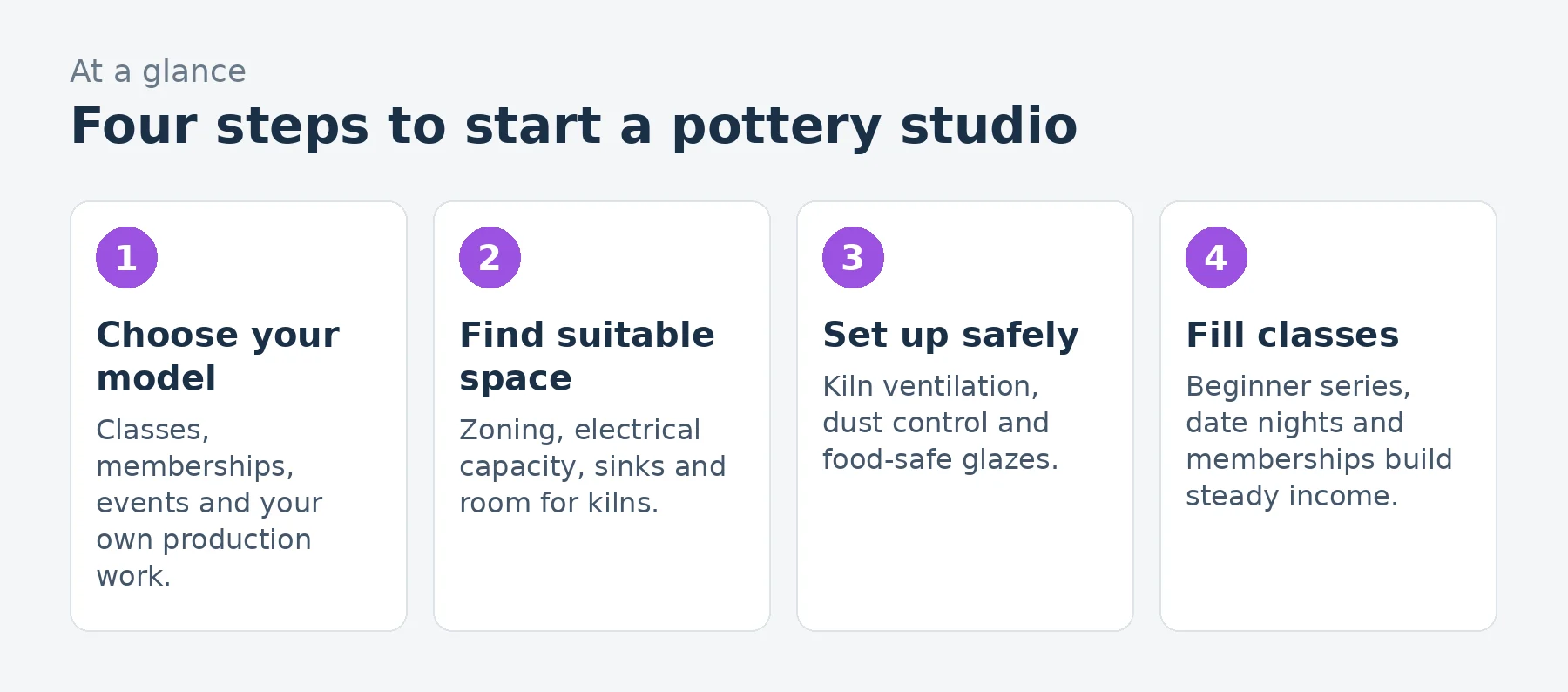
A pottery studio at a glance
Table of Contents
| Topic | What to expect |
|---|---|
| Startup cost | Moderate: space, kilns, wheels, tables, shelving, clay and glazes, electrical work and ventilation |
| Licenses | Business license, zoning for classes, building and electrical permits for kilns, fire inspection |
| Key safety | Kiln ventilation, clay dust control and food-safe, lead-safe glazes for dinnerware |
| How you earn | Classes, memberships, parties and events, firing fees and selling pottery |
| Best for | Skilled potters who love teaching and building a community |
Who a pottery studio suits
It suits experienced potters who enjoy teaching, can manage schedules and want to build a creative community. Running a studio is as much about hospitality and operations as about ceramics skill.
Business models
- Class series: beginner and intermediate wheel and handbuilding courses over several weeks.
- One-time experiences: date nights, workshops and try-it sessions.
- Memberships: monthly access to wheels, shelves and firing for independent potters.
- Parties and team events: birthdays, bachelorettes and corporate outings.
- Production pottery: your own work sold online, at markets and in the studio shop.
- Firing services: firing work for local potters and schools.
Choosing space
Look for space zoned for classes or light industrial use, with good sinks and drainage (with clay traps to keep clay out of pipes), high electrical capacity for kilns, ventilation, storage and room for wheels, work tables and drying shelves. Accessible, welcoming spaces near shops and restaurants suit experience-based classes.
Kilns and equipment
- Electric kilns sized for your class volume, with proper electrical circuits installed by a licensed electrician.
- Pottery wheels for each student in a class.
- Work tables, wedging tables, slab roller and extruder.
- Shelving for drying and storing student work.
- Glaze area with buckets, spraying or dipping tools.
Kilns usually need permits and inspections; follow manufacturer installation guidance and local fire codes.
Ventilation and dust safety
Firing kilns release fumes, so install kiln vent systems and room ventilation. Clay and glaze materials create silica dust when dry; reduce dust by wet cleaning floors and surfaces, avoiding sweeping, and storing materials carefully. Teach students safe practices.
Lead-safe glazes for food use
Pottery used for food and drink can release lead or cadmium if glazes are not formulated and fired correctly. The FDA sets action levels for lead in ceramic ware and has warned about lead-glazed traditional pottery. Use commercially prepared glazes labeled food-safe, fire them to the specified temperature and test or avoid questionable glazes on dinnerware. Label decorative pieces that are not meant for food.
Insurance and waivers
Carry general liability insurance for students and visitors, property coverage for kilns and equipment, and workers’ compensation for employees. Use participation waivers and clear studio rules.
Startup costs for a pottery studio
| Item | What to budget for |
|---|---|
| Space | Lease deposits, build-out, sinks and clay traps |
| Electrical work | Circuits for kilns, permits |
| Kilns and wheels | Electric kilns, wheels, ventilation |
| Furniture and tools | Tables, shelving, slab roller, hand tools |
| Materials | Clay, glazes, kiln shelves and posts |
| Booking system | Online class booking and memberships |
Use our startup cost calculator for your total.
Pricing classes and memberships
Price class series to include instruction, clay, glazes, firing and studio time, and price memberships by access hours, shelf space and firing allowance. Charge extra for additional clay and firing. Compare local studios and arts centers, and use our pricing calculator to check that each offer covers instructor time and kiln costs.
A worked example: a small studio
These are illustrative assumptions for a small studio, not predictions.
| Assumption | Monthly | |
|---|---|---|
| Class series | 6 classes of 8 students at $260 per series, per month | $12,480 |
| Memberships | 30 members at $170 | $5,100 |
| Parties and corporate events | 6 events at $450 | $2,700 |
| Pottery sales | Owner’s work and studio shop | $1,500 |
| Revenue | $21,780 | |
| Clay, glazes and supplies | $(1,800) | |
| Instructors | Part-time teachers | $(4,200) |
| Rent and utilities | Including kiln electricity | $(4,800) |
| Equipment payments and maintenance | Kilns and wheels | $(900) |
| Insurance, software and marketing | $(1,100) | |
| Profit before owner pay and taxes | $8,980 |
That leaves about $8,980 a month before the owner’s pay and taxes, on about $21,780 of revenue. Kiln capacity and instructor schedules limit growth, so plan both as classes fill.
Loading the calculator…
Running classes well
- Keep classes small enough for personal help.
- Teach centering, throwing and trimming step by step.
- Schedule glazing sessions and firing timelines clearly.
- Label student work carefully to avoid lost pieces.
- Collect feedback and offer next-level classes.
Firing schedules
Bisque and glaze firings take time, so plan kiln loading, firing and cooling around class schedules. Tell students when pieces will be ready, and charge firing fees for members based on size or shelf space.
Building community
Open studio nights, member shows, holiday sales and community events turn students into members. A studio shop featuring member work adds income and keeps people engaged.
Selling your own work
Many studio owners sell their pottery at markets, online and in the studio. Your work shows students what is possible and builds the studio’s reputation.
Hiring instructors
Experienced potters who teach well are the core of a studio. Look for patience and clear explanation as well as skill, offer consistent schedules and pay fairly. Train instructors on studio rules, safety and how you want classes to run, so every student has a similar experience.
Studio rules and etiquette
Clear rules keep a shared studio running: cleaning stations after use, labeling work, shelf limits, glaze use, firing request procedures and member hours. Post them visibly and include them in membership agreements.
Kids’ classes and camps
Children’s classes and summer camps fill weekday afternoons and school breaks. They need extra supervision, simple projects, child-safe materials and clear policies for parents.
A studio shop
Selling member and owner pottery, tools and gift cards in a small studio shop adds income and showcases what students can achieve. Gift cards for classes are popular holiday presents.
Marketing classes
Pottery classes sell on experience. Post photos of student work and class nights, list classes on local event sites, partner with restaurants for date-night packages, offer gift cards and send members a monthly newsletter with new classes and events.
Common mistakes to avoid when starting a pottery studio
- Choosing space without enough electrical capacity.
- Weak kiln ventilation and dust control.
- Using untested glazes on food-use pieces.
- Underpricing classes once clay and firing are counted.
- Too few kilns for class volume.
Your first 90 days as a pottery studio owner
- Days 1-30: choose your model, find space and confirm electrical, zoning and permits.
- Days 31-60: install kilns, wheels and ventilation, buy insurance and set class schedules and prices.
- Days 61-90: open with taster sessions, fill your first class series and launch memberships.
Frequently asked questions about starting a pottery studio
How much does it cost to start a pottery studio?
It depends on space, kilns, wheels and electrical work. Kilns and electrical upgrades are often the largest costs.
Do pottery studios need permits?
Usually a business license, zoning approval for classes and building, electrical and fire permits for kilns.
Are pottery glazes food safe?
Only when formulated and fired correctly. Use commercially prepared food-safe glazes at the right temperature, and avoid questionable glazes on dinnerware.
How do pottery studios make money?
Through classes, memberships, parties and events, firing fees and pottery sales.
Do I need ventilation for a kiln?
Yes. Kilns release fumes during firing, so vent systems and room ventilation are important.
How many students should be in a class?
Small enough for personal help, often about six to ten depending on space and wheels.
Can I start a pottery studio at home?
Some potters teach small classes at home where zoning allows, but kilns need proper electrical work and ventilation, and insurance should cover students.
Do pottery studios make money from memberships?
Memberships provide steady monthly income from independent potters who rent wheels, shelves and firing, complementing classes.
What kind of kiln should a studio buy?
Most small studios use electric kilns sized for their class volume, installed with proper circuits and ventilation. Some add a second kiln as classes grow.
How long until student pieces are ready?
Often a few weeks, after drying, a bisque firing, glazing and a glaze firing. Tell students the timeline at the start of class.
Should I offer gift cards?
Yes. Gift cards for classes and date nights are popular presents and bring new students, especially around the holidays.
Keep learning
- Pottery industry data
- How to start a woodworking business
- How to start a candle making business
- Pricing calculator
Sources
- FDA, Questions and answers on lead-glazed traditional pottery
- FDA, Compliance Policy Guide 545.450: pottery (ceramics), import and domestic lead contamination
- US Bureau of Labor Statistics, Craft and fine artists
- US Small Business Administration, Apply for licenses and permits
Last reviewed November 3, 2026. Startup costs are estimates; check local prices, licensing and tax rules before you commit money.
This article is general information, not financial, legal or tax advice. Check the rules that apply to you or talk to a qualified professional before making decisions. See our disclaimer.