
Pottery has become a popular hobby and craft business: people sign up for wheel classes, studio memberships and date nights, while production potters sell mugs, bowls and art pieces. Kilns, wheels and safety requirements make pottery studios more equipment-intensive than many art businesses. Craft and fine artists earned a median of $56,260 in May 2024, according to the Bureau of Labor Statistics. Below is the key industry data on pottery and ceramics studios, with costs, business models and a first-year projection.
Businesses range from production potters selling handmade ceramics to studios teaching classes and membership studios where members use wheels and kilns.
The workforce
| Occupation | Jobs (2024) | Median pay (May 2024) | Projected growth, 2024 to 2034 |
|---|---|---|---|
| Craft and fine artists | 52,000 | $56,260 | 0% |
Source: U.S. Bureau of Labor Statistics, Occupational Outlook Handbook and Occupational Employment and Wage Statistics.
Business models compared
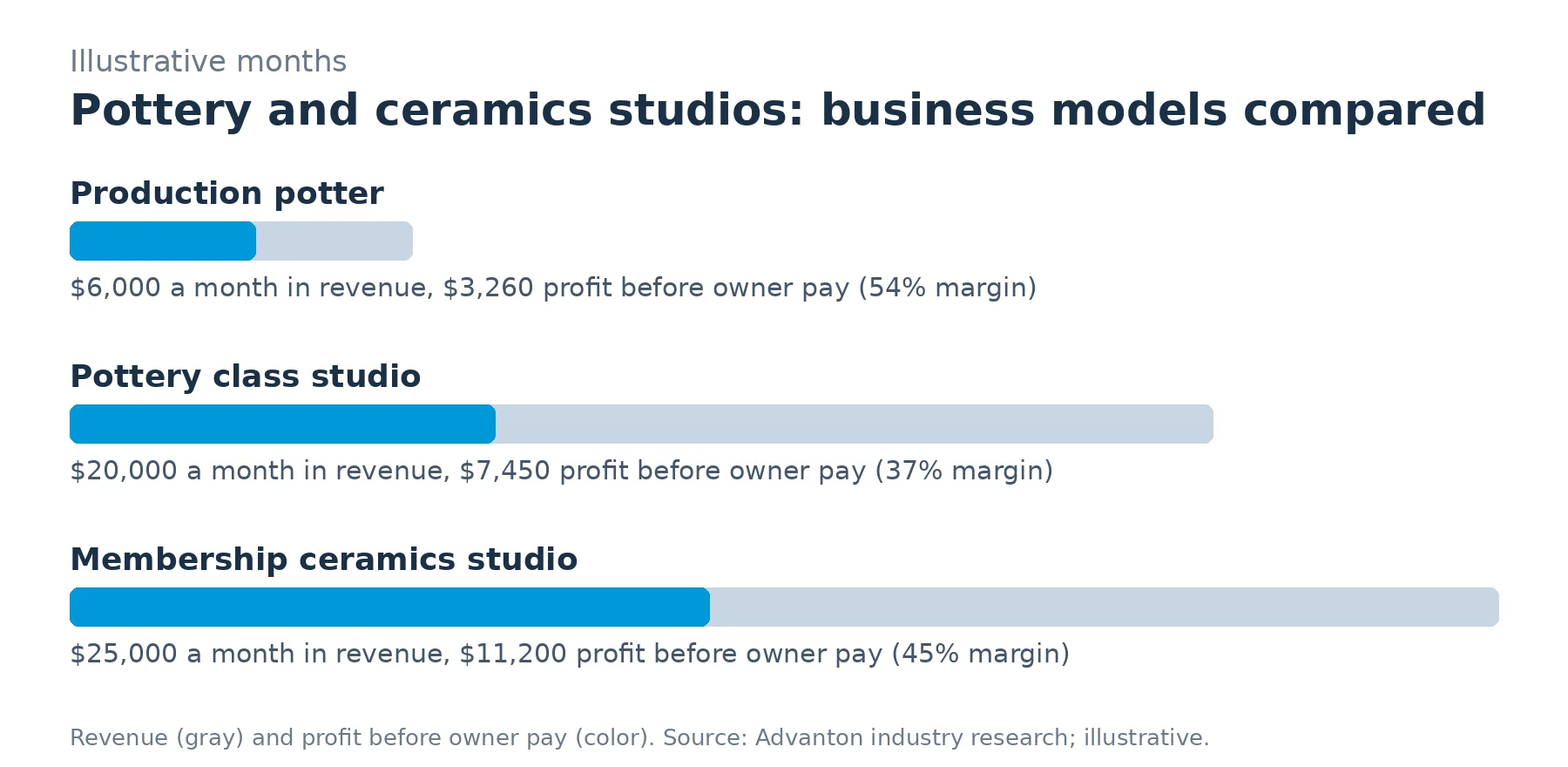
The figures below are illustrative months from our research, not industry averages. They show how revenue and costs typically fit together; your market, prices and costs will differ.
| Business model | Startup costs | Example monthly revenue | Costs | Profit before owner pay | Margin |
|---|---|---|---|---|---|
| Production potter | Moderate: wheel, kiln, electrical work, clay and glazes | $6,000 | $2,740 | $3,260 | 54% |
| Pottery class studio | Moderate to high: several wheels, kilns, sinks, ventilation | $20,000 | $12,550 | $7,450 | 37% |
| Membership ceramics studio | High: many wheels, kilns, storage shelving, ventilation | $25,000 | $13,800 | $11,200 | 45% |
Fixed and variable costs
For projections, the most useful split is between variable costs, which rise and fall with sales (materials, supplies, hourly labor, fees), and fixed costs, which you pay every month regardless (rent, salaried staff, insurance, loan payments).
| Business model | Variable costs (% of revenue) | Fixed costs per month | What it means |
|---|---|---|---|
| Production potter | 26.7% | $1,140 | Mostly fixed: needs steady volume to cover overhead |
| Pottery class studio | 35.5% | $5,450 | Balanced: margins improve as volume grows |
| Membership ceramics studio | 12.6% | $10,650 | Mostly fixed: needs steady volume to cover overhead |
What the numbers say
Clay and glazes are inexpensive, while rent, kilns and staff are the main costs.
Classes bring the highest revenue per hour, especially date nights and series.
Memberships provide steady monthly income once the community fills.
The three models in brief
Production potter. Handmade mugs, bowls and art sold at markets and online. See handmade and crafts data.
Pottery class studio. Wheel and hand-building classes, workshops and date nights. See art studios data.
Membership ceramics studio. Members use wheels, kilns and shelving monthly. See coworking data for a similar membership model.
Cost structure: pottery class studio
Each cost as a share of the example month’s revenue ($20,000):
| Cost | Monthly amount | Share of revenue | Type |
|---|---|---|---|
| Instructor pay | $4,500 | 22.5% | Variable |
| Rent | $3,000 | 15.0% | Fixed |
| Clay and glazes | $1,500 | 7.5% | Variable |
| Equipment payments | $800 | 4.0% | Fixed |
| Marketing | $800 | 4.0% | Fixed |
| Card fees | $600 | 3.0% | Variable |
| Kiln electricity | $500 | 2.5% | Variable |
| Utilities | $400 | 2.0% | Fixed |
| Insurance | $300 | 1.5% | Fixed |
| Software | $150 | 0.8% | Fixed |
| Profit before owner pay | $7,450 | 37% |
A first-year projection: pottery class studio
New businesses rarely start at full speed. This projection assumes revenue ramps from 35% of the example month in month 1 to 100% by month 12, variable costs move with revenue, and fixed costs stay the same every month. It’s a planning illustration, not a forecast.
| Month | Revenue | Variable costs | Fixed costs | Profit | Cumulative |
|---|---|---|---|---|---|
| 1 | $7,000 | $2,485 | $5,450 | -$935 | -$935 |
| 2 | $9,000 | $3,195 | $5,450 | $355 | -$580 |
| 3 | $11,000 | $3,905 | $5,450 | $1,645 | $1,065 |
| 4 | $12,400 | $4,402 | $5,450 | $2,548 | $3,613 |
| 5 | $14,000 | $4,970 | $5,450 | $3,580 | $7,193 |
| 6 | $15,200 | $5,396 | $5,450 | $4,354 | $11,547 |
| 7 | $16,400 | $5,822 | $5,450 | $5,128 | $16,675 |
| 8 | $17,400 | $6,177 | $5,450 | $5,773 | $22,448 |
| 9 | $18,200 | $6,461 | $5,450 | $6,289 | $28,737 |
| 10 | $19,000 | $6,745 | $5,450 | $6,805 | $35,542 |
| 11 | $19,600 | $6,958 | $5,450 | $7,192 | $42,734 |
| 12 | $20,000 | $7,100 | $5,450 | $7,450 | $50,184 |
Year one: revenue $179,200, profit before owner pay $50,184. The first profitable month is month 2. Cumulative results bottom out at -$935, which is the minimum cash cushion this plan would need, before any startup costs.
Rent, equipment payments and a technician start before memberships fill, so this membership studio illustration turns profitable in month 2, with a cumulative low of about $900, before kilns and build-out.
How pottery studios earn
- Classes and multi-week courses.
- Memberships with studio access.
- Firing fees.
- Date nights, parties and team events.
- Sales of finished pottery.
Kilns and electrical
Kilns need proper electrical service, clearances, ventilation and supervision. Plan electrical upgrades before signing a lease, since adding capacity can be expensive and may need landlord approval.
Dust and silica
Dry clay dust contains silica. Wet mop floors, wipe surfaces, avoid dry sweeping, use proper ventilation and teach students safe habits from the first class.
A startup checklist for pottery and ceramics studios
- Plan electrical capacity for kilns.
- Set up ventilation and wet cleaning routines.
- Choose food-safe glazes.
- Write membership and class policies.
- Insure the studio and students.
Food-safe glazes
Mugs and bowls must be safe for food. Use glazes formulated as food safe, fire them to the correct temperature and test when needed, especially before selling tableware.
Where the opportunities are
- Date nights and team events.
- Memberships for experienced potters.
- Kids’ clay camps.
- Custom tableware for restaurants.
- Online and market sales.
Key terms
| Term | Meaning |
|---|---|
| Bisque | First firing of clay |
| Glaze firing | Firing that melts glaze into glass |
| Leaching | Release of metals from glazes into food |
| Membership | Monthly access to studio equipment |
Studio community
Members stay for community: open studio nights, critiques, holiday sales and shared learning. Studios that feel welcoming keep members for years.
Key numbers to track
Track class fill rates, members, kiln loads, clay costs per student and churn.
Common mistakes
- Underestimating electrical upgrades.
- Dry sweeping clay dust.
- Non-food-safe glazes on dishes.
- Too many members for kiln capacity.
- Underpricing firing.
Marketing a pottery studio
Instagram videos of wheel work, date night promotions, gift cards, open houses and local markets bring students. See art studios data.
Kiln scheduling
Kiln capacity limits how many classes and members a studio can serve; plan firing schedules carefully and communicate turnaround times so students know when work will be ready.
Pricing
Price classes to include clay, firing and instruction; charge firing fees by weight or shelf space for members’ extra work so kiln costs stay covered.
Selling pottery
Markets, wholesale to shops and restaurants and online sales bring income beyond classes and showcase the studio’s work to new students.
Equipment
Wheels, kilns, slab rollers, glaze stations and shelving are the main investments; buy quality to reduce repairs, and consider used equipment from closing studios.
Gift cards
Pottery classes make popular gifts, especially for holidays, birthdays and couples looking for a memorable date.
Beginner classes that convert
Most members start with beginner courses. Multi-week classes that build real skills, followed by an easy path into membership with a first-month discount, turn students into long-term members.
Glaze basics
Understanding glaze chemistry, firing temperatures and testing helps studios offer reliable, attractive glazes and troubleshoot problems like crawling or crazing.
Reclaiming clay
Recycling trimmings and failed pieces back into usable clay saves money and reduces waste, though it takes time, buckets and drying space to do well.
Safety
Burns, cuts and electrical hazards require rules, training and supervision, especially around hot kilns and trimming tools.
Test these numbers with your own plan
Open this industry in our free Business Idea Reality Check to start from any model above, change prices, costs, startup budget and your own pay, and see your break-even month, the cash you’d need, three scenarios and how new businesses in this sector survive in your state.
- Start with the closest model and its cost structure.
- Replace every price and cost with local quotes.
- Estimate your ramp: how fast customers will realistically come in year one.
- Map cash month by month with the free Cash & Payroll Planner.
- Build the full plan in the free Business Planner.
About this data
Workforce figures come from the U.S. Bureau of Labor Statistics (Occupational Outlook Handbook and Occupational Employment and Wage Statistics, May 2024 wages and the 2024 to 2034 projections, unless noted). Market figures cite their sources above. Business model figures are illustrative months built from typical prices and costs to show how revenue, fixed costs and variable costs fit together; they are not industry averages or guarantees. We review these profiles when new government data is released, at least once a year, and the same figures power the Business Idea Reality Check.
Licensing and rules
Register the business; electric kilns often need dedicated circuits and electrical permits, and kiln placement must follow manufacturer clearances, ventilation and fire codes; clay and glaze dust contains crystalline silica, which OSHA regulates for employees, so use wet cleaning and avoid dry sweeping; ceramic ware intended for food must not leach unsafe lead or cadmium under FDA limits, so use food-safe glazes and test where appropriate; waivers and liability insurance cover students and members. Requirements change; confirm with your state and local agencies before you start.
Frequently asked questions about pottery and ceramics studios
Do kilns need special electrical work?
Often yes; many need dedicated circuits and permits.
Is clay dust dangerous?
Dry clay dust contains silica; wet cleaning reduces exposure.
Are glazes safe for dishes?
Only food-safe glazes, properly fired, should be used on mugs, plates and other food ware.
Is a pottery studio profitable?
It can be, with full classes, steady memberships, date nights and efficient kiln use.
What do artists earn?
BLS reported a median of $56,260 for craft and fine artists in May 2024.
How do pottery memberships work?
Members pay monthly for wheel time, shelves and firing.
How much space does a pottery studio need?
Enough for wheels, tables, kilns, glaze areas and shelving; plan around kiln ventilation and storage.
Can I start pottery at home?
Many potters do, with proper electrical service, ventilation and local zoning approval.
How can I test these numbers?
Open pottery and ceramics studios in the Business Idea Reality Check and enter your own numbers.
Keep learning
Sources
Last reviewed November 2, 2026. Startup costs are estimates; check local prices, licensing and tax rules before you commit money.
In India
Small businesses like this in India
In MoSPI’s survey of unincorporated businesses (proprietorships, partnerships and similar firms), this falls under Pottery, cement, glass and other mineral products. In 2023-24 India had 5.5 lakh such establishments employing 21.6 lakh workers, and 72.7% were run without hired workers. Across the wider manufacturing group, the number of establishments grew 6.48% between 2023-24 and 2025.
| Urban | Rural | All India | |
|---|---|---|---|
| Value added per business a year | ₹4,64,481 | ₹5,51,884 | ₹5,28,928 |
| Value added per worker a year | ₹1,49,660 | ₹1,32,062 | ₹1,35,744 |
| Pay per hired worker a year | ₹1,38,789 | ₹1,09,217 | ₹1,13,848 |
Running it alone or with staff: businesses with no hired workers added about ₹1,14,174 a year on average, while those with hired workers added about ₹16,32,682 (all India).
Where these businesses are: the states with the most small manufacturing businesses are West Bengal (16.0%), Uttar Pradesh (11.8%), Maharashtra (7.7%), Gujarat (7.2%), Tamil Nadu (6.9%) of the national total (2023-24).
Value added is what a business produces minus what it spends on materials and other inputs, before paying its workers and owner, so it’s a rough guide to the income a typical small business generates. These figures cover the whole activity, which can be broader than this one business type. Across all small businesses, average fixed assets such as equipment, furniture and vehicles were ₹3,42,242 per establishment in 2025.
Licences and registrations to expect
- Consent to Establish and Consent to Operate from your State Pollution Control Board, unless your activity is in the exempt white category.
- Factory registration under the OSH Code once you have 20 or more workers with power (40 without).
- BIS certification for products covered by mandatory quality control orders, and Legal Metrology registration for packaged goods.
- Registration under your state’s Shops and Establishments Act if you have premises or employees.
- A trade licence from your municipal corporation or council for many shop and service businesses.
- GST registration once turnover crosses ₹40 lakh for goods or ₹20 lakh for services (lower in some special category states), or earlier if you sell goods to other states or through e-commerce marketplaces.
- Professional tax registration in states that levy it.
- Free Udyam (MSME) registration, which helps with loans, government schemes and delayed-payment protection.
Rules differ by state and city. Check with your municipal corporation, state departments and a chartered accountant before you start.
Run a business like this in India? List it free in the India Business Directory, with your hours, deals and GST registration.
Free tools for India: Make a GST invoice · Compare business credit cards
Build a market report for Pottery and Ceramics Studios in India Pick your state and see market size, earnings, competition and licences, from official data. Free, with a PDF download.
Sources: MoSPI, Annual Survey of Unincorporated Sector Enterprises (ASUSE) 2023-24, full report, Appendix A Tables 4, 29, 33, 35 and 37 (survey period October 2023 to September 2024); MoSPI, Annual Survey of Unincorporated Sector Enterprises (ASUSE) 2025, factsheet (survey period January to December 2025, released 24 March 2026). Licensing summary by Advanton, checked November 2026.