
A recording studio rents professional recording space and engineering services to musicians, bands, podcasters, voiceover artists, brands and content creators. Studios offer what home setups often cannot: isolated rooms, quality acoustics, premium microphones and experienced engineers.
Many musicians now record at home, so successful studios diversify: music sessions, podcasts, voiceovers, audiobooks, rehearsals, video content and mixing. Location, acoustics and the reputation of the engineers matter most. The Bureau of Labor Statistics tracks pay and jobs for broadcast, sound and video technicians, the occupation closest to studio engineering. This guide covers space, acoustics, gear, pricing, clients, contracts, a worked example and a 90-day plan.
A recording studio at a glance
Table of Contents
| Topic | What to expect |
|---|---|
| Startup cost | Moderate to high: space, soundproofing and acoustic build-out, microphones, interfaces, monitors, instruments and furniture |
| Licenses | Business license, zoning approval and building permits for construction; noise considerations |
| How you earn | Hourly, day and block rates for sessions, engineering, mixing, podcasts, voiceover, rehearsal and video |
| Key assets | Good acoustics, reliable gear and skilled engineers with a reputation |
| Best for | Experienced engineers or producers who want to build a creative hub |
Who a studio suits
It suits experienced audio engineers and producers who enjoy working with artists and clients and can run a business: bookings, maintenance, staffing and marketing. A studio’s reputation often rests on its engineers.
Choosing a location
Look for space zoned for commercial or light industrial use, away from noise sources such as rail lines and heavy traffic, with parking, loading access for gear, good power and the ability to build rooms within rooms. Check noise rules, and avoid sharing walls with businesses that need quiet or that make noise themselves.
Isolation and acoustics
Isolation (soundproofing) keeps sound in and out using mass, decoupled walls, sealed doors and floating floors. Acoustic treatment controls reflections and bass inside rooms with absorbers, diffusers and bass traps. Plan the control room, live room and vocal booth carefully; construction usually requires building permits. Good rooms make every microphone sound better.
Gear
- Microphones: a range of dynamic, condenser and ribbon microphones.
- Preamps and interfaces with enough inputs for bands.
- Monitoring: quality studio monitors and headphone systems for performers.
- Computers and DAWs with backup systems.
- Instruments and amps: drum kits, keyboards and amplifiers many clients expect.
- Cables, stands and patching, kept organized and maintained.
Services and revenue streams
- Music tracking sessions with an engineer.
- Mixing and mastering.
- Podcast recording and video podcast production.
- Voiceover, audiobook and dialogue recording.
- Rehearsal room rentals.
- Lessons, workshops and engineering courses.
- Video sessions for musicians and creators.
Pricing
Studios charge hourly rates, day or block rates for longer sessions and lockout rates for exclusive use over several days, often with or without an engineer. Charge separately for mixing, mastering and extra services. Take deposits to hold bookings and set cancellation terms. Use our pricing calculator.
Session agreements and files
Agreements should cover rates, deposits, cancellation, overtime, damage to equipment, file storage and delivery and ownership. Clients usually own the recordings they pay for, while the studio owns its equipment and any separately licensed sounds; spell this out. Keep backups for an agreed period and tell clients how long you store files. If your engineers contribute creatively, clarify credits and any royalty participation in writing.
Startup costs to plan for
| Item | What to budget for |
|---|---|
| Space | Lease deposits and build-out |
| Isolation and acoustics | Construction, doors, treatment |
| Recording gear | Microphones, preamps, interfaces, monitors |
| Instruments | Drums, keys, amps |
| Computers and software | DAWs, plugins, backups |
| Insurance | Equipment, liability and business interruption |
Use our startup cost calculator for your total.
Filling the calendar
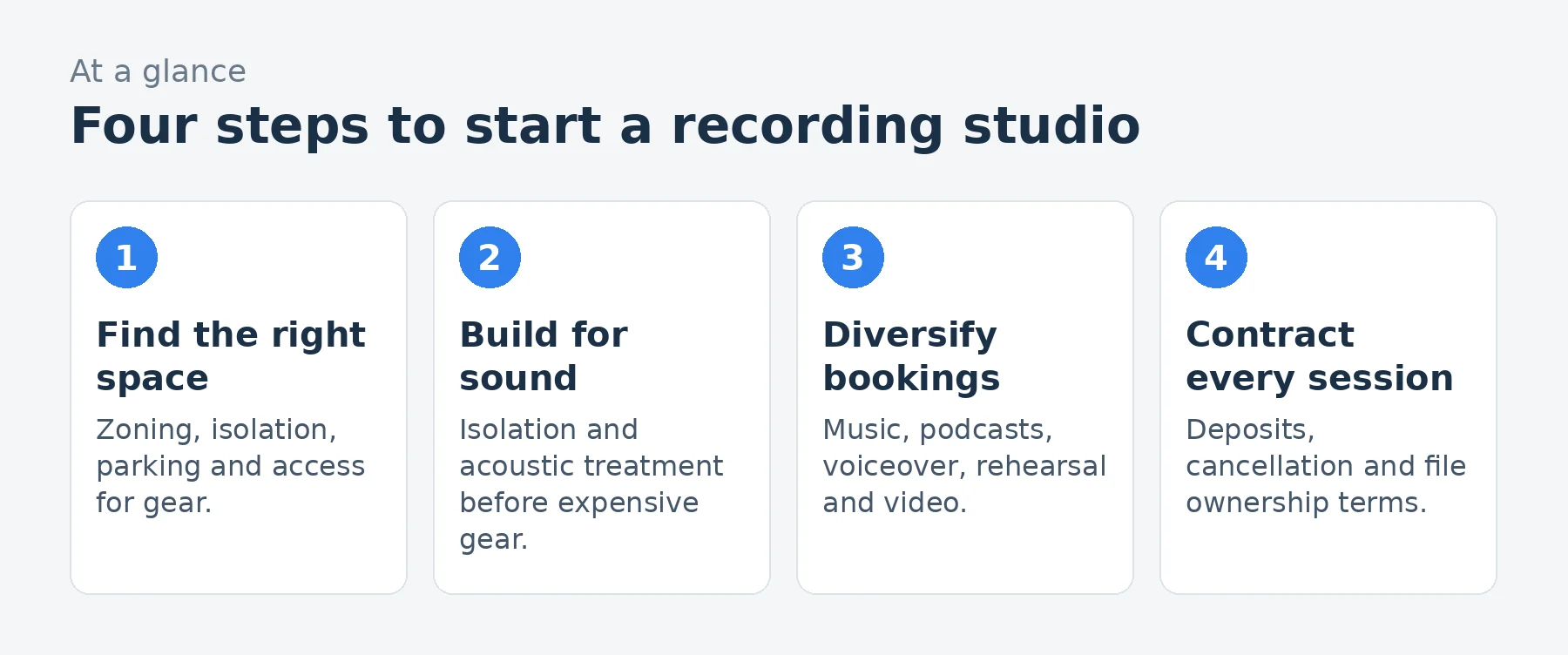
Musicians often book evenings and weekends, while podcasters, voiceover artists and businesses can fill weekday daytime hours. Offer packages (for example, a single-song package or a monthly podcast plan), an easy online booking system and reminders to reduce no-shows.
A worked example: a two-room studio
These are illustrative assumptions for a small two-room studio, not predictions.
| Assumption | Monthly | |
|---|---|---|
| Music sessions | 90 hours at $60 | $5,400 |
| Podcast and voiceover sessions | 50 hours at $70 | $3,500 |
| Mixing and mastering | $1,800 | |
| Rehearsal room rentals | $900 | |
| Revenue | $11,600 | |
| Freelance engineers | Paid per session | $(2,400) |
| Rent and utilities | $(3,200) | |
| Gear payments and maintenance | $(800) | |
| Insurance, software and booking system | $(400) | |
| Marketing | $(500) | |
| Profit before owner pay and taxes | $4,300 |
That leaves about $4,300 a month before the owner’s pay and taxes, on about $11,600 of revenue. Room utilization is everything: filling weekday daytime hours with podcasts and voiceover often makes the difference.
Loading the calculator…
Hiring engineers
Many studios use freelance engineers paid per session or a share of booking revenue, plus a lead engineer or manager. Engineers with followings bring clients. Agree on rates, scheduling, client ownership and conduct in writing, and classify workers correctly.
Finding clients
- Local artists and bands through venues, music schools and social media.
- Podcasters and businesses needing professional audio and video.
- Voiceover artists and audiobook publishers.
- Producers who rent rooms for their own clients.
- Events such as open studio nights and listening sessions.
Insurance and maintenance
Insure equipment against theft, fire and damage, carry general liability for visitors and consider business interruption coverage. Maintain gear on a schedule, keep spares of critical items and back up client files in multiple places.
Podcast studio packages
Podcasters value turnkey service: multiple microphones, cameras, lighting, an engineer and editing. Offer packages by episode or monthly plans, and set up a comfortable, attractive room for video podcasts. Podcast clients often book regularly, which steadies income.
Voiceover and audiobook work
Voiceover artists and audiobook narrators need very quiet booths, consistent sound and remote connection options so clients can direct sessions from elsewhere. Reliable remote session technology opens national clients.
Studio culture
Artists return to studios where they feel comfortable and creative. Clean, welcoming spaces, punctual sessions, respectful engineers and small touches such as good lighting and lounges build loyalty and word of mouth.
Backups and file delivery
Back up every session during and after recording, to at least two locations. Deliver files in agreed formats with clear naming, and keep client archives for a stated period. Lost files damage reputations quickly.
Choosing your niche
Studios often specialize: hip-hop and pop vocals, live bands, acoustic and classical recording, podcasts and video or voiceover. A niche shapes room design, gear, marketing and which engineers you hire.
Rates with and without an engineer
Some clients bring their own engineer and only rent the room; others need full engineering. Offer both rates, require approval for outside engineers and set rules on equipment use to protect your gear.
Online booking and deposits
An online booking system with real-time availability, automatic confirmations, deposits and reminders reduces no-shows and saves hours of messaging. Show room photos, gear lists and rates clearly so clients book with confidence.
Common mistakes to avoid
- Buying expensive gear before fixing the rooms.
- Weak soundproofing that brings noise complaints.
- No deposits or cancellation policy.
- Unclear file ownership and storage terms.
- Relying only on music sessions.
Your first 90 days
- Days 1-30: find space, confirm zoning and plan the build-out with an acoustic designer.
- Days 31-60: build or treat rooms, install gear, set rates and write session agreements.
- Days 61-90: open with promotional sessions, market to artists and podcasters and track room utilization.
Frequently asked questions
How much does it cost to build a recording studio?
It depends on space and construction; isolation and acoustic build-out are often the largest costs.
How do recording studios charge?
By the hour, day or block, with lockout rates for multi-day projects and separate fees for mixing and mastering.
Who owns recordings made in a studio?
Usually the client who paid for the session, as stated in the session agreement.
Do recording studios need permits?
Usually a business license, zoning approval and building permits for construction.
Can a recording studio be profitable?
Yes, with diversified bookings such as podcasts and voiceover filling weekday hours.
Should I hire engineers or work alone?
Many studios start with the owner engineering and add freelance engineers as bookings grow.
Can a recording studio offer podcast production?
Yes. Podcast and video podcast sessions are a strong revenue stream that fills weekday hours.
Do studios need insurance?
Yes. Equipment, liability and business interruption insurance protect against theft, damage and accidents.
How much do recording studios charge per hour?
Rates vary widely by city, rooms, gear and engineer; many studios offer block and package discounts.
Should I offer rehearsal space?
Rehearsal rooms can fill evenings and bring musicians who later book recording sessions.
What gear do studios need first?
Good rooms, reliable monitors, an interface with enough inputs and a few versatile, quality microphones come before luxury gear.
Should I soundproof or treat my room first?
Plan both, but isolation must be built into construction, while treatment can be added and adjusted later.
How do I attract artists to a new studio?
Offer introductory sessions, partner with local producers, host listening events and share recordings you made there.
Keep learning
- Music and entertainment industry data
- How to start a music production business
- How to start a podcast business
- Pricing calculator
Sources
- US Bureau of Labor Statistics, Broadcast, sound and video technicians
- US Copyright Office, Copyright basics and works made for hire
- SoundExchange, Royalties for sound recordings
- US Small Business Administration, Apply for licenses and permits
Last reviewed November 3, 2026. Startup costs are estimates; check local prices, licensing and tax rules before you commit money.

