
A beekeeping business keeps honey bee colonies and earns from honey, beeswax products, selling bees (nucleus colonies and queens) and sometimes pollination services for farms. Local, raw honey has loyal customers, and many beekeepers start with a few hives and grow steadily.
Bees are livestock, and keeping them healthy is the core challenge: Varroa mites, diseases and other stresses cause significant colony losses each year, so beekeepers plan to replace colonies regularly. The Bureau of Labor Statistics reports a median pay of $87,980 for farmers, ranchers and other agricultural managers (May 2024), though most small farm owners earn far less in their early years, and employment in the occupation is projected to decline slightly. This guide covers hives, rules, bee health, honey production and labeling, selling, a worked example and a 90-day plan.
A beekeeping and honey business at a glance
Table of Contents
| Topic | What to expect |
|---|---|
| Startup cost | Low to moderate: hives, bees, protective gear, tools, extractor, bottling supplies |
| Licenses | State apiary registration in many states; honey sales under cottage food or food processing rules; honey labeling rules |
| Income sources | Honey, comb honey, beeswax products, nucs and queens, pollination services |
| Key risks | Varroa mites, disease, poor weather, pesticide exposure and winter losses |
| Best for | Patient, observant people who enjoy outdoor work and learning a craft |
Who beekeeping suits
It suits patient, observant people who enjoy outdoor work, can handle stings and heat, and like learning continuously. Beekeeping skill takes years to build, which is why most businesses grow slowly from a few hives.
Learning and starting colonies
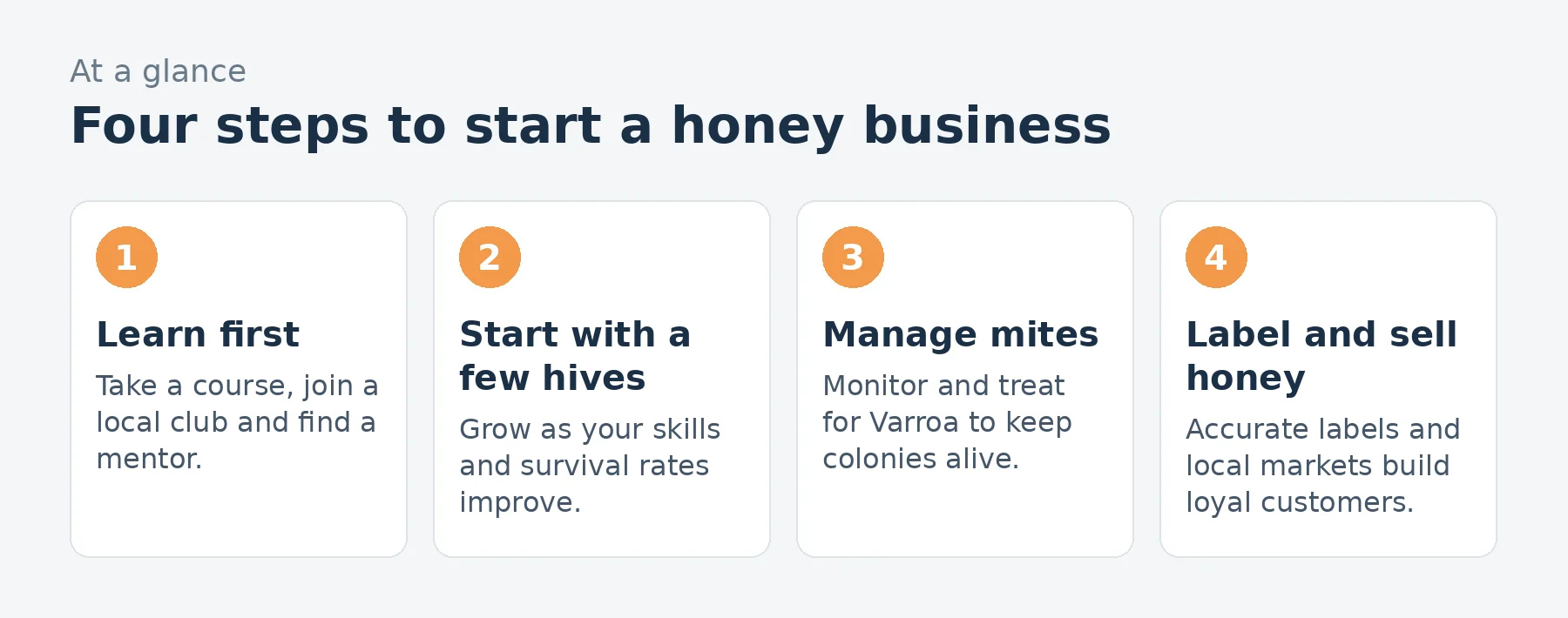
Take a beginner course, join a local beekeeping association and find a mentor before buying bees. Most beekeepers start with two to five hives, bought as nucleus colonies (nucs) or packages in spring. Starting with at least two hives lets you compare colonies and share resources if one struggles.
Equipment
- Hives: Langstroth hives are most common, with boxes, frames and foundation.
- Protective gear: veil, jacket or suit and gloves.
- Tools: smoker, hive tool, frame grip.
- Extraction: uncapping tools, an extractor, strainers and bottling tank.
- Bottling: jars, lids and labels.
Rules and registration
Many states require apiary registration and allow inspections to control bee diseases. Local ordinances may limit hives in residential areas. Honey sales are often allowed under cottage food laws or have specific exemptions, but rules vary; larger operations may need a licensed processing space.
Labels must be accurate: the FDA’s guidance says honey labeled as "honey" should be pure honey, and blends with sweeteners must be labeled accordingly. Include the product name, net weight and your name and address, plus any statements your state requires.
Keeping bees healthy
The Varroa mite is the leading threat to honey bee colonies. Monitor mite levels regularly and treat when needed, using approved methods and following label directions. Watch for diseases, keep strong colonies, ensure bees have food (feeding in dearths) and prepare hives for winter. Expect some losses every year and plan to replace colonies by splitting strong hives or buying nucs.
Startup costs to plan for
| Item | What to budget for |
|---|---|
| Bees | Nucs or packages |
| Hives | Boxes, frames, foundation, stands |
| Gear and tools | Suit, gloves, smoker, hive tool |
| Extraction | Extractor or rental, uncapping tools |
| Packaging | Jars, lids, labels |
| Training | Courses and association membership |
Use our startup cost calculator for your total.
Selling honey and more
- Local raw honey at farmers markets, farm stands and local shops.
- Varietal and seasonal honey from specific bloom periods.
- Comb honey and creamed honey at premium prices.
- Beeswax products: candles, lip balm and wraps (cosmetic products have their own labeling rules).
- Nucs and queens for other beekeepers in spring.
- Pollination services for orchards and farms, priced per colony, which requires moving hives and strong colonies at the right time.
A worked example: a 40-hive operation
These are illustrative assumptions for an established 40-hive operation, averaged per month over a year, not predictions.
| Assumption | Monthly | |
|---|---|---|
| Honey sales | About 1,600 pounds a year sold in jars, averaged monthly | $1,800 |
| Beeswax products and comb honey | Candles, lip balm, comb | $300 |
| Nucleus colonies | Spring sales, averaged monthly | $400 |
| Revenue | $2,500 | |
| Jars, labels and packaging | $(220) | |
| Bee replacement and queens | Covering winter losses | $(350) |
| Mite treatments, feed and supplies | $(200) | |
| Market fees and fuel | $(150) | |
| Equipment replacement | $(100) | |
| Profit before owner pay and taxes | $1,480 |
That leaves about $1,480 a month on average before the beekeeper’s pay and taxes, on about $2,500 of revenue. Honey yields vary widely by location and year, so income can swing from season to season.
Pricing honey
Local, raw honey sells at prices well above imported supermarket honey. Calculate your cost per jar (jar, lid, label and your share of hive costs) and compare with local beekeepers. Offer several sizes and premium products to raise sales per customer. Use our pricing calculator.
The beekeeping year
- Spring: inspect colonies, manage swarming, split strong hives and install new colonies.
- Summer: add supers during nectar flows, monitor mites and harvest honey.
- Fall: treat for mites as needed, combine weak colonies and make sure bees have enough food stores.
- Winter: leave bees undisturbed, check stores, repair equipment and plan for spring.
Extracting and bottling
Extract honey in a clean space: uncap frames, spin them in an extractor, strain the honey and let it settle before bottling. Honey is stable, but moisture content matters; harvest only capped honey, which is ripe. Many small beekeepers share or rent extractors through local clubs before buying their own.
Pollination contracts
Pollination services can be a significant income source in agricultural areas. Contracts should specify the number and strength of colonies, delivery and removal dates, placement, pesticide communication and payment. Moving hives is heavy work and can stress colonies, so start only when your colonies are strong and your equipment is ready.
Value-added honey products
Value-added products raise income from the same hives: creamed honey, infused honey, comb honey, honey sticks, beeswax candles, lip balms and gift sets. Food products and cosmetics have their own labeling rules, so check requirements before selling. Seasonal gift boxes sell well at holiday markets and to companies looking for local gifts.
Working with neighbors
Good relations protect your apiary. Place hives away from property lines and walkways, provide water so bees do not visit neighbors’ pools, use gentle colonies and share a jar of honey with nearby residents. Follow local ordinances on hive numbers and placement.
Funding a small farm business
Small farm businesses can use several funding sources beyond savings: USDA Farm Service Agency microloans and farm loans (including programs for beginning farmers), state agriculture grants, local farm incubators, crowdfunding and community-supported pre-sales such as CSA shares or presales of products. Talk to your local USDA service center and extension office, which also offer training and technical help for new farmers.
Insurance and records
Carry general and product liability insurance, especially when selling at markets and to stores, and ask about farm property coverage for buildings and equipment. Some crop and livestock insurance programs are available through USDA. Keep clear records of sales, expenses, production and any food safety practices; they support taxes, loans and insurance claims.
Common mistakes to avoid
- Skipping mite monitoring and treatment.
- Starting with too many hives before gaining skill.
- Inaccurate honey labels.
- Harvesting too much and leaving bees short for winter.
- Ignoring local hive ordinances and neighbors.
Your first 90 days
- Days 1-30: take a course, join a local club, check apiary registration and local rules and order nucs.
- Days 31-60: install colonies, inspect regularly with a mentor and start mite monitoring.
- Days 61-90: keep colonies strong, plan your first harvest and design compliant labels.
Frequently asked questions
Do I need a license to keep bees?
Many states require apiary registration, and local ordinances may limit hives. Check before you start.
Can I sell honey from home?
Often yes, under cottage food rules or specific honey exemptions, but rules vary by state.
How much honey does a hive produce?
It varies widely by location, weather and colony strength.
What is the biggest threat to bees?
The Varroa mite, along with diseases and other stresses, causes significant colony losses.
Can beekeepers earn from pollination?
Yes. Some rent colonies to farms during bloom, which requires strong colonies and moving hives.
When do beekeepers harvest honey?
Usually in summer or late summer after major nectar flows, harvesting only capped honey and leaving enough for the bees.
Is local honey more valuable than store honey?
Many customers pay more for local, raw honey and varietal honeys, which supports higher prices than imported supermarket honey.
How many hives do I need to start a honey business?
Many beekeepers start with two to five hives to learn, then grow to dozens as skills and colony survival improve.
Do I need a special space to extract honey?
Small producers often extract in a clean kitchen or shed where state rules allow; larger operations may need a licensed processing space. Check your state’s rules.
Keep learning
- Beekeeping industry data
- How to start a market garden business
- Handmade goods and crafts industry data
- Pricing calculator
Sources
- FDA, Proper labeling of honey and honey products
- US Bureau of Labor Statistics, Farmers, ranchers and other agricultural managers
- Institute for Justice, State reforms for cottage food and food freedom laws
- USDA Agricultural Research Service, Honey bee health
Last reviewed November 2, 2026. Startup costs are estimates; check local prices, licensing and tax rules before you commit money.

