
Event venues host weddings, receptions, parties, corporate events, fundraisers and community gatherings. Popular formats include rustic barns, banquet halls, converted industrial lofts, gardens and estates. A great venue with a strong reputation can be booked most weekends of the year, with weekday corporate and community events adding income.
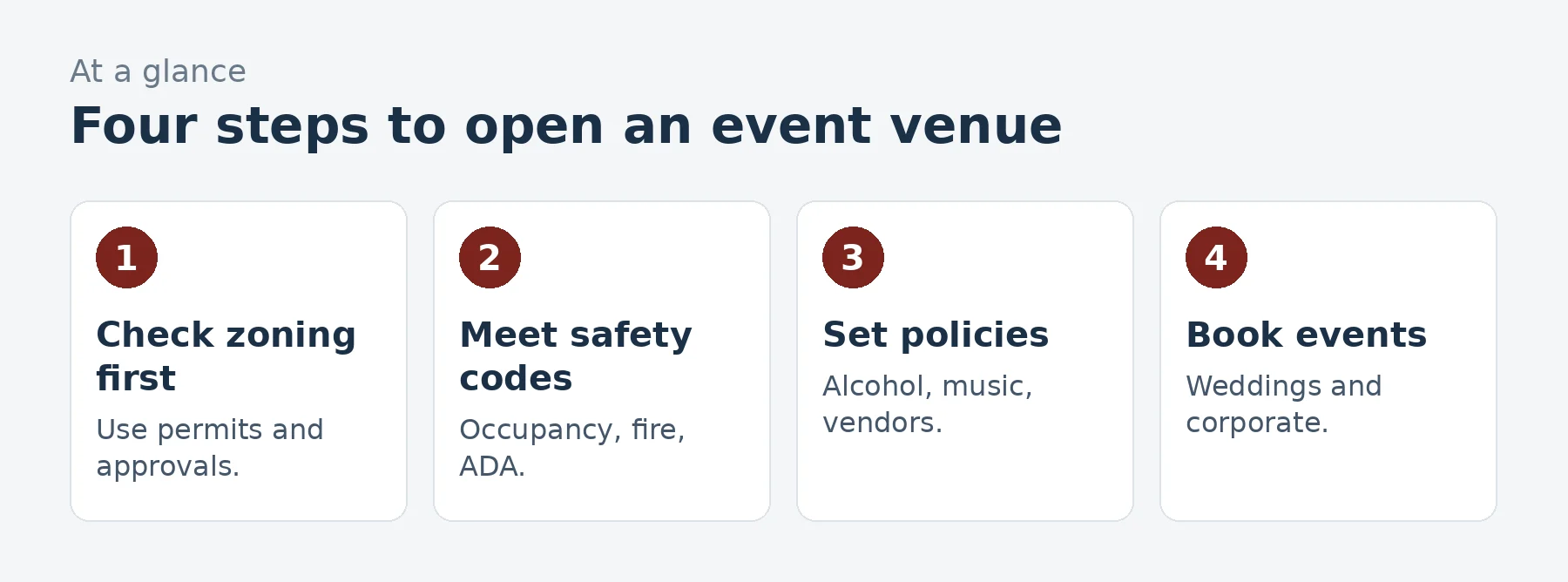
It’s also one of the most heavily regulated small businesses to open. Before you buy or lease a property, check zoning, the permits needed to change its use, occupancy limits and fire codes, accessibility requirements, alcohol rules, music licensing and noise limits. Many would-be venue owners discover too late that their barn or building can’t legally host large gatherings without major work.
An event venue business at a glance
Table of Contents
| Topic | What to expect |
|---|---|
| Startup cost | High: property purchase or lease, code upgrades, furniture, restrooms, parking, insurance |
| Key rules | Zoning and use permits, occupancy and fire codes, ADA, alcohol licensing, music licenses, noise rules |
| Revenue model | Rental fees by day or event, plus packages, bar service and add-ons |
| How you earn | Weddings, parties, corporate and community events, and in-house services |
| Best for | Hospitality-minded owners with capital, patience for permits and strong event skills |
Who running a venue suits
It suits hospitality-minded people who love events, can manage staff and vendors, and have the capital and patience to get through permits and code upgrades. You’ll work most weekends during peak season, and your reputation depends on how smoothly couples’ and clients’ most important days go.
Zoning and permits
Start with zoning. Many properties, especially farms, barns and homes in residential areas, aren’t zoned for commercial events and need a special use or conditional use permit, which may require public hearings, neighbor notification, parking plans and limits on events. Converting a building to an assembly use usually requires a change of use or building permit, which triggers code upgrades. Speak to the planning and building departments before you sign anything.
Occupancy, fire and life safety
Event venues are assembly occupancies under building and fire codes, such as the NFPA 101 Life Safety Code and the International Building and Fire Codes adopted locally. Requirements typically include a posted maximum occupancy, enough exits with proper signage and lighting, fire alarms, sometimes sprinklers, fire-rated construction, and rules for tents, candles and decorations. Code upgrades for older barns and buildings can be expensive, so get estimates early.
Accessibility
Venues open to the public must meet the Americans with Disabilities Act Title III requirements: accessible parking, routes, entrances, restrooms and seating, and removing barriers where readily achievable. New construction and alterations must meet the accessibility standards. Accessibility also matters to guests, especially at weddings with older relatives.
Alcohol policies
Alcohol brings income and risk. Options include holding your own liquor license and running a bar, requiring a licensed caterer or bartending service, or allowing clients to bring alcohol where state law permits, usually with licensed, insured bartenders. Carry liquor liability insurance, train staff to check IDs and stop serving intoxicated guests, and follow your state’s alcohol rules closely.
Music licensing and noise
Public performances of music at a business venue generally require licenses from performing rights organizations such as ASCAP, BMI, SESAC and GMR, which venues typically obtain. Check your local noise ordinance, which may set decibel limits and end times, and plan sound management and neighbor relations, especially for outdoor events.
Food, catering and vendors
Decide whether you’ll have in-house catering, an exclusive caterer, a preferred vendor list, or allow any licensed caterer. A catering or prep kitchen needs health department permits. Require vendors to carry insurance and follow your rules on setup times, power, decorations and cleanup.
Contracts, deposits and policies
Use detailed contracts covering dates and hours, guest counts, fees and deposits, payment schedules, cancellation and rescheduling, damage deposits, alcohol rules, vendor rules, decorations, noise and end times, and what happens if events must be cancelled for weather or emergencies. Take non-refundable deposits to hold dates, as your state allows.
Pricing
Price by day or event, with higher rates for peak-season Saturdays and lower rates for Fridays, Sundays, weekdays and off-season dates. Offer packages that include tables, chairs, linens, setup, a coordinator and bar service. Use our pricing calculator.
Running event days
Every event needs a clear plan: a timeline agreed with the client, setup and breakdown schedules for vendors, a coordinator on site, security where needed, and procedures for emergencies, weather and medical incidents. Walk the venue before each event to check exits, lighting, restrooms and hazards, and keep an incident log.
Filling the calendar
Weekends in peak season book first, so plan for weekdays and the off-season: corporate meetings, workshops, holiday parties, community events, photo shoots, markets and fundraisers. Lower weekday rates and simple packages help fill those dates.
Neighbors
Good relationships with neighbors matter, especially for rural and residential venues. Manage parking, traffic, lighting and noise, give neighbors a contact number, and keep to end times.
Staffing
Most venues need an event coordinator who manages bookings and runs event days, plus setup, cleaning and maintenance staff, and security or parking attendants for large events. If you serve alcohol, bartenders must be trained and, in many states, certified in responsible service. Pay attention to wage and hour rules for event staff, who often work long, irregular shifts.
Preferred vendors
A list of preferred caterers, planners, DJs, florists, photographers and rental companies helps clients and ensures vendors know your venue. Choose vendors who are licensed, insured and reliable, and be transparent with clients about any referral arrangements.
Booking tours that convert
Most couples and planners tour several venues before booking. Show the venue set up for an event if you can, explain what’s included and what isn’t, give clear prices and availability, and follow up promptly with a written proposal. Photos and videos of real events help clients picture their own day.
Weather plans
Outdoor ceremonies and receptions need a backup plan, such as an indoor space or a permitted tent, with clear rules on when the decision is made. Tents above certain sizes usually need permits and fire inspections.
Startup costs for an event venue
| Item | What to budget for |
|---|---|
| Property | Purchase or lease, with zoning that allows events |
| Code upgrades | Exits, fire alarms, sprinklers, accessibility, restrooms |
| Furniture and equipment | Tables, chairs, linens, lighting, sound, decor |
| Parking and grounds | Parking areas, lighting and landscaping |
| Licenses and permits | Use permits, liquor license, music licenses |
| Insurance | General and liquor liability, property, workers’ compensation |
Use our startup cost calculator for your total.
A worked example: a mid-sized venue
These are illustrative assumptions for a mid-sized venue in its main season, not predictions.
| Assumption | Monthly | |
|---|---|---|
| Weekend weddings and large events | 6 events averaging $6,500 | $39,000 |
| Weekday corporate and community events | 5 events averaging $1,400 | $7,000 |
| Bar service and add-ons | $4,500 | |
| Revenue | $50,500 | |
| Staff: event coordinator, setup, cleaning, security | $(11,500) | |
| Mortgage or lease | $(9,000) | |
| Utilities, maintenance and grounds | $(3,800) | |
| Insurance and licenses | $(1,800) | |
| Bar supplies and liquor costs | $(1,800) | |
| Marketing and listing sites | $(2,000) | |
| Profit before owner pay and taxes | $20,600 |
That leaves about $20,600 a month before the owner’s pay and taxes, on about $50,500 of revenue in a busy month. Off-season months earn much less, so plan for the full year.
Marketing
- Wedding listing sites and social media with professional photos.
- Wedding planners, photographers and caterers.
- Corporate event planners and local businesses.
- Open houses and bridal shows.
- Reviews from couples and clients.
Common mistakes to avoid when starting an event venue
- Buying property before checking zoning and use permits.
- Underestimating code upgrade costs.
- Allowing alcohol without proper licensing and insurance.
- Ignoring music licenses and noise limits.
- Weak contracts on cancellations and damage.
Your first 90 days as an event venue owner
- Days 1-30: confirm zoning, permits, code requirements and costs before committing to a property.
- Days 31-60: complete upgrades, arrange insurance and licenses, and set policies and contracts.
- Days 61-90: photograph the venue, hold an open house and take your first bookings.
Frequently asked questions about starting an event venue
Do I need a special permit to host weddings on a farm?
Often; many farms and residential properties need a special or conditional use permit for events.
What fire codes apply to event venues?
Assembly occupancy requirements under the codes your area adopts, such as NFPA 101 and the International Fire Code.
Do venues need music licenses?
Generally yes, from performing rights organizations such as ASCAP and BMI.
Can guests bring their own alcohol?
It depends on state law and your policies; licensed, insured bartenders are usually required.
Does my venue need to be ADA accessible?
Yes; venues open to the public must meet ADA Title III requirements.
How do venues price?
By day or event, with peak and off-peak rates and packages.
What insurance do venues need?
General liability, liquor liability, property and workers’ compensation.
Can I run a venue with a small staff?
Yes, with an event coordinator and setup and cleaning help for each event.
How can venues earn in the off-season?
Corporate events, holiday parties, workshops, markets and community events.
Should a venue offer packages?
Yes; clear packages simplify booking for clients and raise average spend.
Keep learning
- Event and wedding venues industry data
- How to start a wedding planning business
- How to start a party rental business
- Pricing calculator
Sources
- NFPA 101, Life Safety Code
- ADA.gov, ADA requirements for businesses open to the public (Title III)
- ASCAP, Music licensing for businesses
- US Small Business Administration, Apply for licenses and permits
- FDA, Registration of food facilities
- OSHA, Electrical safety
Last reviewed November 7, 2026. Startup costs are estimates; check local prices, licensing and tax rules before you commit money.

